Showing posts with label addiction. Show all posts

Thursday, 12 December 2019

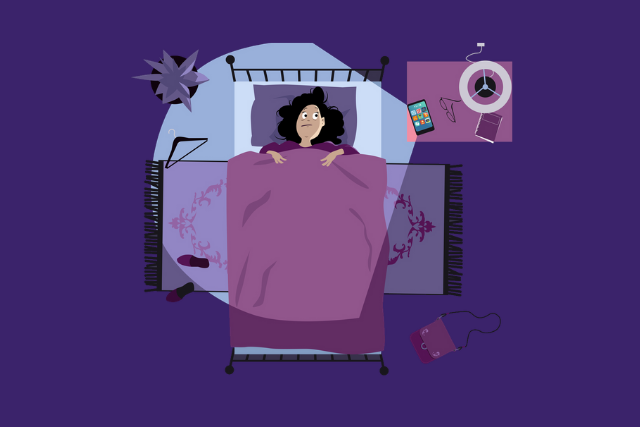
The Simple Changes That Reduced My Phone-Induced Anxiety

a post by Kristine Peter for the Tiny Buddha blog


“Simple living doesn’t solve all my problems, it just removes distractions.” ~Melissa Camara Wilkins

At times it’s felt like my phone was my only access to the outside world. A place to connect in the middle of the night. The means to stay in touch with friends and family on the other side of the globe. It was a lifeline.

Until it wasn’t.

Improved sleep, reduced stress, and a mindful relationship with technology — they were high on my wellness “should have achieved by now” list.

I’m not sure which was bothering me more, the actual stress of not having a mindful relationship with technology or the fact that I had not been able to achieve a mindful relationship with my smartphone.

It was a cycle in my mind I just couldn’t stop. And I was struggling. All the tips and current trends to “digital detox” were not making my life easier. In fact, they were making it much harder.

Being unable to successfully follow advice for my health made me feel like a failure, especially as it was connected to my mental health. Did that mean I didn’t care about my well-being? Was I a fraud?

My phone was disrupting my sleep and worsening my anxiety. But all it took was one small change to break my bad habits and create a new, more mindful relationship with technology.

Continue reading


Saturday, 7 December 2019

How to Love an Addict (Who Doesn't Love Themselves)

a post by Marlena Tillhon-Haslam for the Tiny Buddha blog


I grew up in a family of high-functioning addicts. We looked like the perfect family, but as we all know, looks can be deceiving. No one was addicted to drugs, so that obviously meant that we had no problems. Cigarettes, alcohol, food, and work don’t count, right?

I have come to realise that what we are addicted to is nowhere near as important as the admission that we’re addicted to something. When we try to make ourselves feel better by telling ourselves that gambling or porn or beer is nowhere near as bad as crack or heroin, we are merely lying to ourselves. In the recovery movement, we call this denial.

Denial was the foundation my life was built on. We did not speak of my grandfather’s abusive behaviour and alcoholism. We did not question my grandmother’s chain-smoking habit. We did not mention my other grandfather’s drunken falls and injuries. We never tried to help my aunt who was eating anything she could get her hands on. No one questioned the countless hours my father spent working.

There were so many things we just never talked about. There were so many things that were secrets. Things I had to hide. The unspoken family rule.

Continue reading

The one thing that is not covered is how to love the addict that you are married to.
I have tried, really tried and we are still living in the same house but that's about it!


Friday, 27 September 2019

Pain, Suffering, Joy, Love—Meditation Helps Me Experience It All

a post by Jake Kessler for the Tiny Buddha blog


“I know, things are getting tougher when I can’t get the top off the bottom of the barrel.” ~Jesse Michaels

No one thought I was going to live to see twenty. Including me. In fact, I vividly remember telling my father that it would be miraculous if I saw twenty-five. It wasn’t emotional. It was simply a statement of fact. And yet here I am—mid-thirties, wife, daughter, one on the way, house, job, sense of purpose. What happened?

I was one of those kids with questions. Big questions. “What does it all mean?” questions. I used to wonder what the point of all of this was. As young as seven and eight I remember lying in bed at night trying to understand the nature of the world. I would examine my family, my friends, my fears, my aspirations, looking for the thread that would unravel the existential knot.

I loved to learn, and I was frequently drawn to the sciences in a way that I now see as continuing to look for answers to the big questions. When my friends were asked what they wanted to be when they grew up, they gave the common answers—policeman, fireman, professional athlete, etc. I think someone said “Batman” (it might have been me…).

Continue reading

Powerful, amazing, thought-provoking.


Thursday, 29 August 2019

Against Tolerance: The Ethics Of Empathy

an article by Rafaƫl Newman published on 3 Quarks Daily


“Quark”, photograph by the author, Bern 2018

I am employed two or three weekends a month as a minder or “Betreuer” at a treatment centre and halfway house for recovering drug addicts in Zurich. My duties include spending the night at the facility as the lone member of supervisory staff, eating meals with the clients, supervising their activities and accompanying their outings, taking urine samples and administering breathalyzer tests, distributing a variety of antidepressants and other prescription meds, and joining them for sessions of meditation and self-led group therapy.

Our clients typically come from the Swiss middle and working class, are predominantly white and “European”, and have in common with other addicts of my acquaintance a marked tendency to egocentrism and either a concomitant failure of empathy or, in reaction to the affective over-sensitivity that has come to be associated with addiction (particularly in the case of celebrity overdose victims such as Philip Seymour Hoffman), a self-protective closing of the border between self and other, whether by chemical, behavioral, or neurotic means.

Among my unspoken responsibilities as a minder, therefore, and in line with the principles of the self-help program that serve the center as an unofficial “philosophy”, is the performance of a living example: of empathy in action; of open-mindedness regarding others and their sensibilities or “struggles”; of humility and the will to serve, rather than simply to use, exploit, and consume. And as a consequence, the recovering addicts in my charge are, implicitly, to learn how to belong to a group rather than to go it alone, as they have been wont to do in active addiction.

Continue reading


Wednesday, 28 August 2019

It's possible to be paralyzed by choice

a post by Seamus Bellamy for the Boing Boing blog

Mental health problems are a pain in the ass. One of the more obnoxious coping mechanisms I used to use to deal with depression and anxiety was shopping.


Having nightmares again? Stressed out? Buy something new! You earned it, pal!

Sometimes, the brief rush of endorphins I'd snag from spending a little dough was enough to allow me to slide through another day without addressing any of the problems I was suffering from.

On other days, I'd buy something I knew damn well that I didn't need and feel almost instantly guilty. I'd want to return it, but the shame and embarrassment of walking back into a store and having to explain myself felt like too much to tolerate. I'd find ways around having to return stuff by buying non-returnable items, like digital downloads. Back when I was first confronting my addiction to this kind of rampant consumerism, I figured out that I had spent somewhere in the neighborhood of $10,000 on iTunes downloads over a five-year period.

Continue reading


Wednesday, 21 August 2019

My Life with an Alcoholic Parent (and 6 Addiction Myths)

a post by Ashley Sword for the Tiny Buddha blog


“Be the person who breaks the cycle. If you were judged, choose understanding. If you were rejected, choose acceptance. If you were shamed, choose compassion. Be the person you needed when you were hurting, not the person who hurt you. Vow to be better than what broke you—to heal instead of becoming bitter so you can act from your heart, not your pain.” ~Lori Deschene

Take a moment to look around where you are right now. Look at the people surrounding you, whether you’re in your office, a waiting room, or the line at the post office.

Statistically, one out of every eight American adults in your space is suffering with a substance abuse disorder.
[Looking around my home right now I can see two addicts, my husband and one of his mates, both drinking alcohol. This piece made hard reading but in the end I have chosen to stay with the marriage – I guess after getting on for 40 years it’ a habit!]

This person could be your next-door neighbor, your family doctor, your teacher, or a co-worker.

Out of more than 15 million people struggling, less than 8 percent reportedly have received treatment, according to the National Institute of Alcohol Abuse and Alcoholism.

Television shows and movies often lead us to believe that the people who suffer from addiction are the homeless, jobless people on the street who beg for money to feed their habit.

In some circumstances, this unfortunately is true, but I’ve learned that addiction can also be found in the people around you in your day-to-day life. Addiction doesn’t care which zip code you live in or what skin color you have. It doesn’t matter how much money you have in your bank account or what kind of position you hold within a company.

Continue reading


Monday, 8 April 2019

Addiction Recovery: Distinguishing 'Who I Am' Versus 'What I Do'

a post by Edie Weinstein for the World of Psychology blog


While speaking with a young woman who is newly in recovery with more than 100 days clean, the topic of change arose. She said that she was unhappy with who she was. I inquired further and asked what she was distressed about in her life. She went on to tell me her history and all of things she had done over the years that caused pain and sorrow, dysfunction and addictive behaviors.

We delved deeper and explored the catalysts for those choices. What became apparent was that she had internalized behaviors and saw them as a reflection of her identity. Her sense of self worth was in the basement, despite having turned her life around. She is not alone. This description could fit any number of people who find themselves on the upside of addiction.

She had determined that where she was heading was clearly not where she wanted to end up. I asked if she could tell the difference between who she was and what she did. Looking puzzled for a moment, she was able to share her finer qualities and still recognized the need for altering her self-perception and her relationships. I reminded her that even good people make poor choices that are not of benefit to themselves and those around them. Recovery encompasses far more than refraining from indulging in her substance of choice, but rather that “searching and fearless moral inventory,” Step 4 of the 12-step model. She had never had so many days of consecutive sobriety and never so much hard-won wisdom.

Continue reading


Monday, 11 February 2019

Which Should We Treat First: Mental Illness or Addiction?

a post by Kristance Harlow for the World of Psychology blog


Substance use can alter behaviors, moods, and personalities so severely for people with addiction that without specialized knowledge and experience, it’s difficult to determine underlying causes such as mental illness or trauma.

I credit psychological intervention for pushing me into recovery from alcoholism.

Addiction is a mental illness, but is it one that needs to be treated before anything else? Or should we be stopping people from hitting their addiction bottom and helping them recover from their comorbid conditions concurrently?

Continue reading


Friday, 8 February 2019

The contribution of patients and providers to the overuse of prescription drugs

a column by Carolina Lopez, Anja Sautmann and Simone Schaner for VOX: CEPR’s Policy Portal

Healthcare systems around the world battle high rates of over-treatment.

This column investigates the role of patient demand in this, using a randomised evaluation of malaria treatment at public health clinics in Mali.

It finds no evidence of doctors attempting to increase treatment rates or intensity, instead heightened demand from patients sometimes pressured doctors into going against their own professional judgement and writing a prescription anyway. In such situations, interventions that make it easier for doctors to resist patient demands could help sustain subsidies and reduce over-treatment.

Continue reading


Tuesday, 15 January 2019

When You Love an Addict: 6 Things You Should Know

a post by Julie K Jones for the World of Psychology blog

All relationships go through ups and downs. It’s normal. They are made up of two imperfect people trying to make it work together. But when you add addiction into the relationship it takes those “normal” ups and downs and turns them into a wild rollercoaster that leaves you feeling like you are barely hanging on. The good times provide you with just enough hope that you start to believe it really is going to get better. But then a bad time comes and you aren’t sure what to do.

If you didn’t love them, it would be easy to walk away. But you do, so you feel at a loss of how to handle the situation.

Continue reading

I have to admit that the setting of boundaries was the hardest to do. And I still, after nearly 40 years, find myself covering for him at times.
And I neglect my own self-care.
Maybe I need to print our the six suggestions and pin them on the wall in front of me. 


Thursday, 10 January 2019

Addicted to Sugar: The Other White Powder

a post by Alicia King for the World of Psychology blog


In that first meeting I went to for my sugar addiction, I heard others admit to doing the same things I did. Sneaking. Lying. Throwing food in the bin to halt a binge only to come back later and fish it out to eat.

It was right in front of my face, but I couldn’t see it for what it was for years. Addiction is a wayward beast. God knows you can’t see much when you’re laid flat on your back, pinned down by invisible yet ferocious forces.

The narrative was just so unfamiliar that I doubted it was real. Where were the used syringes, grubby spoons, and Ewan McGregor swimming in a lav to Brian Eno music? Where were the gin and tequila bottles strewn next to stained ashtrays?

A glance into my dependence only revealed brightly colored plastic wrappers and packaging, crumbs strewn on the car floor, stomach pains, abominable flatulence, and soft velvety chocolate stains on the couch and seat of my pants. Far from Trainspotting or Leaving Las Vegas, this was more like Leaving Seven Eleven.

Continue reading


Wednesday, 9 January 2019

What Expecting to Die Young Taught Me About Living a Happy Life

a post by Lindsay Wilson for the Tiny Buddha blog


At the age of nine, I was sitting in a doctor’s office at Baylor University with both of my parents when we were all told I wouldn’t live to see twenty-three. The doctor casually told us my dad would probably never get to walk me down the aisle and I’d likely never make my mom a grandmother, but there was great chicken pot pie in the cafeteria on the first floor.

Enjoy the rest of your day.

Eight months later, on my tenth birthday, the possibility of my dad walking me down the aisle was permanently taken away when he died suddenly of an aortic and thoracic aneurysm. He had the same genetic abnormality I have, which caused the aneurysm, so by my logic, confirmed by the doctors, my demise was not far behind.

Continue reading and discover that there is life to be had even with a life-threatening condition.


Friday, 21 December 2018

What's worse than drug addiction? The cruelty of drug treatments.

a post by Maia Szalavitz for the Big Think blog

Drug treatment centers pose potential threats to drug addicts.
  • Many drug treatment centers are run as for-profit institutions. Making a buck off of treating people's addictions often runs counter to actually helping addicts.
  • Some Chinese drug centers are experimenting with removing an addict's nucleus accumbens, which saps them of their ability to feel pleasure.
  • The solution to drug addiction may be creating better drugs to use, says author and journalist Maia Szalavitz.
Continue reading

and you will discover that the post is primarily an advert for a book. I think I might try it -- maybe, just may be, I will get some tip on living with an alcoholic without murder or suicide being the end,


Friday, 16 November 2018

Is Junk Food Addictive?

a post by Janet Singer for the World of Psychology blog


You’re in withdrawal, experiencing everything from mood swings and anxiety to headaches and insomnia. Perhaps you’ve quit smoking or stopped your regular marijuana usage. Or maybe, just maybe, you’ve cut back on those greasy fries, burgers, and other highly processed food.

A study published in the September 2018 issue of Appetite reported that people who reduced their consumption of highly processed foods experienced some of the same physical and psychological symptoms as those withdrawing from cigarettes or marijuana usage. While studies in mice have shown that reducing junk food can trigger withdrawal symptoms, lead study author Erica Schulte stated that this recent experiment offers the first evidence that these withdrawal-like symptoms can occur in people when they cut down on highly processed foods.

Based on self-reporting, the participants’ withdrawal symptoms were most intense between the second and fifth days after attempting to reduce junk-food consumption. It’s interesting to note that this is the same time span typically experienced during drug withdrawal.

Continue reading


Wednesday, 14 November 2018

We Need a More Cohesive Definition of "Recovery"

a post by Olivia Pennelle for the World of Psychology blog


Our time would be better spent trying to help people recover in whatever way is most effective for them rather than pushing and shaming everyone into one particular recovery pathway.

I’ve lost count of the number of times I’ve heard someone say that a person might be sober, but that they’re not in recovery, or describe them as a “dry drunk,” because the person doesn’t attend some defined program of recovery. I find that attitude divisive, dogmatic, and unhelpful, particularly because it shames others to believe in only one gold standard of recovery.

This simply isn’t true. And it’s harmful; we have too many people dying of substance use disorder. Our time would be better spent trying to help people recover in whatever way is most effective for them rather than pushing and shaming everyone into one particular recovery pathway.

Continue reading


Friday, 12 October 2018

Alcoholics (Not So) Anonymous: A Mental Health Roadmap?

a post by Matthew Loeb for the World of Psychology blog


Maybe I should become an alcoholic.

Before you wonder whether I have had one too many gin and tonics, let me explain.

I have an uncle who has battled alcohol and drug issues for decades. When he believe a relapse is imminent, he attends an Alcoholics Anonymous meeting. For him, AA has been a lifesaver, providing stability and support during particularly tumultuous times. In fact, he credits AA with his current sobriety.

For mental health sufferers, where is our “Alcoholics Anonymous?” More specifically, where is our support group for struggling individuals mired in the throes of a depressive episode? Or a relentless panic attack? A proverbial safe space where we — the 40 plus million Americans battling mental health issues — can share our mental health trials and tribulations without judgment.

Continue reading


Friday, 5 October 2018

Major study: Drug overdoses over a 38-year period reveal hidden trends

a post by Brandon A. Weber for the Big Think blog


It's just the current cycle that involves opiates, but methamphetamine, cocaine, and others have caused the trajectory of overdoses to head the same direction

  • It appears that overdoses are increasing exponentially, no matter the drug itself
  • If the study bears out, it means that even reducing opiates will not slow the trajectory.
  • The causes of these trends remain obscure, but near the end of the write-up about the study, a hint might be apparent.

Continue reading

Whilst this study was done in the USA there is no reason to expect that the UK is the same.


Tuesday, 2 October 2018

Why Social Media and My Addictive Personality Don't Mesh

a post by Anonymous for the Tiny Buddha blog


Twitter didn’t give me the flu or bronchitis, but it made me sick. Unhealthy. Ill-feeling. And it could have been any social media platform that did it, I just happened to have chosen Twitter.

For years I avoided creating any sort of social media account. I complained to companies the old-fashioned way: calling or emailing customer service. I didn’t need to know what people I wasn’t in touch with in real life were doing.

As someone who was married and not dating, there simply wasn’t the requirement to be on any kind of social media. With two kids, I spent my (little) free time watching TV or texting with a few friends. I would proudly state, “I don’t even have Facebook” when people discussed it.

Then in January 2018, I decided to open a Twitter account, mostly to rant about things, as I had done a few years prior on a blog. Not big-issue political rants or anything, more “Why isn’t the first car on an advanced green turning?? YOU HAVE A RESPONSIBILITY, MAN” type stuff.

I had conveniently blocked from memory the reason I had stopped blogging about all my anger-inducing experiences: I had felt like it was poisoning me. To always be posting something negative, it builds over time. As much as I liked expressing my anger, I didn’t like the feeling it created.

Continue reading


Wednesday, 5 September 2018

Loving Yourself When You're Addicted to Self-Improvement

a post by Leslie Ralph for the Tiny Buddha blog


“Whatever purifies you is the right path.” ~Rumi 

I'm tired of being good. It's time to be deliciously free.

How I wish I could say that without rushing in to assure you that I promise I’ll still be good.

The truth is, I worry. Less than I used to, but still, I do.

I’ve probably had every kind of worry you could imagine. There’s the kind about things that haven’t happened yet, things that didn’t but very nearly could have, things that are highly unlikely if not impossible, things that are commonplace; I’ve worried about the things I want and the things I don’t, the purpose and the impermanence of life.

Continue reading


Saturday, 12 May 2018

Addiction Is an Intimacy Disorder

a post by Robert Weiss for the Sex & Intimacy in the Digital Age blog [via World of Psychology]

Addiction photo

Addiction and Early-Life Trauma

Addicts are people who’ve lost control over their relationship with a substance or behavior. They use when they don’t want to. They use when they have promised themselves and others they will stop. They use when it pushes them away from family, friends, and other important people. They use when it impacts their work, schooling, finances, reputation, freedom, etc. They tell egregious lies to themselves and others to rationalize and justify their actions. They do this no matter how abominable their behavior gets, no matter how many problems their addiction creates.

And contrary to popular belief, addicts do this not because they enjoy it. They do it to escape. Addictions are not about feeling good, they’re about feeling less. Addicts cope with stress, depression, anxiety, loneliness, boredom, attachment deficits, and unresolved trauma by numbing out instead of turning to loved ones and trusted others who might provide emotional support.

Addicts choose their addiction rather than other people as a coping mechanism because, for them, unresolved childhood trauma has poisoned the well of attachment. Other people can (and often have) hurt them, let them down, and left them feeling abandoned, unloved, or intruded upon. Thus, they fear and don’t feel secure with emotional intimacy, and they refuse to turn to others, even empathetic loved ones, for help when they’re struggling or feeling down. Instead, they self-soothe by numbing out with an addictive substance or behavior.

Continue reading