an article by Lameese Eldesouky and Tammy English (Washington University in St. Louis, Missouri) published in Journal of Personality Volume 87 Issue 4 (August 2019)
Abstract
Objective
We investigated how the Big Five traits predict individual differences in five theoretically important emotion regulation goals that are commonly pursued—pro‐hedonic, contra‐hedonic, performance, pro‐social, and impression management.
Method
We conducted two studies: (a) a large survey study consisting of undergraduates (N = 394; 18–25 years; 69% female; 56% European American) and community adults (N = 302; 19–74 years; 50% female; 75% European American) who completed a newly developed global measure of individual differences in emotion regulation goals and (b) a 9‐day daily diary study with community adults (N = 272; 23–85 years; 50% female; 84% European American) who completed daily reports of emotion regulation goals. In both studies, participants completed a measure of the Big Five.
Results
Across global and daily measures, pro‐hedonic goals and pro‐social goals were positively associated with Agreeableness, performance goals were positively associated with Openness, and impression management goals were positively associated with Neuroticism. Globally, contra‐hedonic goals were also negatively associated with Agreeableness and Conscientiousness.
Conclusions
The Big Five systematically predict the emotion regulation goals people typically pursue. These findings have important implications for understanding why people engage in certain forms of regulatory behavior and why personality has consequences for well‐being.
Showing posts with label goals. Show all posts
Showing posts with label goals. Show all posts
Sunday, 11 August 2019


Monday, 8 April 2019
Addiction Recovery: Distinguishing 'Who I Am' Versus 'What I Do'
a post by Edie Weinstein for the World of Psychology blog

While speaking with a young woman who is newly in recovery with more than 100 days clean, the topic of change arose. She said that she was unhappy with who she was. I inquired further and asked what she was distressed about in her life. She went on to tell me her history and all of things she had done over the years that caused pain and sorrow, dysfunction and addictive behaviors.
We delved deeper and explored the catalysts for those choices. What became apparent was that she had internalized behaviors and saw them as a reflection of her identity. Her sense of self worth was in the basement, despite having turned her life around. She is not alone. This description could fit any number of people who find themselves on the upside of addiction.
She had determined that where she was heading was clearly not where she wanted to end up. I asked if she could tell the difference between who she was and what she did. Looking puzzled for a moment, she was able to share her finer qualities and still recognized the need for altering her self-perception and her relationships. I reminded her that even good people make poor choices that are not of benefit to themselves and those around them. Recovery encompasses far more than refraining from indulging in her substance of choice, but rather that “searching and fearless moral inventory,” Step 4 of the 12-step model. She had never had so many days of consecutive sobriety and never so much hard-won wisdom.
Continue reading
While speaking with a young woman who is newly in recovery with more than 100 days clean, the topic of change arose. She said that she was unhappy with who she was. I inquired further and asked what she was distressed about in her life. She went on to tell me her history and all of things she had done over the years that caused pain and sorrow, dysfunction and addictive behaviors.
We delved deeper and explored the catalysts for those choices. What became apparent was that she had internalized behaviors and saw them as a reflection of her identity. Her sense of self worth was in the basement, despite having turned her life around. She is not alone. This description could fit any number of people who find themselves on the upside of addiction.
She had determined that where she was heading was clearly not where she wanted to end up. I asked if she could tell the difference between who she was and what she did. Looking puzzled for a moment, she was able to share her finer qualities and still recognized the need for altering her self-perception and her relationships. I reminded her that even good people make poor choices that are not of benefit to themselves and those around them. Recovery encompasses far more than refraining from indulging in her substance of choice, but rather that “searching and fearless moral inventory,” Step 4 of the 12-step model. She had never had so many days of consecutive sobriety and never so much hard-won wisdom.
Continue reading
Monday, 15 October 2018
When Things Have to Change: How to Find the Willpower to Achieve Your Goals
a post by Timothy James for the Tiny Buddha blog

“When it is obvious the goals cannot be reached, don’t adjust the goals, adjust the action steps.” ~Confucius
Do you want to know my biggest fear?
I’ve just come out of the closet, my parents have rejected me, and I am terrified, really, really terrified, because I’m completely alone, and the pain is unbearable.
But it’s not just the rejection that terrifies me—it’s also what happens after that.
With no one to turn to, I find comfort at the bottom of a bag of chips.
Three months and thirty pounds later I’ve yet to leave the confines of my bedroom. I’m wasting away, haunted by dead dreams, dirty dishes, and empty soda cans. The depression is unbearable. I feel like I’ll never be able to turn things around.
I look in the mirror and don’t recognize this person looking back at me. I’ve resigned myself to a life of sadness, solitude, and self-neglect. It feels as though everything is hopeless and I’ll never to amount to anything in life.
Feelings of depression, lack of confidence, and fear of failure drive me to seek comfort with Aunt Jamima instead of with a new diet plan. This vicious cycle of depression and binge eating leads me to a state of paralysis, and obesity. I’ve completely stopped taking care of myself. I feel like I may as well die because my life is over!
Yikes! Dramatic much?
The secret is, not only is this one of my biggest fears, this actually happened!
Continue reading
“When it is obvious the goals cannot be reached, don’t adjust the goals, adjust the action steps.” ~Confucius
Do you want to know my biggest fear?
I’ve just come out of the closet, my parents have rejected me, and I am terrified, really, really terrified, because I’m completely alone, and the pain is unbearable.
But it’s not just the rejection that terrifies me—it’s also what happens after that.
With no one to turn to, I find comfort at the bottom of a bag of chips.
Three months and thirty pounds later I’ve yet to leave the confines of my bedroom. I’m wasting away, haunted by dead dreams, dirty dishes, and empty soda cans. The depression is unbearable. I feel like I’ll never be able to turn things around.
I look in the mirror and don’t recognize this person looking back at me. I’ve resigned myself to a life of sadness, solitude, and self-neglect. It feels as though everything is hopeless and I’ll never to amount to anything in life.
Feelings of depression, lack of confidence, and fear of failure drive me to seek comfort with Aunt Jamima instead of with a new diet plan. This vicious cycle of depression and binge eating leads me to a state of paralysis, and obesity. I’ve completely stopped taking care of myself. I feel like I may as well die because my life is over!
Yikes! Dramatic much?
The secret is, not only is this one of my biggest fears, this actually happened!
Continue reading
Tuesday, 27 March 2018
We Can’t Do Everything, But We Can Do More Than We Think
a post by Colleen Haggerty for the Tiny Buddha blog

“There are plenty of obstacles in your path. Don’t allow yourself to become one of them.” ~Ralph Marston
I was sitting in a self-improvement course listening to the facilitator’s instructions. “I want you to come up with a Big, Hairy, Audacious Goal,” she announced. “This needs to be a stretch, something where you really put skin in the game. You have seven weeks to reach this goal.”
The rest of her instructions trailed off as I thought about which area of my life I wanted to improve. I overheard a few of my classmates talking to each other about their lofty physical goals. My body contracted when I heard them talking. I shrunk into my shame.
I couldn’t even run a 5k, I thought. I had lost my leg in a car accident thirty years previous and while there were many things I could do, running was not one of them. These days just walking was hard.
During our break, I found a place to be alone and take counsel with myself. I felt myself resisting the obvious goal. I sat down and shut my eyes. Can I do it? Can I walk a mile?
Continue reading
“There are plenty of obstacles in your path. Don’t allow yourself to become one of them.” ~Ralph Marston
I was sitting in a self-improvement course listening to the facilitator’s instructions. “I want you to come up with a Big, Hairy, Audacious Goal,” she announced. “This needs to be a stretch, something where you really put skin in the game. You have seven weeks to reach this goal.”
The rest of her instructions trailed off as I thought about which area of my life I wanted to improve. I overheard a few of my classmates talking to each other about their lofty physical goals. My body contracted when I heard them talking. I shrunk into my shame.
I couldn’t even run a 5k, I thought. I had lost my leg in a car accident thirty years previous and while there were many things I could do, running was not one of them. These days just walking was hard.
During our break, I found a place to be alone and take counsel with myself. I felt myself resisting the obvious goal. I sat down and shut my eyes. Can I do it? Can I walk a mile?
Continue reading
Wednesday, 21 February 2018
Goals for algorithmic genies
an article by Hassan Masum (Waterloo Institute for Complexity and Innovation, University of Waterloo, Canada) and Mark Tovey (Centre for Planetary Science and Exploration, Western University, Canada) published in First Monday Volume 23 Number 2 (February 2018)
Abstract
Algorithmic genies built from growing computational capabilities bring risks like automating well-paying jobs, yet we suggest that if supplied with suitable goals and supporting infrastructure they can help in meeting many human needs. We argue that algorithmic genies can be harnessed to raise the baseline experience of people worldwide (raising the floor), especially if such harnessing is informed by wide consensus and deep evidence.
Examples show how algorithmic genies could raise the floor for widely agreed human needs like health, education, and other components of the Social Progress Index.
Ensuring that both the least well off and the majority share in the benefits of progress can help to ensure the floor is raised for all (floored progress). Floored progress can apply beyond basic human needs to problems that people across the economic spectrum struggle with (shared floors).
We include three tables with illustrative opportunities, and conclude by summarizing the value of raising floors individually and in concert.
Full text (HTML)
Abstract
Algorithmic genies built from growing computational capabilities bring risks like automating well-paying jobs, yet we suggest that if supplied with suitable goals and supporting infrastructure they can help in meeting many human needs. We argue that algorithmic genies can be harnessed to raise the baseline experience of people worldwide (raising the floor), especially if such harnessing is informed by wide consensus and deep evidence.
Examples show how algorithmic genies could raise the floor for widely agreed human needs like health, education, and other components of the Social Progress Index.
Ensuring that both the least well off and the majority share in the benefits of progress can help to ensure the floor is raised for all (floored progress). Floored progress can apply beyond basic human needs to problems that people across the economic spectrum struggle with (shared floors).
We include three tables with illustrative opportunities, and conclude by summarizing the value of raising floors individually and in concert.
Full text (HTML)
Monday, 1 January 2018
19 Things to Start Doing for Yourself in the New Year
a post by Maria Stenvinkel for the Tiny Buddha blog

“And suddenly you know… it’s time to start something new and trust the magic of new beginnings.” ~Unknown
Did you know that 80 percent of New Year’s resolutions fail?
That’s pretty crazy. Maybe you’re part of that statistic. Feeling eager, excited, and ready for change only to fall back into old patterns after a few weeks.
This was me, year after year – striving for change but not managing to pull it through, but not last year.
A few days ago I found a letter I had written to myself on New Year’s Eve in 2016, describing how I wanted 2017 to unfold. I described what I wanted to accomplish for my business, the kind of people I wanted to surround myself with, and most importantly, how I wanted to feel through it all.
To my surprise, I noticed how much I actually had accomplished. Even though my letter was very ambitious (oops, went down that road again…), I noticed how my vision, focus, and intentions had placed me in the right direction throughout the year.
In previous years, my focus had been on achieving things such as exercising three times per week, eating only healthy food, and quitting bad habits. You know, concrete results. This time, however, my focus was on working toward my vision of the future I desire while growing and enjoying myself in the process.
In simple terms: making sure I was happy while working toward a compelling future. So, whenever I put down a goal, I also made sure to define how I wanted it to feel.
For example, instead of deciding “I’m going to exercise three times per week” I wrote “I’m gonna love my body and take really good care of it by practicing yoga, dancing, or doing other activities I feel drawn to do.”
To help stir your imagination for the New Year – so that you’re not pushed by pressure, but instead pulled by pleasure – I’ve listed nineteen things you could start doing.
Continue reading
“And suddenly you know… it’s time to start something new and trust the magic of new beginnings.” ~Unknown
Did you know that 80 percent of New Year’s resolutions fail?
That’s pretty crazy. Maybe you’re part of that statistic. Feeling eager, excited, and ready for change only to fall back into old patterns after a few weeks.
This was me, year after year – striving for change but not managing to pull it through, but not last year.
A few days ago I found a letter I had written to myself on New Year’s Eve in 2016, describing how I wanted 2017 to unfold. I described what I wanted to accomplish for my business, the kind of people I wanted to surround myself with, and most importantly, how I wanted to feel through it all.
To my surprise, I noticed how much I actually had accomplished. Even though my letter was very ambitious (oops, went down that road again…), I noticed how my vision, focus, and intentions had placed me in the right direction throughout the year.
In previous years, my focus had been on achieving things such as exercising three times per week, eating only healthy food, and quitting bad habits. You know, concrete results. This time, however, my focus was on working toward my vision of the future I desire while growing and enjoying myself in the process.
In simple terms: making sure I was happy while working toward a compelling future. So, whenever I put down a goal, I also made sure to define how I wanted it to feel.
For example, instead of deciding “I’m going to exercise three times per week” I wrote “I’m gonna love my body and take really good care of it by practicing yoga, dancing, or doing other activities I feel drawn to do.”
To help stir your imagination for the New Year – so that you’re not pushed by pressure, but instead pulled by pleasure – I’ve listed nineteen things you could start doing.
Continue reading
Wednesday, 27 December 2017
How to Keep Going When Your Dream Seems Far Off
a post by Claire O'Connor for the Tiny Buddha blog
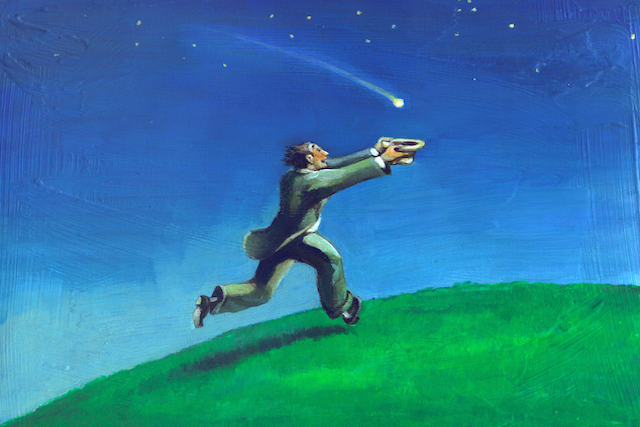
“Do what you have to do until you can do what you want to do.” ~Oprah Winfrey
I needed a bit of extra cash last month, so I took on a temporary events role working at a local design exhibition.
I’ve worked in events before, so I didn’t think much about it.
I just knew that I needed some money, I liked doing events, and a short contract had presented itself.
It seemed perfect!
So off I went to my first shift, feeling pretty good about myself and about life.
The first event was at a studio in a deserted industrial park. Even at 5:30pm, when it was still light, I felt uncomfortable walking the ten minutes from the bus stop.
When I got there, I quickly realized that the role wasn’t going to be as fun as I thought it would be: standing shivering outside in the cold, wearing an exhibition t-shirt, registering attendees, most of whom weren’t on the guest list but were expecting to be on the list.
So they got shirty.
And the line up grew longer.
So they got even more shirty.
Continue reading
“Do what you have to do until you can do what you want to do.” ~Oprah Winfrey
I needed a bit of extra cash last month, so I took on a temporary events role working at a local design exhibition.
I’ve worked in events before, so I didn’t think much about it.
I just knew that I needed some money, I liked doing events, and a short contract had presented itself.
It seemed perfect!
So off I went to my first shift, feeling pretty good about myself and about life.
The first event was at a studio in a deserted industrial park. Even at 5:30pm, when it was still light, I felt uncomfortable walking the ten minutes from the bus stop.
When I got there, I quickly realized that the role wasn’t going to be as fun as I thought it would be: standing shivering outside in the cold, wearing an exhibition t-shirt, registering attendees, most of whom weren’t on the guest list but were expecting to be on the list.
So they got shirty.
And the line up grew longer.
So they got even more shirty.
Continue reading
Wednesday, 29 November 2017
Why we don't all need to be happy
a post by Amanda Beth Peery for 3 Quarks Daily

Everyone wants to be happy.
The key to life is happiness.
Do what makes you happy.
This message is everywhere, the great happiness cliché, plastered across blogs, books, and billboards.
Happiness has become the universal currency of life: we know we’ve done well if we end up with a lot of it. But why are we so convinced that happiness should be our goal? Aren’t there other things to live for?
“Happiness” is used as a vague catch-all, standing in for any type of fulfillment and any “positive emotion”. It’s associated with satisfaction of desires and even a mild anti-consumerism (“money can't buy happiness”). Although happiness might seem like something everyone should want, it’s actually a very particular value, and it shouldn't be everyone’s ultimate goal.
Continue reading
Are you happy? Right now, this minute? I thought not.
Do you have a goal of being happy? Possibly. Probably.
Perhaps now is the time to reassess your goals because in my mind goals should be SMART (Specific, Measurable, Achievable, Realistic, Time-based) and believe me happiness does not meet those criteria.
Everyone wants to be happy.
The key to life is happiness.
Do what makes you happy.
This message is everywhere, the great happiness cliché, plastered across blogs, books, and billboards.
Happiness has become the universal currency of life: we know we’ve done well if we end up with a lot of it. But why are we so convinced that happiness should be our goal? Aren’t there other things to live for?
“Happiness” is used as a vague catch-all, standing in for any type of fulfillment and any “positive emotion”. It’s associated with satisfaction of desires and even a mild anti-consumerism (“money can't buy happiness”). Although happiness might seem like something everyone should want, it’s actually a very particular value, and it shouldn't be everyone’s ultimate goal.
Continue reading
Are you happy? Right now, this minute? I thought not.
Do you have a goal of being happy? Possibly. Probably.
Perhaps now is the time to reassess your goals because in my mind goals should be SMART (Specific, Measurable, Achievable, Realistic, Time-based) and believe me happiness does not meet those criteria.
Saturday, 28 October 2017
Living a Valued Life: 5 Steps to Clarify Your Values
a post for the World of Psychology blog by Julie K. Jones
Your life is important. We all have moments of doubt and fear that can make us feel small, inferior and unworthy. These thoughts do not control us and they have no power over us. We can choose to live a valued and purposeful life that has meaning and invigorates our spirit. Here are some steps that you can take right now to live in accordance with your values, goals and dreams.
Continue reading
Your life is important. We all have moments of doubt and fear that can make us feel small, inferior and unworthy. These thoughts do not control us and they have no power over us. We can choose to live a valued and purposeful life that has meaning and invigorates our spirit. Here are some steps that you can take right now to live in accordance with your values, goals and dreams.
Continue reading
Subscribe to:
Posts (Atom)

