an article by Michelle Peterie and Greg Marston (University of Queensland, Australia), Gaby Ramia (University of Sydney, Australia) and Roger Patulny (University of Wollongong, Australia) published in Work, Employment and Society Volume 33 Issue 5 (October 2019)
Abstract
Contemporary governments employ a range of policy tools to ‘activate’ the unemployed to look for work.
Framing unemployment as a consequence of personal shortcoming, these policies incentivise the unemployed to become ‘productive’ members of society. While Foucault’s governmentality framework has been used to foreground the operation of power within these policies, ‘job-seeker’ resistance has received less attention. In particular, forms of emotional resistance have rarely been studied.
Drawing on in-depth interviews with 80 unemployed welfare recipients in Australia, this article shows that many unemployed people internalise activation’s discourses of personal failure, experiencing shame and worthlessness as a result.
It also reveals, however, that a significant minority reject this framing and the ‘feeling rules’ it implies, expressing not shame but anger regarding their circumstances. Bringing together insights from resistance studies and the sociology of emotions, this article argues that ‘job-seeker’ anger should be recognised as an important form of ‘everyday resistance’.
Showing posts with label anger. Show all posts
Showing posts with label anger. Show all posts
Saturday, 12 October 2019


Wednesday, 2 October 2019
4 Fears That Create People-Pleasers and How to Ease Them
a post by KJ Hutchings for the Tiny Buddha blog

“It feels good to be accepted, loved, and approved of by others, but often the membership fee to belong to that club is far too high of a price to pay.” ~Dennis Merritt Jones
Like a lot of people, I grew up putting others’ needs and wants first. I learned early that doing things for other people and accommodating their wishes gained me attention and approval. It was only in those moments that I felt good enough and deserving of love.
As a child, I liked nothing more than feeling indispensable and being told I was a good and nice girl. This praise was incredibly important to me, as was making others happy. My own happiness did not come into the equation; I was happy because they were happy. I felt loved, safe, and appreciated, in the short term at least.
As I got older my people-pleasing went into overdrive. I continually tried to gain people’s approval, make them happy, and help them whenever needed.
Continue reading
“It feels good to be accepted, loved, and approved of by others, but often the membership fee to belong to that club is far too high of a price to pay.” ~Dennis Merritt Jones
Like a lot of people, I grew up putting others’ needs and wants first. I learned early that doing things for other people and accommodating their wishes gained me attention and approval. It was only in those moments that I felt good enough and deserving of love.
As a child, I liked nothing more than feeling indispensable and being told I was a good and nice girl. This praise was incredibly important to me, as was making others happy. My own happiness did not come into the equation; I was happy because they were happy. I felt loved, safe, and appreciated, in the short term at least.
As I got older my people-pleasing went into overdrive. I continually tried to gain people’s approval, make them happy, and help them whenever needed.
Continue reading
Wednesday, 25 September 2019
Why Anger Matters and What to Do About It
a post by Rev. Connie L. Habash for the Awakening Your True Self blog [via World of Psychology]

Anger gets a bad rap in the therapy – and spirituality – community. It’s labeled a “negative” emotion, and for good reason. When anger runs us and we react to it, it can blow like a volcano and make quite a mess of our relationships.
But the truth is that anger isn’t inherently a bad emotion. In fact, anger, like all emotions, has a purpose and is a necessary part of being a human. Anger matters, and you can learn to work with it in a helpful way.
In a three-minute read the Reverend Connie manages to cover
Continue reading
Anger gets a bad rap in the therapy – and spirituality – community. It’s labeled a “negative” emotion, and for good reason. When anger runs us and we react to it, it can blow like a volcano and make quite a mess of our relationships.
But the truth is that anger isn’t inherently a bad emotion. In fact, anger, like all emotions, has a purpose and is a necessary part of being a human. Anger matters, and you can learn to work with it in a helpful way.
In a three-minute read the Reverend Connie manages to cover
- Why is Anger Important?
- The Problem with Anger
- The First Essential: Presence
- The Inquiry
- A Quick Pause to Help You Through It
Continue reading
Thursday, 13 June 2019
How to Recognize Painful Emotional Triggers and Stop Reacting in Anger
a post by Erin Grace for the Tiny Buddha blog

There I was again, regretting the spiteful words that had cascaded out of my mouth during a heated argument with my partner.
I felt that old familiar feeling, the burning in my solar plexus that bubbled up and erupted like a volcano, spilling out expressions of anger, blame, and criticism.
It had been a rocky few months, my partner was struggling to find consistent work, and our credit card debt was on the rise. Suddenly anger kicked in and I lashed out, accusing him of slacking off and guilting him about me being the only one working.
As the words spilled from my mouth, I knew deep down that what I was saying was hurtful and untrue. I could see that my partner was trying his best , but my anger had taken over, causing suffering that I would later regret.
This was a familiar pattern for me. I’ve frequently reacted emotionally, without understanding why, and caused suffering to myself and my partner and chaos in our relationship. I spent the next few days beating myself up about my reaction and wondering, why do I never seem to learn?
Continue reading
“Where there is anger, there is always pain underneath.” ~ Eckhart Tolle
There I was again, regretting the spiteful words that had cascaded out of my mouth during a heated argument with my partner.
I felt that old familiar feeling, the burning in my solar plexus that bubbled up and erupted like a volcano, spilling out expressions of anger, blame, and criticism.
It had been a rocky few months, my partner was struggling to find consistent work, and our credit card debt was on the rise. Suddenly anger kicked in and I lashed out, accusing him of slacking off and guilting him about me being the only one working.
As the words spilled from my mouth, I knew deep down that what I was saying was hurtful and untrue. I could see that my partner was trying his best , but my anger had taken over, causing suffering that I would later regret.
This was a familiar pattern for me. I’ve frequently reacted emotionally, without understanding why, and caused suffering to myself and my partner and chaos in our relationship. I spent the next few days beating myself up about my reaction and wondering, why do I never seem to learn?
Continue reading
Tuesday, 4 June 2019
5 Victim-Shaming Myths That Harm Abuse and Trauma Survivors and Encourage Spiritual Bypassing
a post by Shahida Arabi for the "Recovering from a Narcissist2 blog [via World of Psychology]

As an author and researcher who has communicated with thousands of trauma and abuse survivors, I’ve become all too familiar with the victim-shaming myths which cause retraumatization in those who have suffered the unimaginable. These myths are often normalized as everyday platitudes that, even when said in well-meaning ways, can pose unnecessary harm to survivors and their healing journeys.nger,
Research has shown the powerful detrimental effects of victim-blaming and victim-shaming statements. Studies have confirmed that when victims encounter negative reactions from professionals, family members, and friends, this destructively affects the willingness of victims to come forward to disclose their pain and only leads to further self-blame and uncertainty about their experiences (Williams, 1984; Ahrens, 2006). This is a harmful form of secondary gaslighting and victimization which needs to be reexamined and dismantled.
Below are some common victim-blaming and victim-shaming myths which need to be exposed, reevaluated and reframed to help, rather than hurt survivors of abuse and trauma.
Continue reading
As an author and researcher who has communicated with thousands of trauma and abuse survivors, I’ve become all too familiar with the victim-shaming myths which cause retraumatization in those who have suffered the unimaginable. These myths are often normalized as everyday platitudes that, even when said in well-meaning ways, can pose unnecessary harm to survivors and their healing journeys.nger,
Research has shown the powerful detrimental effects of victim-blaming and victim-shaming statements. Studies have confirmed that when victims encounter negative reactions from professionals, family members, and friends, this destructively affects the willingness of victims to come forward to disclose their pain and only leads to further self-blame and uncertainty about their experiences (Williams, 1984; Ahrens, 2006). This is a harmful form of secondary gaslighting and victimization which needs to be reexamined and dismantled.
Below are some common victim-blaming and victim-shaming myths which need to be exposed, reevaluated and reframed to help, rather than hurt survivors of abuse and trauma.
Continue reading
Tuesday, 16 April 2019
What makes arrogant people so angry?
a post by Alessandra Tanesini for the OUP blog

Arrogant people are often intolerant of questioning or criticism. They respond to genuine and even polite challenges with anger. They are bullies that attempt to humiliate and intimidate those who do not agree with, or explicitly defer to, their opinions. The arrogant feel superior to other people and arrogate for themselves special privileges. This sense of entitlement and desire to keep others’ down explains the anger, intolerance of criticism, and the bullying behaviour that is characteristic of those who are arrogant.
Ordinarily, when speakers put forward in conversation a claim as true they acquire responsibilities to their audience, and are entitled to expect respectful treatment in return. Speakers owe to their audiences that they are sincere, that they have good reasons to believe that what they are saying is true, and that they are prepared to defend their views against legitimate challenges. The arrogant behave as if no challenges to their views were ever legitimate. That is, they behave as if their claims had the special authoritativeness of verdicts.
Continue reading
“Light Photo” by Jussara Romão. CC0 via Unsplash
Arrogant people are often intolerant of questioning or criticism. They respond to genuine and even polite challenges with anger. They are bullies that attempt to humiliate and intimidate those who do not agree with, or explicitly defer to, their opinions. The arrogant feel superior to other people and arrogate for themselves special privileges. This sense of entitlement and desire to keep others’ down explains the anger, intolerance of criticism, and the bullying behaviour that is characteristic of those who are arrogant.
Ordinarily, when speakers put forward in conversation a claim as true they acquire responsibilities to their audience, and are entitled to expect respectful treatment in return. Speakers owe to their audiences that they are sincere, that they have good reasons to believe that what they are saying is true, and that they are prepared to defend their views against legitimate challenges. The arrogant behave as if no challenges to their views were ever legitimate. That is, they behave as if their claims had the special authoritativeness of verdicts.
Continue reading
Tuesday, 22 January 2019
How Going Offline for 10 Days Healed My Anxiety
a post by Suzanne Falter for the Tiny Buddha blog
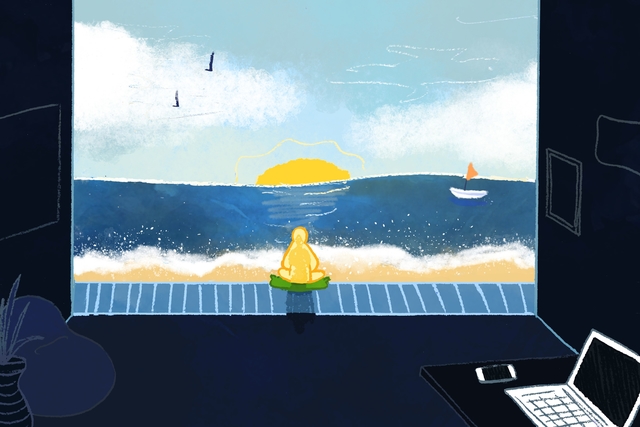
Illustration by Kaitlin Roth
“Almost everything will work again if you unplug it for a while, including you.” ~Anne Lamott
I wake up anxious a little past 4am. My heart is beating faster than usual, and I’m aware of an unsettled feeling, like life-crushing doom is imminent. For a moment, I wonder if I just felt the first waves of a massive earthquake. Or perhaps those were gunshots I just heard in the distance.
But no, it’s just another night in my bedroom in the Bay Area, and everything is utterly fine. But somehow, my central nervous system isn’t so sure.
The problem is the thick swirl of news media, social media, and talk among friends I carry with me every day. It’s a toxic milkshake of speculation, fear, and anger that I consume, and it has me deeply rattled. I absorb this stuff like crazy.
I suspect I’m not alone.
Continue reading
Illustration by Kaitlin Roth
“Almost everything will work again if you unplug it for a while, including you.” ~Anne Lamott
I wake up anxious a little past 4am. My heart is beating faster than usual, and I’m aware of an unsettled feeling, like life-crushing doom is imminent. For a moment, I wonder if I just felt the first waves of a massive earthquake. Or perhaps those were gunshots I just heard in the distance.
But no, it’s just another night in my bedroom in the Bay Area, and everything is utterly fine. But somehow, my central nervous system isn’t so sure.
The problem is the thick swirl of news media, social media, and talk among friends I carry with me every day. It’s a toxic milkshake of speculation, fear, and anger that I consume, and it has me deeply rattled. I absorb this stuff like crazy.
I suspect I’m not alone.
Continue reading
Tuesday, 2 October 2018
Why Social Media and My Addictive Personality Don't Mesh
a post by Anonymous for the Tiny Buddha blog

Twitter didn’t give me the flu or bronchitis, but it made me sick. Unhealthy. Ill-feeling. And it could have been any social media platform that did it, I just happened to have chosen Twitter.
For years I avoided creating any sort of social media account. I complained to companies the old-fashioned way: calling or emailing customer service. I didn’t need to know what people I wasn’t in touch with in real life were doing.
As someone who was married and not dating, there simply wasn’t the requirement to be on any kind of social media. With two kids, I spent my (little) free time watching TV or texting with a few friends. I would proudly state, “I don’t even have Facebook” when people discussed it.
Then in January 2018, I decided to open a Twitter account, mostly to rant about things, as I had done a few years prior on a blog. Not big-issue political rants or anything, more “Why isn’t the first car on an advanced green turning?? YOU HAVE A RESPONSIBILITY, MAN” type stuff.
I had conveniently blocked from memory the reason I had stopped blogging about all my anger-inducing experiences: I had felt like it was poisoning me. To always be posting something negative, it builds over time. As much as I liked expressing my anger, I didn’t like the feeling it created.
Continue reading
Twitter didn’t give me the flu or bronchitis, but it made me sick. Unhealthy. Ill-feeling. And it could have been any social media platform that did it, I just happened to have chosen Twitter.
For years I avoided creating any sort of social media account. I complained to companies the old-fashioned way: calling or emailing customer service. I didn’t need to know what people I wasn’t in touch with in real life were doing.
As someone who was married and not dating, there simply wasn’t the requirement to be on any kind of social media. With two kids, I spent my (little) free time watching TV or texting with a few friends. I would proudly state, “I don’t even have Facebook” when people discussed it.
Then in January 2018, I decided to open a Twitter account, mostly to rant about things, as I had done a few years prior on a blog. Not big-issue political rants or anything, more “Why isn’t the first car on an advanced green turning?? YOU HAVE A RESPONSIBILITY, MAN” type stuff.
I had conveniently blocked from memory the reason I had stopped blogging about all my anger-inducing experiences: I had felt like it was poisoning me. To always be posting something negative, it builds over time. As much as I liked expressing my anger, I didn’t like the feeling it created.
Continue reading
Tuesday, 25 September 2018
Why Your Brain Can't Let Go of a Grudge
a post by George Dvorsky published by GIZMODO [via the World of Psychology blog]
We humans are masters of resentment—a characteristic that can be traced back the beginnings of recorded history. Feuds seem to be an indelible aspect of the human condition, but why should this be? We spoke to the experts to find out why we love to hold a grudge, and the importance of letting go.
Like other emotions, the capacity for hate and resentment are learned and reinforced over the course of our lives—but they’re also etched in the wiring of our DNA. When we boil feelings of resentment and the desire for revenge down to the most basic level, they’re really about an evolved mental state that’s driving us to achieve some sort of goal. Ultimately, feuds are rooted in desire, and the seeking of a particular outcome.
Continue reading
We humans are masters of resentment—a characteristic that can be traced back the beginnings of recorded history. Feuds seem to be an indelible aspect of the human condition, but why should this be? We spoke to the experts to find out why we love to hold a grudge, and the importance of letting go.
Like other emotions, the capacity for hate and resentment are learned and reinforced over the course of our lives—but they’re also etched in the wiring of our DNA. When we boil feelings of resentment and the desire for revenge down to the most basic level, they’re really about an evolved mental state that’s driving us to achieve some sort of goal. Ultimately, feuds are rooted in desire, and the seeking of a particular outcome.
Continue reading
Monday, 30 April 2018
Change is an emotional state of mind: Behavioral responses to online petitions
an article by Abby Koenig and Bryan McLaughlin (Texas Tech University, USA) published in New Media & Society Volume 20 Issue 4 (April 2018)
Abstract
Scholars are increasingly concerned about the rising level of negativity in social media sites. This negativity has found its way into sites that are supposedly intended for prosocial civic engagement.
To examine how hostility impacts behavior in a user-generated, prosocial context, an experimental study was conducted using an online petition modeled after those posted to the website Change.org.
This study examines whether negativity causes a contagion effect leading to more negativity and the different types of negativity that may occur. Results suggest that when users read negative-toned petitions, a contagion effect increases both anger and anxiety.
However, our findings are not consistent with previous literature that argues anger leads to increased proactive behavior. Instead, we find that while anxiety leads to an increase in petition-related action, anger does not.
These findings have important theoretical and practical implications for scholars and those looking to participate in social justice via online platforms.
Full text (PDF 18pp)
Abstract
Scholars are increasingly concerned about the rising level of negativity in social media sites. This negativity has found its way into sites that are supposedly intended for prosocial civic engagement.
To examine how hostility impacts behavior in a user-generated, prosocial context, an experimental study was conducted using an online petition modeled after those posted to the website Change.org.
This study examines whether negativity causes a contagion effect leading to more negativity and the different types of negativity that may occur. Results suggest that when users read negative-toned petitions, a contagion effect increases both anger and anxiety.
However, our findings are not consistent with previous literature that argues anger leads to increased proactive behavior. Instead, we find that while anxiety leads to an increase in petition-related action, anger does not.
These findings have important theoretical and practical implications for scholars and those looking to participate in social justice via online platforms.
Full text (PDF 18pp)
Tuesday, 24 April 2018
Easing a Broken Heart: 5 Ways to Reframe Rejection
a post by Marissa Walter for the Tiny Buddha blog
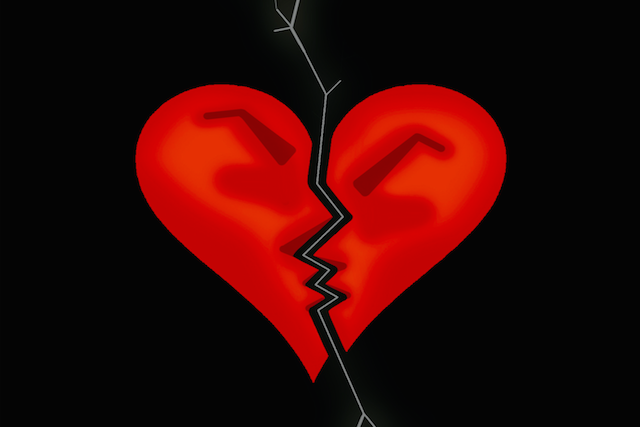
“When the wrong people leave your life, the right things start to happen.” ~Zig Ziglar
The end of a relationship triggers many grief emotions, but when a couple breaks up because one person decides that it’s over, there is a very distinct pain: the sting of rejection. It doesn’t matter whether things had been difficult for some time or if the split came out of the blue; either way, rejection feels cruel.
At the end of my marriage eight years ago, I had no idea that the breakup was coming. On top of the shock that the relationship was suddenly over, I carried the intense and overwhelming feeling of rejection; I was no longer valued, wanted, or needed.
Rejection can trigger feelings of shame, low self-esteem. and diminished confidence as well as helplessness and victimization. If you are left for another person (which was my experience) the intensity of rejection increases further. I experienced anger and resentment about betrayal; this makes healing feel much harder than in those cases where a decision to split is mutual.
When I began move through my initial grief, I found that the biggest shift in moving forward came through changing how I viewed rejection. I realized that by identifying with the feeling of rejection I was telling myself that something was wrong with me; that the marriage was over because I hadn’t come up to scratch and, therefore, needed to be let go.
Continue reading
“When the wrong people leave your life, the right things start to happen.” ~Zig Ziglar
The end of a relationship triggers many grief emotions, but when a couple breaks up because one person decides that it’s over, there is a very distinct pain: the sting of rejection. It doesn’t matter whether things had been difficult for some time or if the split came out of the blue; either way, rejection feels cruel.
At the end of my marriage eight years ago, I had no idea that the breakup was coming. On top of the shock that the relationship was suddenly over, I carried the intense and overwhelming feeling of rejection; I was no longer valued, wanted, or needed.
Rejection can trigger feelings of shame, low self-esteem. and diminished confidence as well as helplessness and victimization. If you are left for another person (which was my experience) the intensity of rejection increases further. I experienced anger and resentment about betrayal; this makes healing feel much harder than in those cases where a decision to split is mutual.
When I began move through my initial grief, I found that the biggest shift in moving forward came through changing how I viewed rejection. I realized that by identifying with the feeling of rejection I was telling myself that something was wrong with me; that the marriage was over because I hadn’t come up to scratch and, therefore, needed to be let go.
Continue reading
Tuesday, 13 March 2018
How to Cope with Anger and Pain
a post by Suzanne Kane for the World of Psychology blog

“Where there is anger, there is always pain underneath.” – Eckhart Tolle
Most of us have experienced our fair share of anger and pain, some more so than others.
But did you ever stop to think what’s underneath all that anger? What is the root cause?
In many cases, it might be difficult to discern or pinpoint the origin of the emotion or identify the exact cause. All you know is that you feel like exploding, things are just not going right, and you can’t seem to get past it.
Sometimes that means you lash out verbally or behave in unhealthy ways, such as drinking too much, compulsive overeating, engaging in promiscuous or risky sexual behavior. At the extreme, you might even cause harm to yourself or others, emotionally and perhaps even physically.
Before your anger gets totally out of hand, however, a little self-reflection and some healthy coping measures may save the day.
Continue reading
“Where there is anger, there is always pain underneath.” – Eckhart Tolle
Most of us have experienced our fair share of anger and pain, some more so than others.
But did you ever stop to think what’s underneath all that anger? What is the root cause?
In many cases, it might be difficult to discern or pinpoint the origin of the emotion or identify the exact cause. All you know is that you feel like exploding, things are just not going right, and you can’t seem to get past it.
Sometimes that means you lash out verbally or behave in unhealthy ways, such as drinking too much, compulsive overeating, engaging in promiscuous or risky sexual behavior. At the extreme, you might even cause harm to yourself or others, emotionally and perhaps even physically.
Before your anger gets totally out of hand, however, a little self-reflection and some healthy coping measures may save the day.
Continue reading
Sunday, 18 February 2018
7 Tips to Control Anger
a post for Adventures in Mind, Body & Soul with April Wright [via World of Psychology]

Anger can range from mild irritation to out-of-control rage.
When anger is managed well, it can provide a healthy release, a motivator for change, or a self-empowering strategy. Anger also is a protectant from underlying feelings of pain, fear, guilt, or shame. It is a normal human response, an indicator of hurt, and promoter of transformation.
When anger reaches an elevated state, the pre-frontal cortex, the thinking part of the brain is hijacked by the amygdala, the emotional, instinctual part of the brain that induces the fight-flight-freeze response. New information can no longer be received and defenses rise, demands persist, criticism overtakes, or vented venom leads to violence. It is at times when anger reaches an uncontrolled state of mind that a deliberate plan of action must take place.
Continue reading
Anger can range from mild irritation to out-of-control rage.
When anger is managed well, it can provide a healthy release, a motivator for change, or a self-empowering strategy. Anger also is a protectant from underlying feelings of pain, fear, guilt, or shame. It is a normal human response, an indicator of hurt, and promoter of transformation.
When anger reaches an elevated state, the pre-frontal cortex, the thinking part of the brain is hijacked by the amygdala, the emotional, instinctual part of the brain that induces the fight-flight-freeze response. New information can no longer be received and defenses rise, demands persist, criticism overtakes, or vented venom leads to violence. It is at times when anger reaches an uncontrolled state of mind that a deliberate plan of action must take place.
Continue reading
Saturday, 17 February 2018
What Is Revenge Porn?
a post by Kurt Smith for the World of Psychology blog
Break-ups can be difficult and often quite painful. But imagine that the person you loved and trusted for the duration of your relationship decided to take revenge on you for breaking it off. What does that look like? Well, there are a variety of ways that a scorned lover might express their resentment, but in today’s era of cyber-everything, revenge porn is becoming a tool of choice for many in their quest for vengeance.
Revenge porn has been defined by the government as “the sharing of private, sexual materials, either photos or videos, of another person without their consent and with the purpose of causing embarrassment or distress.” Often there will be additional personal information included with the images or videos that are published. This combination can leave a person feeling vulnerable and could possibly put them in danger. At minimum, it is psychologically damaging to the victim.
Continue reading
Break-ups can be difficult and often quite painful. But imagine that the person you loved and trusted for the duration of your relationship decided to take revenge on you for breaking it off. What does that look like? Well, there are a variety of ways that a scorned lover might express their resentment, but in today’s era of cyber-everything, revenge porn is becoming a tool of choice for many in their quest for vengeance.
Revenge porn has been defined by the government as “the sharing of private, sexual materials, either photos or videos, of another person without their consent and with the purpose of causing embarrassment or distress.” Often there will be additional personal information included with the images or videos that are published. This combination can leave a person feeling vulnerable and could possibly put them in danger. At minimum, it is psychologically damaging to the victim.
Continue reading
Saturday, 30 December 2017
Why Anger Isn't “Bad” and How I Learned to Hear Its Hidden Message
a post by Meredith Walters for the Tiny Buddha blog

“Bitterness is like cancer. It eats upon the host. But anger is like fire. It burns it all clean.”
~Maya Angelou
I’ve always had a complex relationship with anger.
When I was young, I used to think I was somehow above anger. I would brag to people that I never got mad. Sure, I’d admit, I hated some people, but at least I wasn’t angry.
When I began therapy in my mid-twenties to deal with persistent depression and panic attacks, I started to see the feebleness of that particular story. I did get angry, it turned out, quite frequently, and I found that things went much better when I allowed myself to feel it.
I began to learn that my anger often contained useful information about me and what I wanted.
It alerted me to the fact that one of my boundaries had been crossed, or that there was something I wanted to speak up about. It let me know when I felt hurt. I saw how my closest relationships could allow for anger without falling apart, and I began to accept it as a normal part of the human condition, perhaps even a helpful one.
Continue reading
“Bitterness is like cancer. It eats upon the host. But anger is like fire. It burns it all clean.”
~Maya Angelou
I’ve always had a complex relationship with anger.
When I was young, I used to think I was somehow above anger. I would brag to people that I never got mad. Sure, I’d admit, I hated some people, but at least I wasn’t angry.
When I began therapy in my mid-twenties to deal with persistent depression and panic attacks, I started to see the feebleness of that particular story. I did get angry, it turned out, quite frequently, and I found that things went much better when I allowed myself to feel it.
I began to learn that my anger often contained useful information about me and what I wanted.
It alerted me to the fact that one of my boundaries had been crossed, or that there was something I wanted to speak up about. It let me know when I felt hurt. I saw how my closest relationships could allow for anger without falling apart, and I began to accept it as a normal part of the human condition, perhaps even a helpful one.
Continue reading
Wednesday, 27 December 2017
Glenn Close: ‘You lose power if you get angry’
From vengeful mistress to Agatha Christie matriarch: the actor talks about Harvey Weinstein, mental illness and growing up in a cult
by Lotte Jeffs for the Guardian
Glenn Close and I sit at the corner of a large boardroom table in an intimidatingly minimalist office on the 14th floor of a Los Angeles talent agency. It’s the kind of environment in which Patty Hewes, the ruthless lawyer Close played in Damages for five seasons, would feel at home and I’m almost waiting for her to stand up, slam both hands on the table and shout, “I’ll rip your face off” or any of the other terrifying put-downs that defined her double Emmy award-winning performance.
But Close is in high spirits and radiates such warmth I barely notice the chill from the tower block’s air-con. After we fiddle with the settings on our swivel chairs, which are so high they make anyone under six foot kick their legs like a child on a swing, the 70-year-old, six-time Oscar nominee and star of stage, television and film starts telling me about her dreams. “I have had a lot recently, full of this wonderful love for a younger man. The dreams just keep coming and I wake up thinking, that was wonderful! It wasn’t necessarily us doing the sexual act, just the feeling of love.”
Continue reading as you find out about the history of mental illness in her family. Another high-profile person opening up on the issue.
by Lotte Jeffs for the Guardian
Glenn Close and I sit at the corner of a large boardroom table in an intimidatingly minimalist office on the 14th floor of a Los Angeles talent agency. It’s the kind of environment in which Patty Hewes, the ruthless lawyer Close played in Damages for five seasons, would feel at home and I’m almost waiting for her to stand up, slam both hands on the table and shout, “I’ll rip your face off” or any of the other terrifying put-downs that defined her double Emmy award-winning performance.
But Close is in high spirits and radiates such warmth I barely notice the chill from the tower block’s air-con. After we fiddle with the settings on our swivel chairs, which are so high they make anyone under six foot kick their legs like a child on a swing, the 70-year-old, six-time Oscar nominee and star of stage, television and film starts telling me about her dreams. “I have had a lot recently, full of this wonderful love for a younger man. The dreams just keep coming and I wake up thinking, that was wonderful! It wasn’t necessarily us doing the sexual act, just the feeling of love.”
Continue reading as you find out about the history of mental illness in her family. Another high-profile person opening up on the issue.
Thursday, 26 October 2017
Breaking the Chains of Victimhood When You’ve Been Abused
a post by Paul Hellwig for the Tiny Buddha blog

“Toxically shamed people tend to become more and more stagnant as life goes on. They live in a guarded, secretive, and defensive way. They try to be more than human (perfect and controlling) or less than human (losing interest in life or stagnated in some addictive behavior).” ~John Bradshaw-Healing the Shame That Binds You
Do you feel like a victim? Are those around you suggesting that you are acting like a victim? Are these same people telling you to get over it and move on? Do these judgments and statements feel harmful or helpful for you?
Most people making these harmful statements and suggestions do so with very little understanding or experience with being a victim. They have not taken the time to really listen to your story of what has happened in your life. They make their judgments from the place of never being a victim or not being willing to accept that they were.
People with a history of victimization do not need tough love, harsh words, or anyone’s reality check. Those things are most likely part of what happened to them. They need love, support, empathy, and compassion. If you are unable to give these things to them, the best thing you can do for them is to please stay out of it!
Continue reading
“Toxically shamed people tend to become more and more stagnant as life goes on. They live in a guarded, secretive, and defensive way. They try to be more than human (perfect and controlling) or less than human (losing interest in life or stagnated in some addictive behavior).” ~John Bradshaw-Healing the Shame That Binds You
Do you feel like a victim? Are those around you suggesting that you are acting like a victim? Are these same people telling you to get over it and move on? Do these judgments and statements feel harmful or helpful for you?
Most people making these harmful statements and suggestions do so with very little understanding or experience with being a victim. They have not taken the time to really listen to your story of what has happened in your life. They make their judgments from the place of never being a victim or not being willing to accept that they were.
People with a history of victimization do not need tough love, harsh words, or anyone’s reality check. Those things are most likely part of what happened to them. They need love, support, empathy, and compassion. If you are unable to give these things to them, the best thing you can do for them is to please stay out of it!
Continue reading
Friday, 10 April 2015
Negative emotions in informal feedback: The benefits of disappointment and drawbacks of anger
an article by Genevieve Johnson and Shane Connelly (University of Oklahoma, USA) published in Human Relations Volume 67 Number 10 (October 2014)
Abstract
Using the emotions as social information (EASI) model, this study investigated the emotional, attitudinal and behavioral reactions to failure feedback by manipulating negative emotional displays (angry, disappointed or none) and the position level and relational distance of the feedback source.
Undergraduate students (N = 260) responded to an organizational failure feedback vignette and completed a subsequent performance task.
Results demonstrated that guilt was the complementary emotional experience following displays of disappointment, while reciprocal anger followed displays of anger.
These emotional reactions served as important mediators between the emotional displays paired with the feedback message and participant responses of social behaviors, creative task performance and perceptions of the feedback source.
In addition, our findings indicated that negative emotions can have positive organizational and interpersonal outcomes. Guilt in response to disappointed displays resulted in beneficial behaviors and attitudes, while anger in response to angry displays was socially detrimental. The emotion displayed during feedback provision also served as a consistent contextual factor that did not interact with the position level or relational distance of the feedback source to impact behavioral and attitudinal reactions.
Overall, this study indicates that discrete negative emotions have unique social-functional properties that require further investigation.
Abstract
Using the emotions as social information (EASI) model, this study investigated the emotional, attitudinal and behavioral reactions to failure feedback by manipulating negative emotional displays (angry, disappointed or none) and the position level and relational distance of the feedback source.
Undergraduate students (N = 260) responded to an organizational failure feedback vignette and completed a subsequent performance task.
Results demonstrated that guilt was the complementary emotional experience following displays of disappointment, while reciprocal anger followed displays of anger.
These emotional reactions served as important mediators between the emotional displays paired with the feedback message and participant responses of social behaviors, creative task performance and perceptions of the feedback source.
In addition, our findings indicated that negative emotions can have positive organizational and interpersonal outcomes. Guilt in response to disappointed displays resulted in beneficial behaviors and attitudes, while anger in response to angry displays was socially detrimental. The emotion displayed during feedback provision also served as a consistent contextual factor that did not interact with the position level or relational distance of the feedback source to impact behavioral and attitudinal reactions.
Overall, this study indicates that discrete negative emotions have unique social-functional properties that require further investigation.
Sunday, 8 February 2015
Understanding the positive and negative effects of emotional expressions in organizations: EASI does it
an article by Gerben A van Kleef (University of Amsterdam, The Netherlands) published in Human Relations Volume 67 Number 9 (September 2014)
Abstract
Emotions have a pervasive impact on organisational behaviour. They do not just influence people’s own actions; when expressed, emotions may also exert influence on other organisation members who perceive the expressions. Sometimes emotional expressions have ‘symmetrical’ effects, in that positive expressions yield advantageous outcomes for the expresser, while negative expressions produce disadvantageous outcomes.
In other cases effects are ‘asymmetrical’, such that negative emotional expressions generate beneficial outcomes for the expresser, while positive expressions produce detrimental outcomes.
Drawing on Emotions as Social Information (EASI) theory, I develop a theoretical analysis of when and how expressions of anger and happiness generate symmetrical versus asymmetrical effects. I support my analysis with a review of empirical research on the interpersonal effects of anger and happiness in negotiations and leadership.
This review permits two general conclusions:
Abstract
Emotions have a pervasive impact on organisational behaviour. They do not just influence people’s own actions; when expressed, emotions may also exert influence on other organisation members who perceive the expressions. Sometimes emotional expressions have ‘symmetrical’ effects, in that positive expressions yield advantageous outcomes for the expresser, while negative expressions produce disadvantageous outcomes.
In other cases effects are ‘asymmetrical’, such that negative emotional expressions generate beneficial outcomes for the expresser, while positive expressions produce detrimental outcomes.
Drawing on Emotions as Social Information (EASI) theory, I develop a theoretical analysis of when and how expressions of anger and happiness generate symmetrical versus asymmetrical effects. I support my analysis with a review of empirical research on the interpersonal effects of anger and happiness in negotiations and leadership.
This review permits two general conclusions:
- symmetrical effects of anger and happiness are mediated by affective reactions of perceivers, whereas asymmetrical effects are mediated by inferential processes in perceivers;
- the relative strength of affective reactions versus inferential processes (and thereby the likelihood of symmetrical versus asymmetrical effects) depends on the perceiver’s information processing motivation and ability and on the perceived appropriateness of the emotional display.
Tuesday, 19 February 2013
Alleviating the Burden of Emotional Labor: The Role of Social Sharing
an article by A. Silke McCance (Procter & Gamble), Christopher D. Nye and Kisha S. Jones (University of Illinois at Urbana-Champaign), Lu Wang (University of New South Wales) and Chi-yue Chiu (Nanyang Technological University) published in Journal of Management Volume 39 Number 2 (February 2013)
Abstract
Difficult customer interactions cause service employees to experience negative emotions and to engage in emotional labour.
The present laboratory study examined whether social sharing (i.e. talking about an emotionally arousing work event with one’s coworkers) can attenuate the residual anger lingering after a taxing service episode.
Participants assumed the role of customer service representatives for a fictitious technical support hotline and encountered either neutral or difficult service interactions. After fielding three easy or three difficult calls, participants were given the opportunity to engage in social sharing by talking about (a) the facts that just transpired, (b) the feelings aroused by the encounters, or (c) the positive aspects of the experience, or they were asked to complete a filler task.
Results from quantitative data revealed that participants who engaged in difficult (vs. neutral) customer interactions reported more surface acting and felt more anger.
Engaging in social sharing was beneficial: All three types of social sharing were effective in reducing the anger aroused by handling demanding customers.
Findings from qualitative analyses suggested that different mechanisms might have contributed to the effectiveness of the three types of social sharing.
Future research directions and implications for practice are discussed.
Abstract
Difficult customer interactions cause service employees to experience negative emotions and to engage in emotional labour.
The present laboratory study examined whether social sharing (i.e. talking about an emotionally arousing work event with one’s coworkers) can attenuate the residual anger lingering after a taxing service episode.
Participants assumed the role of customer service representatives for a fictitious technical support hotline and encountered either neutral or difficult service interactions. After fielding three easy or three difficult calls, participants were given the opportunity to engage in social sharing by talking about (a) the facts that just transpired, (b) the feelings aroused by the encounters, or (c) the positive aspects of the experience, or they were asked to complete a filler task.
Results from quantitative data revealed that participants who engaged in difficult (vs. neutral) customer interactions reported more surface acting and felt more anger.
Engaging in social sharing was beneficial: All three types of social sharing were effective in reducing the anger aroused by handling demanding customers.
Findings from qualitative analyses suggested that different mechanisms might have contributed to the effectiveness of the three types of social sharing.
Future research directions and implications for practice are discussed.
Subscribe to:
Posts (Atom)

