Showing posts with label economy. Show all posts

Tuesday, 30 July 2019

What money cannot buy

Esprit 7-8/2019

Eurozine Review


Esprit's summer issue, edited by Camille Riquier, considers the idea that capitalism has replaced God with money. Because the thirst for wealth ignores the blood of the poor, the community of money is based on a breach of trust. Do new currencies make a difference? Can we make money visible again, and hence master it?

Continue reading


Thursday, 18 July 2019

The new left economics: how a network of thinkers is transforming capitalism

a long read by Andy Beckett published in the Guardian


 Illustration: Nathalie Lees/The Guardian

For almost half a century, something vital has been missing from leftwing politics in western countries. Since the 70s, the left has changed how many people think about prejudice, personal identity and freedom. It has exposed capitalism’s cruelties. It has sometimes won elections, and sometimes governed effectively afterwards. But it has not been able to change fundamentally how wealth and work function in society – or even provide a compelling vision of how that might be done. The left, in short, has not had an economic policy.

Instead, the right has had one. Privatisation, deregulation, lower taxes for business and the rich, more power for employers and shareholders, less power for workers – these interlocking policies have intensified capitalism, and made it ever more ubiquitous. There have been immense efforts to make capitalism appear inevitable; to depict any alternative as impossible.

In this increasingly hostile environment, the left’s economic approach has been reactive – resisting these huge changes, often in vain – and often backward-looking, even nostalgic. For many decades, the same two critical analysts of capitalism, Karl Marx and John Maynard Keynes, have continued to dominate the left’s economic imagination. Marx died in 1883, Keynes in 1946. The last time their ideas had a significant influence on western governments or voters was 40 years ago, during the turbulent final days of postwar social democracy. Ever since, rightwingers and centrists have caricatured anyone arguing that capitalism should be reined in – let alone reshaped or replaced – as wanting to take the world “back to the 70s”. Altering our economic system has been presented as a fantasy – no more practical than time travel.

Continue reading


Friday, 12 April 2019

What is kidnap insurance?

a post by Anja Shortland for the OUP blog


‘Coins Currency’ by Stevepb. Public domain via Pixabay

Millions of people live and work in areas where they cannot rely on the state to keep them safe. Instead, their security is provided by armed groups: for example, community or clan militias, warlords, rebel movements, drug cartels, or mafias – i.e. local strongmen that can defend their territory against intruders and keep order within it. But their deal with the population usually goes far beyond providing physical security. When armed groups protect property rights, facilitate trade, and offer fair dispute resolution, the local economy grows and with it the protectors’ tax base. As long as the interactions are long-term, the strongmen gain legitimacy and profit from developing a reputation for effective protection, good governance and non-punitive taxation.

Continue reading


Thursday, 28 March 2019

We’re working like it’s 1975, but the jobs boom isn’t all it seems. Here’s why

an article by Larry Elliott published in the Guardian

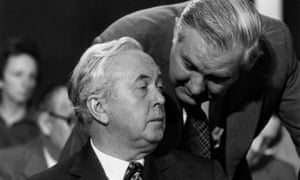
Harold Wilson with James Callaghan at the Labour party conference in Blackpool in 1975.
Harold Wilson with James Callaghan at the Labour party conference in Blackpool in 1975. Photograph: Frank Barratt/Getty Images

Britain’s recent jobs record has been remarkable. The economy is chugging along but the last time the unemployment rate was as low as it is today was in the winter of 1974-75. Harold Wilson was prime minister, Derby County were on course to win the old first division, David Bowie was about to release Young Americans.

Back then things were about to take a turn for the worse. Prices were rising fast, and later in 1975 inflation would hit a postwar peak of more than 25%. Unemployment also rose, leading to the coining of a new term – stagflation. In 1976, there was the mother and father of a sterling crisis that ended with spending cuts being imposed by the International Monetary Fund.

The 1970s are still seen as the fright decade, even though they are as distant in time for today’s young adults as the early 1930s were for those who came of age when Wilson became prime minister for a second time in 1974. A regular barb aimed at Jeremy Corbyn is that he wants to return Britain to the “dark days” of the 1970s.

In some ways, attempts to draw comparisons between now and the 1970s are ridiculous. The lights have not gone out. Industry has not been put on a three-day week. Ministers no longer live in fear of the National Union of Mineworkers. An unemployment rate of 3.9% sits alongside an inflation rate below 2%, not one heading for 20%-plus. Those were the days before mobile phones and social media. Bowie fans didn’t stream Young Americans; they bought it on vinyl.

Continue reading


Monday, 9 April 2018

The ghost in the legal machine: algorithmic governmentality, economy, and the practice of law

an article by Adam Harkens (Queen’s University Belfast, UK) published in Journal of Information, Communication and Ethics in Society Volume 16 Issue 1 (2018)

Abstract

Purpose
This paper aims to investigate algorithmic governmentality – as proposed by Antoinette Rouvroy – specifically in relation to law. It seeks to show how algorithmic profiling can be particularly attractive for those in legal practice, given restraints on time and resources. It deviates from Rouvroy in two ways. First, it argues that algorithmic governmentality does not contrast with neoliberal modes of government in that it allows indirect rule through economic calculations. Second, it argues that critique of such systems is possible, especially if the creative nature of law can be harnessed effectively.

Design/methodology/approach
This is a conceptual paper, with a theory-based approach, that is intended to explore relevant issues related to algorithmic governmentality as a basis for future empirical research. It builds on governmentality and socio-legal studies, as well as research on algorithmic practices and some documentary analysis of reports and public-facing marketing of relevant technologies.

Findings
This paper provides insights on how algorithmic knowledge is collected, constructed and applied in different situations. It provides examples of how algorithms are currently used and how trends are developing. It demonstrates how such uses can be informed by socio-political and economic rationalities.

Research limitations/implications
Further empirical research is required to test the theoretical findings.

Originality/value
This paper takes up Rouvroy’s question of whether we are at the end(s) of critique and seeks to identify where such critique can be made possible. It also highlights the importance of acknowledging the role of political rationalities in informing the activity of algorithmic assemblages.


Wednesday, 28 February 2018

How language duped us into austerity

an article by Zoe Williams published in the Guardian

The same misleading metaphors are used again and again to talk about economic policy. We need a new frame

The Cranhill estate in Glasgow.
The Cranhill estate in Glasgow. ‘If anything, the more hardship austerity caused, the more necessary it was for many to cling to the narrative.’
Photograph: Murdo MacLeod for the Guardian


What do people think the economy is? How do they think it works? How do you think it works, if you think it works at all? The New Economics Foundation, in its report, Framing the Economy, conducted 40 in-depth interviews in London, Newport, Glasgow, Wolverhampton and Hull, with the aim of finding points of common understanding. Though 40 is a relatively small number, the researchers were looking for images, metaphors, certainties and black holes that came up again and again, across regions and demographics.

From these tropes, they’ve been able to plot how, from 2010, the coalition government’s austerity agenda played so well into people’s hopes and fears; how the public attachment to it was so tenacious. How, even as the policy was failing to stimulate the economy in the way that had been promised, it was still seemingly resistant to counter-argument. Even once it was plainly, across the country, having devastating impacts on people’s lived experience (disabled people having their benefits removed and dying weeks later, the victims of the universal credit experiment evicted from their homes), the notion itself – that we all had to tighten our belts, and that was the responsible thing to do – was curiously buoyant.

Continue reading



Wednesday, 10 January 2018

Into Africa

a post by Adrien Couderc for the DEMOS blog

As the UK looks to enhance its reputation as a ‘global leader in free trade’ after Brexit, the International Trade Secretary, Liam Fox, has argued that Britain should look to strike free trade deals with emerging countries. So far, much of the focus has been on deepening trade relationships with India and China – but Africa too has been cited as a potential trade opportunity for Britain. Yet the lazy assumption that emerging countries will automatically queue up for trade partnerships with Britain could exasperate post-colonial tensions. To move beyond this, the government will need to rethink its whole approach to international trade and explore free trade agreements that can balance liberalisation alongside social protection. And in Africa, this will mean establishing a pathway towards reciprocity that understands and recognises the national interest of African countries as well as our own.

Africa’s market of 1.2 billion people holds huge promise in terms of boosting UK trade. First of all, Africa has enormous potential for growth – in 2017, nine of the fastest growing economies in the world were in Africa. Secondly, the emergence of an African middle class, a key potential source of demand for manufactured goods, is an untapped opportunity for British exporters. The growth of African markets will also increase the demand for UK services exports. For example, The City of London is already exploring how the UK fintech industry could be at the forefront of developing innovative solutions to make mobile banking widespread for a continent where nearly 80 per cent of adults do not have access to formal banking services. For instance, WorldRemit, a London startup, is already facilitating online money transfer for millions of people across the continent – providing a crucial lever for financial inclusion in Africa.

Continue reading


Monday, 8 January 2018

2018 risks being a standstill year on pay

a post by Torsten Bell for the Resolution Foundation blog

2018 looks set to be a standstill year. On the biggest political issue of our time we will spend all 365 days of it leaving, but not out of, the EU. It also looks set to be a standstill year for our economy as most people experience it – on pay and employment we may well end it pretty much where we began.

That flat pay may be seen as good news shows quite how far we’ve come as a country. The recent catastrophe of wages in Britain has well and truly managed our expectations. The living standards story of 2017 was the return of shrinking pay packets – still £15 a week below their pre-crisis peak and not forecast to fully recover until 2025. Far from catching back up, we’ve started digging again.

Continue reading


Saturday, 2 September 2017

The circular economy enters the world stage, with Finland leading the way

an article by Kirsi Sormunen and Kimmo Tiilikainen published in the Guardian

It took the Earth a couple of hundred million years to turn animal remains into oil. It takes us just a couple of minutes to finish an espresso macchiato – and dump the plastic cup in the bin.

Something is not quite right here.

Our economy is inherently linear. We make products out of materials provided by nature, we use the stuff and, all too often, throw it away not long after.

Produce, use, throw, repeat.

If your business is to make disposable coffee cups, this may sound pretty sweet. For the rest of us, however, it is a rotten deal.

Continue reading to find out how Finland is changing this linearity into circularity


Saturday, 2 April 2016

Economic Outlook: v30 issue 3 March 2016

Overview: Markets rally but risks still to the downside
  • Our growth forecast for 2016 is steady this month at 2.3% but the forecast for 2017 has been cut again, to 2.7% from 2.9%.
  • The near-term growth outlook has been supported by a decent rally in financial markets. Since mid-February, world stocks have gained around 8%, US high yield spreads have narrowed around 140 basis points and a number of key commodity prices – including oil – have also risen.
  • Another supportive trend is still-healthy consumer demand in advanced economies including the US and Eurozone. Although there has been some slippage in consumer confidence, it has been modest compared to either 2012–13 or 2008–09.
  • So overall, the global economy still looks likely to avoid recession and strengthen a touch next year. But risks to the outlook remain skewed to the downside.
  • Despite the recent market rally, world stocks still remain below their levels at end-2015 and well below last May's peak. Financial conditions more broadly also remain significantly tighter than in mid-2015, and inflation expectations somewhat lower.
  • And there are still negative signals from incoming data. The global manufacturing PMI for February showed output flat while the services PMI showed only very modest growth – both were at their lowest since late 2012.
  • Economic surprise indices for both the G10 and emerging markets also remain in negative territory, and our world trade indicator suggests no improvement from the dismal recent trends.
  • Notable growth downgrades this month include Germany, Japan, the UK, Canada and Brazil.
  • In our view, policymakers still have scope to improve the outlook. The latest ECB moves – more negative rates and more QE – will help a little. Widening of QE to corporate bonds also hints that more radical policy options are coming into view. But policies such as central bank equity purchases or money-financed fiscal expansions will probably require global growth to weaken further before they become likely.
Get PDF (1196K) at a cost

Tuesday, 24 February 2015

So how much has employment really grown since 2010?

via The Work Foundation blog by Ian Brinkley

In an article in the Independent published today (Monday 12 Jan 2015), Professor Danny Blanchflower takes the Conservative Party to task for publishing what Professor Blanchflower believes to be inaccurate claims about job creation under the Coalition government. As with all these things, it depends a bit on where you start and what measure you select.

Continue reading


Wednesday, 28 January 2015

A slower recovery

an article by Robert Peston for BBC Business News

Cranes

There has been a slowdown in the British economy, driven by weaker construction, manufacturing and energy production - although it would be premature to see this as an end to the recovery.

Continue reading


Wednesday, 21 January 2015

The Impact of Economic Perceptions on Work-Related Decisions

an article by Nadya A. Fouad, Jane P. Liu, Elizabeth W. Cotter and India Gray-Schmiedlin (University of Wisconsin–Milwaukee) published in Journal of Career Assessment Volume 22 Number 2 (May 2014)

Abstract

The most recent economic downshift demands that researchers gain a better understanding of the type of decisions individuals are making regarding work and the basis for those decisions.

The state of the economy over the past few years warrants further examination, as the economic downturn has resulted in a dramatic shift in the availability of jobs in the workforce.

The current study examined the impact of the economic downturn on the emotional and cognitive processing of individuals in regard to the decisions they make about work in two separate studies (N = 179 and N = 82), using two measures (Perceptions of Economy [POE] scale and Work Decisions scale) that allowed us to assess economic perceptions and work-related decisions quantitatively.

Results indicated support for the instruments and that POEs account for 5% of the variance in work-related decisions.


Monday, 19 January 2015

Pay, Progression and Productivity: A change of business for a Better Off Britain

a post by Ian Brinkley published in The Work Foundation blog

The recent CBI report A Better off Britain has grabbed the headlines with calls for tax cuts for the low paid and more free child care and for ways to be found to increase pay on a sustainable basis. That would be news in itself - employer organisations are not known for embracing policies more associated with centre - left political parties and trade unions. But the report itself is a remarkable piece of work both in terms of language and the recommendations.

Continue reading

A Better off Britain (PDF 109pp with lots of colour and pictures)


Friday, 2 August 2013

Blast from the Past: City Markets

‘Rebalancing’ remains a mantra for Government. But the scales still tip towards our most affluent cities.

via Centre for Cities by Naomi Clayton

Our latest report, Small Business Outlook 2013, highlighted how SMEs in the UK’s weaker city economies have been hit hardest during the recession. The difference in business start-up rate between the five most and least economically successful cities increased by nearly 20% between 2008 and 2011.

Continue reading (and access the City Markets document) although I warn you that it is not the most pleasant thing you will read today.


Tuesday, 30 July 2013

Bank of England Quarterly Bulletin

2013 Q2 | Volume 53 No. 2 provides the following:

Topical articles

Macroeconomic uncertainty: what is it, how can we measure it and why does it matter?
By Abigail Haddow and Chris Hare of the Bank’s Conjunctural Assessment and Projections Division, John Hooley of the Bank’s International Finance Division and Tamarah Shakir of the Bank’s Macroprudential Strategy Division


The onset of the financial crisis in 2008 brought an end to the ‘Great Stability’ period, making prospects for UK and global economic growth appear not just weaker, but more uncertain. This elevated uncertainty is likely to have adversely affected spending decisions and contributed to the depth of the recent recession and the weakness of the recovery. While uncertainty is not directly observable, this article constructs an aggregate measure of the economic uncertainty faced by households and companies, based on a number of proxy indicators. It also provides some quantitative analysis of the impact of uncertainty on economic activity, drawing a distinction between shocks to uncertainty that are short-lived and those that are more persistent.


Do inflation expectations currently pose a risk to the economy?
By Becky Maule and Alice Pugh of the Bank’s Monetary Assessment and Strategy Division


People’s expectations about future inflation play an important role in determining the current rate of inflation. There is a risk that the recent prolonged period of above-target inflation, which the Monetary Policy Committee (MPC) judges is more likely than not to continue over much of the next two years, may cause inflation expectations to become less well anchored. By pushing up wages and prices, higher inflation expectations could lead to inflation becoming more persistent. At the moment, most indicators are consistent with inflation expectations remaining anchored to the target, although there is tentative evidence that financial market measures of inflation expectations have become a little more responsive to developments in the economy. There are currently few signs to suggest that prices and wages have increased as a result of higher inflation expectations. The MPC will continue to monitor and assess indicators closely.


Public attitudes to monetary policy
By Michael Goldby of the Bank’s Monetary Assessment and Strategy Division


This article examines the latest results from the Bank/GfK NOP survey concerning households’ awareness and understanding of monetary policy, and their satisfaction with the way the Bank is conducting monetary policy. Results from the latest surveys indicate that public awareness of the policy framework has remained broadly constant over the past year at a reasonably high level. Satisfaction with the way the Bank sets interest rates in order to control inflation remains much lower than before the financial crisis. While remaining positive over the past year, net satisfaction fell to a series low in 2012 Q3, before recovering a little in subsequent surveys. The extent of satisfaction with the Bank has moved closely with changes in consumer confidence, which in turn is linked to a range of macroeconomic variables including GDP growth, inflation and unemployment.


Cross-border bank credit and global financial stability
By Bob Hills and Glenn Hoggarth of the Bank’s International Finance Division


This article looks in detail at one aspect of global liquidity: cross-border credit provided by banks. Cross-border banking can potentially have considerable benefits, especially by diversifying the available sources of lending and borrowing, and by increasing banking competition. But such flows can also amplify risks in times of stress. As this article sets out, cross-border bank lending contributed to the build-up in vulnerabilities before the recent crisis, and exacerbated the bust once the crisis hit. The article then considers possible policy responses, arguing in particular that policymakers need to ensure that they can properly monitor these flows, from the point of view of recipient countries and the global system as a whole.


The Old Lady of Threadneedle Street
By John Keyworth, curator of the Bank’s Museum (and the Old Lady’s oldest and longest-serving employee)


The popular nickname for the Bank of England dates back to a caricature of the institution from the 1790s. An exhibition in the Bank’s Museum celebrates two centuries of visual comment, some of which is discussed in this short article. Fascinating


Central counterparties: what are they, why do they matter and how does the Bank supervise them?
By Amandeep Rehlon of the Bank’s Market Infrastructure Division and Dan Nixon of the Bank’s Media and Publications Division


The Government introduced major changes to the system of financial regulation in the United Kingdom in April 2013, including creating the Financial Policy Committee and transferring significant new supervisory responsibilities to the Bank. As part of this, the Bank is now responsible for the supervision of central counterparties, or CCPs. This article explains what CCPs are, setting out their importance for the financial system — including the benefits they bring and some of the risks they could present if not properly managed. It also summarises the Bank’s approach to supervising CCPs and describes some of the key priorities the Bank will be pursuing.


Recent economic and financial developments

Markets and operations


This article reviews developments in financial markets between the 2013 Q1 Quarterly Bulletin and 24 May 2013, drawing on the qualitative intelligence gathered by the Bank in the course of meeting its objectives of monetary and financial stability. The article also sets out usage of the Bank’s operations since the previous Bulletin.


Report


A review of the work of the London Foreign Exchange Joint Standing Committee in 2012 This article reviews the work undertaken by the London Foreign Exchange Joint Standing Committee during 2012

Summaries of speeches and working papers
  • Bank of England speeches
  • Summaries of recent Bank of England working papers – The Bank of England’s forecasting platform: COMPASS, MAPS, EASE and the suite of models
Full text (PDF 98pp)


Tuesday, 2 July 2013

Roads to recovery: three skill and labour market scenarios for 2025

A cedefop briefing note

Cedefop’s latest skill demand and supply forecasts for the European Union (EU) extend the forecast period from 2020 to 2025. The forecast covers the 27 EU Member States plus Iceland, Norway and Switzerland, shown in the figures as EU-27+.

The three scenarios take account of global economic developments up to October 2012, the European Commission’s short-term macroeconomic forecast and the latest Eurostat population projections. The different assumptions of each scenario are set out below.

Baseline scenario:
a modest economic recovery slowly increases confidence. Credit is more easily available, helping investment and consumer spending to increase. Steadily rising demand outside Europe increases exports, and inflation remains within target range. Governments continue to reduce debt, but higher tax revenues relieve pressure to cut spending. Interest rates remain low. The baseline scenario is used for the forecasts’ main findings.

Optimistic scenario:
a speedier economic recovery, greater confidence and widespread bank lending increase investment and consumer spending. Strong economic recovery outside Europe benefits all sectors and boosts exports. Rising global demand increases inflation, but higher tax revenue makes it easier for governments to balance budgets, which eases pressure on interest rates.

Pessimistic scenario:
a prolonged economic slump lowers confidence. Limited access to credit and job insecurity depress investment and consumer spending. Global economic recovery is slow and export markets fragile. Subdued demand lowers inflation, but public debt problems persist, adding pressure to raise taxes and cut spending. Interest rates rise to avoid currency crises.

Full text (PDF 4pp)


Friday, 15 February 2013

OECD Economic Surveys: United Kingdom 2013

OECD's 2013 Economic Survey of the United Kingdom examines recent economic developments, policy and prospects. In addition, it looks at growth and inequality in the UK.

OECD Economic Surveys: United Kingdom 2013 | OECD Free preview | Powered by Keepeek Digital Asset Management Solution  Click on the image aside to access the free preview version (PDF 120pp) not downloadable.

The downloadable version is accessible to subscribers on the OECD iLibrary or can be purchased from the OECD Online Bookshop price £28


Tuesday, 12 February 2013

It’s not always the economy, stupid

via Eurozine Review
  • Spilne says it’s not the economy, at least not on the radical right
  • Kulturos barai learns to flourish within limits
  • Merkur declares solidarity sovereignty's foe
  • Esprit publishes RicÅ“ur’s unpublished piece on God
  • Free Speech Debate won’t compromise: we must be able to talk about this
  • Dilema veche compiles a dossier on the dissidents of today
  • Osteuropa pays homage to Polish composer Witold Lutoslawski
  • Host hits the books fairs
  • Springerin enters the archives, and finds life
  • Sodobnost celebrates the symbiosis of law and literature
  • Ord&Bild tells of an outsourced dissertation
Full article (HTML) PDF (2pp)


Friday, 8 February 2013

TUC Economic Report – Productivity

via ToUChstone blog: A public policy blog from the TUC
by Duncan Weldon

The TUC’s latest Economic Report is now online (PDF 12pp) and covers the UK’s “productivity paradox”.

The report analyses the relationship between estimates of productivity growth and the size of the structural deficit and surveys the recent debate between supply optimists and supply pessimists.

It then goes on to look at eight commonly given explanations for the UK’s recent weakness in productivity growth.

Continue reading