Showing posts with label climate_change. Show all posts

Monday, 16 December 2019

Climate migration frightens... climate poverty is frightening!

a column by Michał Burzyński, Christoph Deuster, Frédéric Docquier and Jaime de Melo for VOX: CEPR’s Policy Portal

There has been much discourse on how long-term climate change will affect human mobility over the course of the 21st century.

This column estimates the long-term welfare and mobility responses to climate change. Depending on the scenario, climate change will force between 210 and 320 million people to move, mostly within their own countries. Massive international flows of climate refugees are unlikely, except under generalised and persistent conflicts. The poorest economies will be hardest hit, thus increasing global inequality and extreme poverty.
Figure 2 Number and type of climate migrants (million per 30-year window)
   
Continue reading
As always I ask you to read the column for the full explanation of the figure above.


Monday, 9 December 2019

Policy change needed to accelerate investment in structural transformation

a column by Laurence Boone and Debora Revoltella for VOX: CEPR’s Policy Portal

For the past two years, global growth outcomes and prospects have steadily deteriorated, while investment growth has collapsed. This is particularly the case in Europe.

This column argues that reducing policy uncertainty, rethinking fiscal policy, and acting vigorously to address the challenges raised by digitalisation, climate change, and persistent inequalities all have the potential to reverse the current slippery trend and lift investment and living standards.

Figure 4 Geographical distribution of 2018 R&D spending, by sector and among new global leading firms (%)
Source: EIB calculations based on EU Industrial R&D Investment Scoreboard.
Continue reading 


Friday, 29 November 2019

Humanitarian aid and political motives: The role of country leaders’ birth regions

a column by Christian Bommer, Axel Dreher and Marcello Pérez-Alvarez for VOX: CEPR’s Policy Portal

International humanitarian aid plays an important role in the response to natural disasters.

This column argues that political motives play a role in the allocation of aid. Focusing on the allocation of US humanitarian assistance, it shows that disasters that affect the birth regions of leaders of recipient countries receive substantially more funding than other comparable disasters.

This suggests that there is a ‘home bias’ in humanitarian aid.

Continue reading USA-based but would appear to be relevant to my UK readers.


Thursday, 7 November 2019

Why Central Banks Need To Step Up On Global Warming

a post by Robin Varghese: Adam Tooze in Foreign Policy:


Lower Manhattan in New York City on Oct. 30, 2012, after Hurricane Sandy. EDUARDO MUNOZ/REUTERS

As [Mark] Carney laid it out back in 2015, three types of risk could strike the financial system: losses in the insurance system, climate change liability, and the problem of stranded assets.

The insurance system is the economy’s shock absorber. Its role is to spread the impact of losses from those immediately affected to those with the wherewithal to bear the shock. In good times, the insurers earn handsome returns for accepting this risk. They cover their own liabilities by taking out reinsurance, further spreading the losses.

Continue reading

Also see this response by Tooze to the Bundesbank’s reaction to his piece.


Tuesday, 29 October 2019

Architectural lessons for the future, via the past

an article by Amin Al-Habaibeh (Nottingham Trent University, UK) published in UNESCO Courier (October-December 2019)

Modern cities, with their paved roads and glass towers, are hardly adapted to cope with the expected rise in temperatures. Designed to provide shade and air circulation, traditional buildings in the Middle East, Gulf and African countries could inspire more sustainable and environmentally-friendly habitats in other parts of the world.

As a result of global warming and the rise in greenhouse gas levels, cities across the world are increasingly likely to be exposed to extreme temperatures. This is particularly true in the Gulf countries, where temperatures are expected to rise to over 50 ℃ during the twenty-first century. But these heat surges have not spared other regions of the world – particularly Europe, where during the summer of 2019, record temperatures were reached in France, the United Kingdom and Switzerland, among other countries.

Today, lifestyles and architecture are dependent on air conditioning, and modern materials such as concrete, asphalt or glass. These materials, however, are not adapted to high temperatures.

Glass reflects solar radiation to the surrounding area, creating heat islands and the risk of a greenhouse effect inside buildings.

Asphalt also absorbs a large part of the sun's rays, which it converts into a heat flux – thus contributing to warming the local environment.

Concrete, on the other hand, consumes a lot of energy during its production, contributing to global warming through carbon emissions.

In addition, modern urban planning does not favour public transportation. This makes private cars a necessity, creating more pollution and localized heat islands, especially when combined with the air-conditioning systems of buildings.

Historically, before the adoption of the modern way of life, most people on the planet lived in a more harmonious way with their environment. They were either farmers within oases, agricultural or fishing village communities, Bedouins or nomads living in tents in the desert, or urban dwellers living in cities.

The materials they selected to build their dwellings came from the environment. They were sustainable, adapted to their way of life, and based on what is now termed a circular economy. Due to their travelling lifestyles and animal herding, the Bedouins lived in tents that were optimized for protection against the weather, and for flexibility. The tents were designed and built to function effectively with the environment – they were woven using available resources like goat hair and sheep’s wool. This is why they are called “houses of hair” in Arabic.

Continue reading and discover ways in which we can combat some of these effects. If not for ourselves for the sake of those who are coming after us.


Monday, 28 October 2019

There’s A Battle Of Storytelling About Migrants And Muslims: Populists are winning

posted by S Abbas Raza in 3 Quarks Daily: Suketu Mehta in Scroll.in:

A truly thoughtful piece of writing which deserves a wide audience.

Around the world, there’s a battle of storytelling about migrants and Muslims. Populists are winning
Illustration: Nithya Subramanian

These days, a great many people in the rich countries complain loudly about migration from the poor ones. But the game was rigged: First, the rich countries colonised us and stole our treasure and prevented us from building our industries. After plundering us for centuries, they left, having drawn up maps in ways that ensured permanent strife between our communities. Then they brought us to their countries as “guest workers” – as if they knew what the word “guest” meant in our cultures – but discouraged us from bringing our families.

Having built up their economies with our raw materials and our labour, they asked us to go back and were surprised when we did not. They stole our minerals and corrupted our governments so that their corporations could continue stealing our resources; they fouled the air above us and the waters around us, making our farms barren, our oceans lifeless; and they were aghast when the poorest among us arrived at their borders, not to steal but to work, to clean their shit, and to sleep with their men.

Still, they needed us. They needed us to fix their computers and heal their sick and teach their kids, so they took our best and brightest, those who had been educated at the greatest expense of the struggling states they came from, and seduced us again to work for them. Now, again they ask us not to come, desperate and starving though they have rendered us, because the richest among them need a scapegoat. This is how the game is rigged today.

Continue reading


Tuesday, 24 September 2019

Coal and climate change

an article by Gareth A. S. Edwards (University of East Anglia, Norwich, UK) published in WIREs Climate Change Volume 10 Issue 5 (September/October 2019)

Abstract

This overview adopts a critical social science perspective to examine the state of play and potential futures for coal in the context of climate change.

It introduces key trends in coal consumption, production and trade, before reviewing the relevant literature.

Finding surprisingly little literature directly focused on coal and climate change, it appraises existing work and highlights key areas for future research.

In addition to established literatures on the situated politics of coal and the political economy of coal, new work calling for demand side policies to be supplemented with supply side policies highlights the increasing importance of normative contestations in driving debates over coal. This suggests that scholars must engage much more directly with climate change as an issue, and particularly with the place of coal in a just transition.

Because of coal's mammoth contribution to climate change and the complex political economy which drives its production and consumption, it is likely that coal will remain at the center of difficult questions about the relationship between climate action and development for quite some time.

Full text (PDF 16pp)


Tuesday, 10 September 2019

It Was Legal Teams—Not Politicians—That Ultimately Held The Tobacco Industry To Account. Their Next Target? Perpetrators Of Climate Change

an article by Mitch Anderson at Reasons to be Cheerful [via 3 Quarks Daily by S. Abbas Raza]


A poster depicting Rhea Suh, president of the National Resources Defense Council, which employs 600 scientists, lawyers, and policy advocates across the globe to fight for the environment. Poster part of Amplifier’s #MyClimateHero campaign

Lawyers are one of America’s most distrusted professions, bringing up the rear behind even bankers and local politicians. But what if lawyers end up saving the world?

Scientists have been warning for years that mounting carbon emissions are dangerously destabilizing our climate. Efforts to tackle this urgent challenge through the political process have so far come up far short of the action needed to avoid some very bad outcomes.

Can litigation succeed where politics has so far failed?

We’ve actually been here before. Several decades ago it also seemed the tobacco industry was an invincible foe to public health. Over the course of decades, however, a series of long-shot lawsuits finally enfeebled this previously unassailable political lobby. Civil litigation against cigarette manufacturers began in the 1950s, but did not bear fruit until 40 years later in a series of court victories that culminated in the $206 billion Master Settlement Agreement with 46 U.S. states.

Continue reading


Monday, 9 September 2019

Deranged

an article by Joan Harvey published in 3 Quarks Daily


Photo by Cristofer Jeschke on Unsplash


If you can get the old voting against state-subsidized healthcare, and the poor voting in favor of cuts to inheritance tax, then democratic capitalism really is workable after all.
Malcolm Bull
As the objective view of the world recedes, it is replaced by intuition as to which way things are heading now.
William Davies
Life is short, and I’ve shortened mine
in a thousand delicious, ill-advised ways,
a thousand deliciously ill-advised ways
Maggie Smith “Good Bones”
Mark Twain, in his wonderful Letters from the Earth, nails the essence of human unreason. It’s not just the creation story with a talking snake, but how man has conceived of heaven, at least in Christianity.

Continue reading

Hazel’s comment:
I cannot truthfully say that this is an enjoyable read but it is great pessimism!
It is also worth going to the end and reading the comments.


Wednesday, 4 September 2019

Climate change: A new subject for the law

an article by Anne-Sophie Novel published in UNESCO Courier 2019-3


Youth plaintiffs in the Juliana v. United States constitutional climate change lawsuit participate in the People’s Climate March, Washington DC, 2017.

More and more citizens and non-governmental organizations around the world are going to court to seek climate change justice. The unprecedented extent of these disputes deserves to be highlighted. This relatively recent type of litigation is forging public opinion, and constitutes a form of pressure on states and industries that is forcing them out of their inertia.

The years go by and new records are set for rising temperatures. Greenhouse gases (GHG) continue to increase, and populations the world over are more and more concerned and discontented about the lack of responsiveness of states to the climate change crisis. As a result, the number of lawsuits against climate change inaction is rising sharply.

The first case of this kind in the world was filed in 2013, in the Netherlands. The Urgenda Foundation (link is external), a Dutch environmental group, sued the government for “the failure of the Dutch state to take sufficient actions to prevent dangerous climate change”. At the time, the Netherlands was one of the most polluting countries in the European Union, and the Foundation demanded it take action to reduce the country's emissions by twenty-five per cent to forty per cent by 2020 (compared to 1990 levels).

On 24 June 2015, the District Court of The Hague ruled in favour of Urgenda – a judgement confirmed on 9 October 2018 by the Hague Court of Appeal, based on scientifically established facts and in line with the traditional principle of a government's duty of care. The court ruled that Dutch GHG emissions must be reduced by at least twenty-five per cent. Recognized as the world's first climate liability lawsuit, this ruling sets a precedent that has since inspired other legal actions around the world.

Continue reading


Friday, 30 August 2019

Climate crimes must be brought to justice

an article by Catriona McKinnon published in the UNESCO Courier


“Climate denial has benefited from the generosity of the fossil fuel industry.”

Climate denial has increased the risk of catastrophic global change. Should international criminal law be used against those who promote this dangerous trend? Economic and political leaders can no longer pretend it is business as usual. Whether they actively induce environmental harm or just ignore the existential threat against the survival of the human species, states and corporations must be held accountable for their actions or inaction regarding climate change.

A fire has started in the theatre, from which there are no exits. Unchecked, the fire will kill and injure many in the theatre, starting with those in the cheapest seats. Many people can smell the smoke, but some others have not noticed it yet. Some people are trying to warn everyone so that the fire can be contained before it spreads out of control. Another group – sitting mainly in the most expensive seats – is trying to shout loudly that there is no fire, or that it is not serious, or that there is plenty of time left to put it out. This group uses emotive language and insists that the other group is not to be trusted.

Many people in the theatre are confused by these conflicting messages or convinced by the fire-deniers. There are enough people in this combined set to significantly slow down the efforts of those listening to the accurate warnings, those who are trying to put out the fire. In this scenario, those shouting “No fire!” ought to be silenced, because there is a fire that requires urgent and immediate action to prevent it from spreading and becoming uncontrollable. But the fire is not being tackled properly because many of the people in the theatre do not know whom to believe.

Can we compare those who deny the reality of climate change to the group that occupies the best seats in the theatre? The answer seems obvious: yes.

Continue reading


Tuesday, 27 August 2019

The philosophical and ethical issues of climate change

via the UNESCO COURIER


Minimum Monument, an ephemeral public art project by Brazilian artist Néle Azevedo. Hundreds of tiny human ice figures thaw in high temperatures the moment they are installed. São Paulo, Brazil, 2016.

Humanity is in a state of debit. Year after year, it consumes more resources than nature can provide. This over-consumption has a direct effect on the climate. To better understand the issues at stake, the Belgian philosopher and biologist Bernard Feltz sheds light on the complex relationships between humans and nature and then focuses on the ethical aspects of climate change management.

A major challenge for our time, climate change concerns both our daily lives and the world geopolitical order. It is one of the dimensions of a global ecological crisis, a direct consequence of the complex interactions between humans and nature. These relationships can be divided into four main approaches.

Continue reading


Thursday, 8 August 2019

The effects of global warming on rural–urban migrations

a column by Giovanni Peri and Akira Sasahara for VOX: CEPR’s Policy Portal

Though the economic consequences of climate change will be felt across the globe, not all populations will be affected equally.

This column examines the impact of rising temperatures on migrant communities. Using historical data from three decades (1970-2000), it finds that higher temperatures increased the number of rural-to-urban migrations in middle-income countries while decreasing rural-to-urban migrations in poor countries.

The prospect of climate change leaving large rural populations trapped in poverty adds urgency to the case for addressing the asymmetric effects of global warming.

Continue reading


Tuesday, 18 June 2019

Avoiding cultural trauma: climate change and social inertia

an article by Robert J. Brulle (Brown University, Providence, RI, USA) and Kari Marie Norgaard (University of Oregon, Eugene, USA) published in Environmental Politics Volume 28 Issue 5 (2019)

Abstract

The failure of societies to respond in a concerted, meaningful way to climate change is a core concern of the social science climate literature. Existing explanations of social inertia display little coherence.

Here, a theoretical approach is suggested that integrates disparate perspectives on social inertia regarding climate change.

Climate change constitutes a potential cultural trauma. The threat of cultural trauma is met with resistance and attempts to restore and maintain the status quo. Thus, efforts to avoid large-scale social changes associated with climate change constitute an effort to avoid cultural trauma, and result in social inertia regarding climate change at individual, institutional, and societal levels. Existing approaches to social inertia are reviewed.

An intellectual framework utilizing the work of Pierre Bourdieu is proposed to integrate these different levels of social interaction. Social processes that maintain social order and thus avoid cultural trauma create social inertia regarding climate change.

Full text (PDF 24pp)


Monday, 17 June 2019

No, climate action can't be separated from social justice

an article by Julian Brave NoiseCat for the Guardian

Elites who divorce climate policy from social justice are almost as out of touch as those who deny climate science altogether

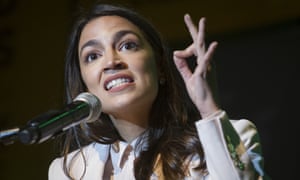
Rep Alexandria Ocasio-Cortez, D-NY, speaks about the Green New Deal at Howard University. Ocasio-Cortez says any plan to adequately address climate change would cost at least $10 trillion.
Alexandria Ocasio-Cortez speaks about the Green New Deal at Howard University. The Democratic congresswoman says adequately addressing climate change would cost at least $10tn. Photograph: Cliff Owen/AP

If you set aside Republicans’ obsession with cow farts, perhaps the most prevalent criticism of the Green New Deal is its emphasis on social justice. Critics contend that the far-reaching climate agenda is far too concerned with extraneous issues such as jobs, infrastructure, housing, healthcare and civil and indigenous rights. Stick to greenhouse gases, they say; reforming the energy system is utopian enough.

Continue reading


Thursday, 30 May 2019

Why climate change could bring more infectious diseases

a post by Lidiya Angelova for the OUP blog


“Mosquito” by mikadago. Pixabay License via Pixabay

Human impact on climate and environment is a topic of many discussions and research. While the social, economic, and environmental effects of climate change are important, climate change could also increase the spread of infectious diseases dramatically. Many infectious agents affect humans and animals. Shifts of their habitats or health as a result of climate change and pollution can lead to the spread of infectious diseases.

One of the first signs of climate change is non-typical behaviour of animal populations. Raising temperatures and humidity are favourable for the development of infectious agents. Ticks are transmitters of various infectious diseases which have a seasonal occurrence in temperate regions – from early spring to late fall. Mild winters and humid, warm summers lead to longer times for tick-borne diseases like Lyme disease to develop. Migratory birds are a major vehicle for the spread of infectious diseases. Some of the pathogens can be transmitted directly to humans. Disturbing their migration route thanks to climate change can spread diseases to new territories. Migratory birds can carry ticks, which if have time to develop into adult form, can spread other deadly diseases.

Continue reading


Sunday, 12 May 2019

Can plants help us avoid a climate catastrophe?

a post by David Beerling for the OUP blog


“Green and white leaf plant” by Jackie DiLorenzo. Public Domain via Unsplash

The amount of carbon dioxide released into the atmosphere by burning of fossil fuels is at a staggering all time high of 34 billion tonnes, having risen every decade since the 1960s. Not surprisingly, our carbon dioxide emissions from fossil fuels, and land-use changes, including deforestation, have raised the atmospheric concentration of this major greenhouse gas to a level unprecedented in human history.

What’s more, the concentration of atmospheric carbon dioxide has risen so rapidly over the past few decades that Earth’s temperature has yet to fully adjust to the new warmer climate it dictates. This means that even if we could magically stop our carbon dioxide emissions from fossil fuels overnight, we have already committed Earth to transition to a warmer climate. Global temperatures have risen by more than 1°C since the 1970s. How much more warming are we likely to experience? Another 0.5°C, 1.5°C, 2.5°C or worse? Scientists are working urgently to try and better constrain this number. Meantime, over 190 nations worldwide signed up to the 2015 Paris Agreement with the goal of limiting warming to less than 2°C and ideally less than 1.5°C. Given the current situation, even a lenient 2°C target now looks wildly optimistic, especially given 34+ billion tonnes of carbon dioxide are added every year we delay mitigation measures.

Continue reading


Tuesday, 7 May 2019

The market is betting on climate change

a column by Wolfram Schlenker and Charles Taylor for VOX: CEPR’s Policy Portal

Understanding beliefs about climate change is important, but most of the measures used in the literature are unreliable.

Instead, this column uses prices of financial products whose payouts are tied to future weather outcomes in the US.

These market expectations correlate well with climate model outputs between 2002 and 2018 and observed weather data across eight US cities, and show significant warming trends. When money is at stake, agents are accurately anticipating warming trends in line with the scientific consensus of climate models.

Continue reading


Thursday, 25 April 2019

Greening monetary policy

a column by Dirk Schoenmaker for VOX: CEPR’s Policy Portal

The ECB’s market-neutral approach to monetary policy undermines the general aim of the EU to achieve a low-carbon economy.

The column argues that steering the allocation of the Eurosystem’s assets and collateral towards low-carbon sectors would reduce the cost of capital for these sectors relative to high-carbon sectors. A modest titling approach could accelerate a transition to a low-carbon economy, and could be implemented without interfering with the priority of price stability.

Continue reading


Friday, 29 March 2019

From sustainable urbanism to climate urbanism

an article by Joshua Long (Southwestern University, USA) and Jennifer L Rice (University of Georgia, USA) published in Urban Studies Volume 56 Issue 5 (April 2019)

Abstract

As the negative impacts of climate change become increasingly apparent, many city leaders and policymakers have begun to regard climate action as both a fiscal challenge and strategic economic opportunity. However, addressing the increasingly evident threats of climate change in the neoliberal, post-financial-crisis city raises several questions about its equitable implementation.

This paper suggests that the prioritisation of a specific mode of climate resilient urban development represents a departure from the previous decades’ movement toward sustainable urbanism.

We refer to this new development paradigm as ‘climate urbanism’, a policy orientation that

  1. promotes cities as the most viable and appropriate sites of climate action and
  2. prioritises efforts to protect the physical and digital infrastructures of urban economies from the hazards associated with climate change.

We argue that the potential social justice impacts of climate urbanism have not been fully interrogated. Certainly, cities are appropriate sites for addressing climate change, but in the current neoliberal context, the transition from policy rhetoric to climate action presents a potentially problematic landscape of inequality and injustice.

With that in mind, this paper offers a critical lens to evaluate the merits of climate urbanism and to interrogate its potential outcomes.