Showing posts with label science. Show all posts

Monday, 14 October 2019

Diet and depression: what you eat impacts your mood

a post by Jason Weisberger for the Boing Boing blog
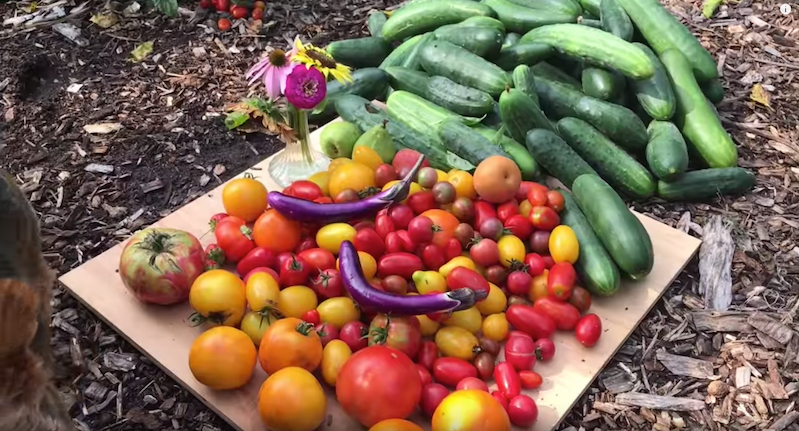


For years a friend has been telling my diet was hurting my general demeanor.

Last year I stopped ignoring her and switched to a diet more like what is described in this study.

I will never be Mr. Cheerful, but it really did help.

NPR:
A randomized controlled trial published in the journal PLOS ONE finds that symptoms of depression dropped significantly among a group of young adults after they followed a Mediterranean-style pattern of eating for three weeks. Participants saw their depression "score" fall from the "moderate" range down to the "normal" range, and they reported lower levels of anxiety and stress too.

Alternatively, the depression scores among the control group of participants – who didn't change their diets –  didn't budge. These participants continued to eat a diet higher in refined carbohydrates, processed foods and sugary foods and beverages. Their depression scores remained in the "moderate severity" range.

"We were quite surprised by the findings," researcher Heather Francis, a lecturer in clinical neuropsychology at Macquarie University in Sydney, Australia, told NPR via email. "I think the next step is to demonstrate the physiological mechanism underlying how diet can improve depression symptoms," Francis said.
Hazel’s comment:
And it is no surprise that people in the UK trying to exist on Universal Credit are also depressed. Bread, potatoes, starchy root vegetables etc are cheaper than the non-carbohydrate vegetables that are good for you!


Saturday, 24 March 2018

Career Assessment and Counseling for STEM: A Critical Review

an article by Patrick J. Rottinghaus, Nikki A. Falk and Chan Jeong Park (University of Missouri-Columbia, USA) published in The Career Development Quarterly Volume 66 Issue 1 (March 2018)

Abstract

Career counselors must continually enhance their knowledge and skills to assist clients contemplating careers in science, technology, engineering, and mathematics (STEM).

Therefore, the authors review STEM disciplines and theory‐driven strategies for assisting diverse individuals to explore, enter, and persist in STEM careers. Appropriate use of career assessments can contribute greatly to this effort.

To identify available measures for STEM‐focused domains and constructs, the authors conducted a journal content analysis of stand‐alone STEM‐related career assessments from 1983 to 2016, identifying 39 articles with 153 measures.

Notable results included the emergence of social cognitive theory and social cognitive career theory as prevailing frameworks for instrument development, a wide variety of disciplines and journals represented, an under-representation of minority samples, and untapped potential for cross‐discipline and researcher–practitioner collaboration.

Useful strategies and resources for counselors and recommendations for enhancing career assessments and interventions are addressed.

Full text (PDF 33pp)


Wednesday, 7 August 2013

Women Scientists and Engineers in European Companies: Putting Motherhood under the Microscope

an article by Clem Herman, Suzan Lewis and Anne Laure Humbert (Open University, Milton Keynes, UK) published in Gender, Work & Organization Volume 20 Issue 5 (September 2013)

Abstract

Unlike the rise in women’s participation in other professional sectors, women still form a minority of professional scientists and engineers, especially in multinational companies. Moreover, embedded gendered cultures in the science, engineering and technology (SET) sectors continue to affect the career progression of professional women, with few women reaching senior management positions and many leaving and failing to return.

This article examines the experiences of women SET professionals in three European companies based in France, The Netherlands and Italy and illustrates how the careers of SET professionals in industry are shaped not only by corporate cultures and practices but also by the specific national contexts in which they live and work.

In particular, we look at how motherhood rather than gender alone is constructed as problematic and propose a model of strategies that women adopt in doing motherhood and SET, including assimilation, cul-de-sac, breaking the mould and lying low.


Tuesday, 5 February 2013

3 things that keep poor kids out of the sciences

via Boing Boing by Maggie Koerth-Baker

There is some truth to the American ideal of meritocracy. But there’s a lot of myth, as well.

Biologist Danielle Lee describes her experience coaching poor kids in St. Louis on science fair projects – an activity that often becomes a stepping stone to a career in the sciences. But, for the kids Lee met, intelligence and a good idea aren’t enough to overcome the institutional barriers working against them.

This is how discrimination happens.

It’s not simple and easy to fix and it isn’t pretty to watch.

Hazel’s comment:
Fans of my weekend miscellanies will readily recognise the writer of this Boing Boing blog post. I sometimes wonder where I would be without her!
This one, however, linked in my mind with something I posted only yesterday about UK poorer students losing their aspirations of university by the time they were 14.


Tuesday, 7 August 2012

PISA in Focus 18

an OECD publication (July 2012)

Are students more engaged when schools offer extracurricular activities?
  • Around 90% of students in OECD countries attend schools that offer field trips to places where students can learn about scientific principles and concepts.
  • In most countries, science-related extracurricular activities at school are related to better student performance, a stronger belief by students in their abilities to handle science-related tasks, and greater enjoyment of learning science. And, in many countries, this is true even after accounting for the socio-economic background of both students and schools.
The bottom line: PISA cannot determine whether being exposed to science-related extracurricular activities enhances students’ attitudes towards science or whether students with more positive attitudes towards science are attracted to schools that offer more of such activities; both could be true. But what PISA does show is that these kinds of activities have a positive relationship not only to student performance, but also to students’ attitudes towards learning and their belief in their own abilities.

Full text (PDF 4pp)


Monday, 2 July 2012

Stupid EU video PSA shows how *not* to promote science to young women

Stupid EU video PSA shows how *not* to promote science to young women
via Boing Boing by Xeni Jardin
I think this is the first time I’ve used a Boing Boing item in my “this is a weekday so it must be serious” category! This is not only serious it is outrageous.
The title tells you there’s gonna be trouble even before you hit play.

Science: It's a Girl Thing! is part of a European Commission campaign to promote science careers to young women, who remain greatly outnumbered in the field and face gender discrimination in academic and professional environments (yes, guys, even today).

More in the LA Times, Inquisitr, Advertising Miami, Physics Central, New Statesman.
Astronomer Dr. Meghan Gray responds. (thanks, Miles O'Brien!)

Tuesday, 19 June 2012

The Reifying and Commoditizing Effects of Disciplines

an article by Willem H. Vanderburg (University of Toronto, Canada) published in Bulletin of Science, Technology & Society Volume 32 Number 1 (February 2012)

Abstract

The present analysis revisits the economics of inattention and the resulting commoditization and creation of privileged goods. These act as a significant force that pushes human history toward a future that will be less livable and sustainable.

The analysis traces the roots of these developments to the reorganization of human knowing and doing by putting them on a discipline-based footing.

It is part of a larger analysis that shows the need to create a different kind of scientific and technical specialization that rebalances breadth with depth, and the accompanying university reforms that will be required.


Monday, 21 May 2012

Science, technology and innovation in Europe

The 143-page Science, technology and innovation in Europe is divided into three main parts:
  1. Investing in R&D,
  2. Monitoring the knowledge workers, and
  3. Productivity and competitiveness.
Focusing on the EU Member States, it includes comparative data for: Liechtenstein, Norway, Switzerland, China, Japan, Russia, South Korea, and the United States.

You can access the document here.
NB: Paper copy is available free via the bookshop (also accessible through the link above.