Showing posts with label diet. Show all posts

Monday, 14 October 2019

Diet and depression: what you eat impacts your mood

a post by Jason Weisberger for the Boing Boing blog



For years a friend has been telling my diet was hurting my general demeanor.

Last year I stopped ignoring her and switched to a diet more like what is described in this study.

I will never be Mr. Cheerful, but it really did help.

NPR:
A randomized controlled trial published in the journal PLOS ONE finds that symptoms of depression dropped significantly among a group of young adults after they followed a Mediterranean-style pattern of eating for three weeks. Participants saw their depression "score" fall from the "moderate" range down to the "normal" range, and they reported lower levels of anxiety and stress too.

Alternatively, the depression scores among the control group of participants – who didn't change their diets –  didn't budge. These participants continued to eat a diet higher in refined carbohydrates, processed foods and sugary foods and beverages. Their depression scores remained in the "moderate severity" range.

"We were quite surprised by the findings," researcher Heather Francis, a lecturer in clinical neuropsychology at Macquarie University in Sydney, Australia, told NPR via email. "I think the next step is to demonstrate the physiological mechanism underlying how diet can improve depression symptoms," Francis said.
Hazel’s comment:
And it is no surprise that people in the UK trying to exist on Universal Credit are also depressed. Bread, potatoes, starchy root vegetables etc are cheaper than the non-carbohydrate vegetables that are good for you!


Friday, 7 December 2018

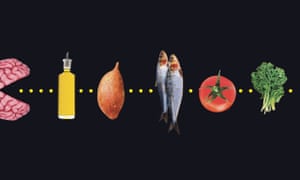
The first list of antidepressant foods restructures the "standard" American diet

a post by Dererk Beres for the Big Think blog
  • Leafy greens, cruciferous vegetables, and oysters top the list of depression-fighting foods.
  • Organ meats are also near the top of nutrient-dense food sources that should be included in your diet.
  • Researchers focus more on what to eat rather than what to remove from the standard diet.
Continue reading

Take out the oysters because a) I can’t afford them and b) I don’t like them and the list looks very like the one I have for helping my body beat anaemia.  Is there a causal link? I guess that is something to talk to my GP about.

Friday, 23 February 2018

It's not just in the genes: the foods that can help and harm your brain

an article by Lisa Mosconi published in the Guardian

Our diet has a huge effect on our brain and our mental wellbeing, even protecting against dementia. So, what should be on the menu?

What to eat to feed your grey cells.

As a society, we are used to the idea that we feed our bodies, and that our diet shapes our waistlines. But many of us forget that the same diet also feeds our brains, and that the food we give our brains shapes our thoughts and actions. I invested many years formally studying neuroscience and neurology, and have spent many more years as a scientist in those fields. Back when I started, most of my time was spent with medical journals. But 15 years into my research, much of my time is spent with cookbooks.

These books are essential to contemporary brain science. The recipes become food, and that food shapes our brains just as surely as it builds our bodies. Day after day, the foods we eat are broken down into nutrients, taken into the bloodstream and carried up into the brain. Once there, they replenish depleted storage, activate cellular reactions and become the very fabric of our brains.

Continue reading


Wednesday, 29 November 2017

'Just go for a run': testing everyday advice for my depression

an article by Martha Mills for the Guardian

If you say you’re depressed, people are quick to dispense wisdom on how to deal with it. Martha Mills decided to take them literally, and try them out for herself

So, it turns out I’m getting better at depression. That isn’t to say I’ve stopped suffering it, or that it is any less debilitating when it sneaks up after a two-year hiatus and pile-drives me into a blistering agony of mental carpet burns topped with a patronising tousle of the bed-hair, like a nostalgic school bully. No, what’s “better” about me is spotting it and moving quicker through the self-blame method of diagnosis.

We all have down days, and that’s what you hope these are. Only they stopped being a day or two of feeling blue that can be whiled away with the distraction of a conspiratorial sofa and questionable DVD collection, and have merged into weeks since you were last able to feel anything but disappointment on waking up, and the choice between showering or just smelling like a tramp’s undercarriage has gone beyond struggle into pure resignation.

Being especially practised at denial, I decided that I, a mere mortal with a solid history of depressive episodes since childhood, could fake my way out of this oncoming tsunami of debilitating black fog using the advice that people who have never experienced depression trot out – an experiment that could surely only succeed [sidelong glance to camera]. I would improve my diet and exercise, force myself to take up hobbies, I would “soldier on until it passed” and thrust myself (reluctantly) into social situations. I even tried “looking on the bright side” but it turned out to just be glare on my TV.

Continue reading and discover how Martha fared along the way.


Friday, 15 September 2017

Is Your Diet Fighting Depression – or Intensifying It?

a blog post by Natalie Shoemaker for Big Think

Article Image

Scientists have recently become aware there’s a connection between our gut and our brain. But just how deep does this connection go? Could we, say, treat depression just by adopting a Mediterranean diet? A new study suggests, yes.

Doctors have been prescribing diets to their patients as a preventative measure against heart disease, cancer, diabetes, and now depression joins that list. “We now have real evidence to back up what’s good common sense: that eating well doesn’t just benefit your body, but it also benefits your brain,” says Columbia professor Drew Ramsey, who wrote, Eat Complete.

Ramsey represents a growing group of mental health experts who practice nutritional psychiatry. The idea of a gut-brain connection is one that has been gaining ground in scientific studies and some have started putting these ideas into practice. There's evidence to suggest certain foods influence the bacteria in our gut, which in turn influence mental health.

Continue reading [several useful links and a couple of videos]

If you don't click through then please:

It’s important to note, the field of nutritional psychiatry is still new, so you should not use this diet as a substitute for consulting a therapist if you feel depressed.