an article by Tine Buffel and Chris Phillipson (University of Manchester, UK) published in Sociology Volume 53 Issue 6 (December 2019)
Abstract
Debates about gentrification continue to occupy a significant part of research investigating social change within urban communities.
While most gentrification studies have focused on ‘incoming’ groups or those forced to leave, there is limited knowledge about those remaining in neighbourhoods undergoing community change.
This study explores the experiences of older residents who have lived much of their adult lives in the same locality but whose views have been largely ignored in gentrification research.
The article presents findings from seven focus groups (N = 58 participants) and 30 in-depth interviews with people aged 60 and over living in Chorlton, a gentrifying neighbourhood in Manchester, UK. These highlight both daily challenges and exclusionary pressures, as well as how people are active in creating a sense of belonging in a neighbourhood undergoing social change.
The article concludes by discussing the need for interventions which promote the ‘age-friendliness’ of communities and ensure that older people have a space to be seen and heard in their neighbourhood.
Full text (PDF 18pp)
Showing posts with label gentrification. Show all posts
Showing posts with label gentrification. Show all posts
Tuesday, 17 December 2019


Monday, 29 July 2019
When Did Nature Become Moral?
an article by Hillary Angelo in Public Books via 3 Quarks Daily with thanks to S. Abbas Raza
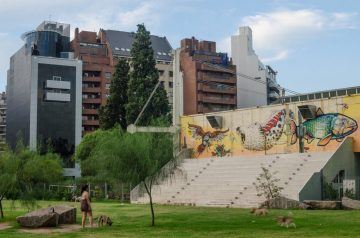
When did nature become a good for cities? When did city dwellers start imagining nature to be something they were missing? Today, urbanites’ moral associations with nature are so obvious and widely shared that a recent New Yorker cartoon of a couple at the dinner table was captioned: “Is this from the community garden? It tastes sanctimonious.” For better or worse, most of us are so steeped in this view of nature that it is hard to imagine how it could be otherwise. But it once was.
Many believe that nature became an ethical force in city life—a process Justin Farrell calls the “moralization of nature” for urban inhabitants—on account of 19th-century industrial cities. The lack of access to clean air, water, sunshine, and green space in crowded, polluted urban environments—in contrast to a real nature “out there”—transformed nature from a material into a moral good. These unnatural cities, the argument goes, forced people to see nature as not just something good, but something good for you: spiritually, emotionally, even physically.
Continue reading
I found this extremely interesting. H
When did nature become a good for cities? When did city dwellers start imagining nature to be something they were missing? Today, urbanites’ moral associations with nature are so obvious and widely shared that a recent New Yorker cartoon of a couple at the dinner table was captioned: “Is this from the community garden? It tastes sanctimonious.” For better or worse, most of us are so steeped in this view of nature that it is hard to imagine how it could be otherwise. But it once was.
Many believe that nature became an ethical force in city life—a process Justin Farrell calls the “moralization of nature” for urban inhabitants—on account of 19th-century industrial cities. The lack of access to clean air, water, sunshine, and green space in crowded, polluted urban environments—in contrast to a real nature “out there”—transformed nature from a material into a moral good. These unnatural cities, the argument goes, forced people to see nature as not just something good, but something good for you: spiritually, emotionally, even physically.
Continue reading
I found this extremely interesting. H
Wednesday, 24 April 2019
The knowledge economy city: Gentrification, studentification and youthification, and their connections to universities
an article by Markus Moos, Nick Revington, Tristan Wilkin and Jean Andrey (University of Waterloo, Canada) published in Urban Studies Volume 56 Issue 6 (May 2019)
Abstract
We investigate the spatial relationships among three prominent facets of contemporary urbanism – gentrification, studentification, and youthification – in the context of Canadian post-secondary educational institutions (universities and colleges).
We conduct the analysis in three major Canadian cities with substantial knowledge economy sectors using confidential Statistics Canada census files, which include information on individuals and their geographies, and the location of universities and colleges, by enrolment size. We document ‘spillover’ effects of expansions in student enrolment and the building of campuses by analysing the geographic correlations among universities and gentrification and youthification.
Studentification and youthification are to some extent coincident but not entirely, whereas the connection to gentrification is more complex.
Our work provides novel insight into the ways the three different facets of contemporary urbanism overlap and contribute to our understanding of how universities and colleges, as hallmarks of the knowledge economy, influence the social geography of cities.
Abstract
We investigate the spatial relationships among three prominent facets of contemporary urbanism – gentrification, studentification, and youthification – in the context of Canadian post-secondary educational institutions (universities and colleges).
We conduct the analysis in three major Canadian cities with substantial knowledge economy sectors using confidential Statistics Canada census files, which include information on individuals and their geographies, and the location of universities and colleges, by enrolment size. We document ‘spillover’ effects of expansions in student enrolment and the building of campuses by analysing the geographic correlations among universities and gentrification and youthification.
Studentification and youthification are to some extent coincident but not entirely, whereas the connection to gentrification is more complex.
Our work provides novel insight into the ways the three different facets of contemporary urbanism overlap and contribute to our understanding of how universities and colleges, as hallmarks of the knowledge economy, influence the social geography of cities.
Wednesday, 20 March 2019
Land in urban debates: Unpacking the grab–development dichotomy
Femke van Noorloos and Griet Steel (Utrecht University, The Netherlands) and Christien Klaufus (University of Amsterdam, The Netherlands) published in Urban Studies Volume 56 Issue 5 (April 2019)
Abstract
On the heels of the rural ‘land grab’ debate, the ongoing urban transition combined with large-scale urban infrastructure investments and land scarcity forces us to also pay more attention to issues of land in urban discussions.
Yet how can we conceptualise land-related problems in order to connect and integrate rural and urban debates in overarching discussions of development? In this commentary, we argue for moving beyond the directly visible outcomes and presumed ‘culprits’ of land investments by critically analysing indirect and long-term effects of land acquisitions on people’s livelihoods as well as the differentiation of these effects for different actors.
We propose three specific arguments to disentangle the grab–development dichotomy:
Full text (PDF 13pp)
Abstract
On the heels of the rural ‘land grab’ debate, the ongoing urban transition combined with large-scale urban infrastructure investments and land scarcity forces us to also pay more attention to issues of land in urban discussions.
Yet how can we conceptualise land-related problems in order to connect and integrate rural and urban debates in overarching discussions of development? In this commentary, we argue for moving beyond the directly visible outcomes and presumed ‘culprits’ of land investments by critically analysing indirect and long-term effects of land acquisitions on people’s livelihoods as well as the differentiation of these effects for different actors.
We propose three specific arguments to disentangle the grab–development dichotomy:
- placing a focus on the sequential chain of effects of displacement;
- paying more attention to the ambivalent roles and contradictory interests of different actors; and
- taking the three-dimensional aspects of land development into account.
Full text (PDF 13pp)
Thursday, 14 February 2019
Chronic urban trauma: The slow violence of housing dispossession
an article by Rachel Pain (Newcastle University, UK) published Urban Studies Volume 56 Issue 2 (February 2019)
Abstract
This paper sets the idea of slow violence into dialogue with trauma, to understand the practice and legitimisation of the repeated damage done to certain places through state violence.
Slow violence (Nixon R (2011) Slow Violence and the Environmentalism of the Poor. Cambridge, MA: Harvard University Press) describes the ‘attritional lethality’ of many contemporary effects of globalisation. While originating in environmental humanities, it has clear relevance for urban studies.
After assessing accounts of the post-traumatic city, the paper draws insights from feminist psychiatry and postcolonial analysis to develop the concept of chronic urban trauma, as a psychological effect of violence involving an ongoing relational dynamic. Reporting from a three-year participatory action research project on the managed decline and disposal of social housing in a former coalmining village in north-east England, the paper discusses the temporal and place-based effects of slow violence.
It argues that chronic urban trauma becomes hard-wired in place, enabling retraumatisation while also remaining open to efforts to heal and rebuild.
Abstract
This paper sets the idea of slow violence into dialogue with trauma, to understand the practice and legitimisation of the repeated damage done to certain places through state violence.
Slow violence (Nixon R (2011) Slow Violence and the Environmentalism of the Poor. Cambridge, MA: Harvard University Press) describes the ‘attritional lethality’ of many contemporary effects of globalisation. While originating in environmental humanities, it has clear relevance for urban studies.
After assessing accounts of the post-traumatic city, the paper draws insights from feminist psychiatry and postcolonial analysis to develop the concept of chronic urban trauma, as a psychological effect of violence involving an ongoing relational dynamic. Reporting from a three-year participatory action research project on the managed decline and disposal of social housing in a former coalmining village in north-east England, the paper discusses the temporal and place-based effects of slow violence.
It argues that chronic urban trauma becomes hard-wired in place, enabling retraumatisation while also remaining open to efforts to heal and rebuild.
Wednesday, 13 February 2019
Gentrification and businesses
a column by Kristian Behrens, Brahim Boualam, Julien Martin and Florian Mayneris for VOX: CEPR’s Policy Portal
Urban planners are increasingly willing to adopt policies to temper neighbourhood changes and to assist potential losers from these changes, but how can future spots of gentrification be anticipated?
This column studies gentrification in New York and Philadelphia between 1990 and 2010 to provide evidence on the micro-geographic scale of the process and the role that businesses play in it. It identifies a small group of about 20 industries whose presence in a poor neighbourhood increases its likelihood of gentrifying.
Continue reading
Urban planners are increasingly willing to adopt policies to temper neighbourhood changes and to assist potential losers from these changes, but how can future spots of gentrification be anticipated?
This column studies gentrification in New York and Philadelphia between 1990 and 2010 to provide evidence on the micro-geographic scale of the process and the role that businesses play in it. It identifies a small group of about 20 industries whose presence in a poor neighbourhood increases its likelihood of gentrifying.
Continue reading
Wednesday, 30 January 2019
Necrotecture: Lifeless Dwellings and London's Super‐Rich
Rowland Atkinson (University of Sheffield, UK) published in International Journal of Urban and Regional Research Volume 43 Issue 1 (January 2019)
Abstract
This article problematizes the relationship between the global super‐rich and processes of property development that have generated large volumes of underused residential space.
Evidence is presented to show that much of London's new skyline is underused or lies entirely empty, so that one interpretation of this new landscape of super‐prime residential development is that it is a kind of dead residential space or necrotecture. These relatively lifeless spaces can be interpreted as the particularly wasteful result of continuing rounds of international capital investment in the built environment and the overconsumption of housing and other resources by the super‐rich.
Necrotectural forms, seen in new towers and spectacular homes, appear to index a massive misdirection of development capacity, even as the city experiences a massive social crisis that continues to be played out in the wider housing market.
Full text (PDF 12pp)
Abstract
This article problematizes the relationship between the global super‐rich and processes of property development that have generated large volumes of underused residential space.
Evidence is presented to show that much of London's new skyline is underused or lies entirely empty, so that one interpretation of this new landscape of super‐prime residential development is that it is a kind of dead residential space or necrotecture. These relatively lifeless spaces can be interpreted as the particularly wasteful result of continuing rounds of international capital investment in the built environment and the overconsumption of housing and other resources by the super‐rich.
Necrotectural forms, seen in new towers and spectacular homes, appear to index a massive misdirection of development capacity, even as the city experiences a massive social crisis that continues to be played out in the wider housing market.
Full text (PDF 12pp)
Monday, 12 November 2018
Complicity and contestation in the gentrifying urban primary school
an article by Ayo Mansaray (University of East London, UK) published in Urban Studies Volume 55 Issue 14 (November 2018)
Abstract
The transformation of primary schools in gentrifying localities has sometimes been referred to as a form of ‘class colonisation’.
This article draws on ethnographic research with teachers, teaching assistants and parents in two inner-London primary schools to explore the largely unexamined role of school leaders (headteachers) in mediating gentrification processes within urban schools.
It argues that institutional history, contexts of headship and leadership style all play an important role in negotiating and recontextualising middle-class mobilisation and power to re-shape primary schools. Headteachers’ relationship to gentrification is therefore not simply one of complicity, but often of contestation and conflict.
This article therefore challenges understandings of gentrification as a hegemonic process, and contributes to a more nuanced picture of the educational consequences of gentrification, particularly the institutional realities and experiences of urban social change.
Abstract
The transformation of primary schools in gentrifying localities has sometimes been referred to as a form of ‘class colonisation’.
This article draws on ethnographic research with teachers, teaching assistants and parents in two inner-London primary schools to explore the largely unexamined role of school leaders (headteachers) in mediating gentrification processes within urban schools.
It argues that institutional history, contexts of headship and leadership style all play an important role in negotiating and recontextualising middle-class mobilisation and power to re-shape primary schools. Headteachers’ relationship to gentrification is therefore not simply one of complicity, but often of contestation and conflict.
This article therefore challenges understandings of gentrification as a hegemonic process, and contributes to a more nuanced picture of the educational consequences of gentrification, particularly the institutional realities and experiences of urban social change.
Friday, 28 December 2012
Neighborhoods on the Rise: A Typology of Neighborhoods Experiencing Socioeconomic Ascent
an article by Ann Owens (Stanford University, USA) published in City & Community
Volume 11 Issue 4 (December 2012)
Abstract
Neighbourhoods are an important source of inequality, and neighbourhood change may lead to changing opportunities for residents. Past research on neighbourhood upgrading tends to focus on one process: gentrification.
I argue that a broader range of types of neighbourhood socio-economic ascent requires examination.
This article documents the different types of neighbourhoods ascending from 1970 to the present.
Using principal components analysis and cluster analysis, I report the prevalence of socio-economic ascent, based on increases in neighbourhood income, rents, house values, and educational and occupational attainment, among five to seven types of neighbourhoods in each decade.
I also examine population and housing changes that co-occur with ascent to identify processes of ascent beyond gentrification.
Overall, findings suggest mixed implications for neighbourhood inequality. While white suburban neighbourhoods make up the bulk of neighbourhoods that ascend in each decade, minority and immigrant neighbourhoods become increasingly likely to ascend over time, though displacement may occur.
Abstract
Neighbourhoods are an important source of inequality, and neighbourhood change may lead to changing opportunities for residents. Past research on neighbourhood upgrading tends to focus on one process: gentrification.
I argue that a broader range of types of neighbourhood socio-economic ascent requires examination.
This article documents the different types of neighbourhoods ascending from 1970 to the present.
Using principal components analysis and cluster analysis, I report the prevalence of socio-economic ascent, based on increases in neighbourhood income, rents, house values, and educational and occupational attainment, among five to seven types of neighbourhoods in each decade.
I also examine population and housing changes that co-occur with ascent to identify processes of ascent beyond gentrification.
Overall, findings suggest mixed implications for neighbourhood inequality. While white suburban neighbourhoods make up the bulk of neighbourhoods that ascend in each decade, minority and immigrant neighbourhoods become increasingly likely to ascend over time, though displacement may occur.
Monday, 17 December 2012
The Edge of the Island: Cultural Ideology and Neighbourhood Identity at the Gentrification Frontier
an article by Gordon C. C. Douglas (University of Chicago, Illinois) published in Urban Studies Volume 49 Number 16 (December 2012)
Abstract
Building on recent ethnographic accounts that have drawn attention to the nuanced ideologies of contemporary gentrifiers, this article brings cultural considerations to bear on the geography of gentrification’s fringes.
Through a case study of a neighbourhood at the gentrification frontier in Chicago, it examines the factors driving first-wave ‘pioneers’ into an area with little prior popular identity or interest. Conscious of the wider gentrification process, these individuals are essentially seeking (and creating) a particular time and place within it – they idealise the ‘edge’ itself.
Yet while they are actively fleeing advanced gentrification, their actions pave the way for its further expansion. The study finds that gentrification’s borders are subjective and relative in the minds of the newcomers themselves, who frame the process in terms of their own ideologies. These sub-cultural ideals are central to understanding the expansion of the gentrification frontier today.
Abstract
Building on recent ethnographic accounts that have drawn attention to the nuanced ideologies of contemporary gentrifiers, this article brings cultural considerations to bear on the geography of gentrification’s fringes.
Through a case study of a neighbourhood at the gentrification frontier in Chicago, it examines the factors driving first-wave ‘pioneers’ into an area with little prior popular identity or interest. Conscious of the wider gentrification process, these individuals are essentially seeking (and creating) a particular time and place within it – they idealise the ‘edge’ itself.
Yet while they are actively fleeing advanced gentrification, their actions pave the way for its further expansion. The study finds that gentrification’s borders are subjective and relative in the minds of the newcomers themselves, who frame the process in terms of their own ideologies. These sub-cultural ideals are central to understanding the expansion of the gentrification frontier today.
Tuesday, 13 September 2011
More Coffee, Less Crime? …
The Relationship between Gentrification and Neighborhood Crime Rates in Chicago, 1991 to 2005
an article by Andrew V Papachristos, Chris M Smith, Mary L Scherer and Melissa A Fugiero published in City & Community Volume 10 Issue 3 (September 2011)
Abstract
This study examines the relationship between gentrification and neighborhood crime rates by measuring the growth and geographic spread of one of gentrification’s most prominent symbols: coffee shops. The annual counts of neighbourhood coffee shops provide an on-the-ground measure of a particular form of economic development and changing consumption patterns that tap into central theoretical frames within the gentrification literature. Our analysis augments commonly used Census variables with the annual number of coffee shops in a neighbuorhood to assess the influence of gentrification on three-year homicide and street robbery counts in Chicago. Longitudinal Poisson regression models with neighbourhood fixed effects reveal that gentrification is a racialised process, in which the effect of gentrification on crime is different for White gentrifying neighbourhoods than for Black gentrifying neighbourhoods. An increasing number of coffee shops in a neighbourhood is associated with declining homicide rates for White, Hispanic, and Black neighbourhoods; however, an increasing number of coffee shops is associated with increasing street robberies in Black gentrifying neighbourhoods.
Unusually for a recent journal the full text of this article is available here. NOTE: It took me ages to load it!
an article by Andrew V Papachristos, Chris M Smith, Mary L Scherer and Melissa A Fugiero published in City & Community Volume 10 Issue 3 (September 2011)
Abstract
This study examines the relationship between gentrification and neighborhood crime rates by measuring the growth and geographic spread of one of gentrification’s most prominent symbols: coffee shops. The annual counts of neighbourhood coffee shops provide an on-the-ground measure of a particular form of economic development and changing consumption patterns that tap into central theoretical frames within the gentrification literature. Our analysis augments commonly used Census variables with the annual number of coffee shops in a neighbuorhood to assess the influence of gentrification on three-year homicide and street robbery counts in Chicago. Longitudinal Poisson regression models with neighbourhood fixed effects reveal that gentrification is a racialised process, in which the effect of gentrification on crime is different for White gentrifying neighbourhoods than for Black gentrifying neighbourhoods. An increasing number of coffee shops in a neighbourhood is associated with declining homicide rates for White, Hispanic, and Black neighbourhoods; however, an increasing number of coffee shops is associated with increasing street robberies in Black gentrifying neighbourhoods.
Unusually for a recent journal the full text of this article is available here. NOTE: It took me ages to load it!
Subscribe to:
Posts (Atom)

