Showing posts with label China. Show all posts

Monday, 11 November 2019

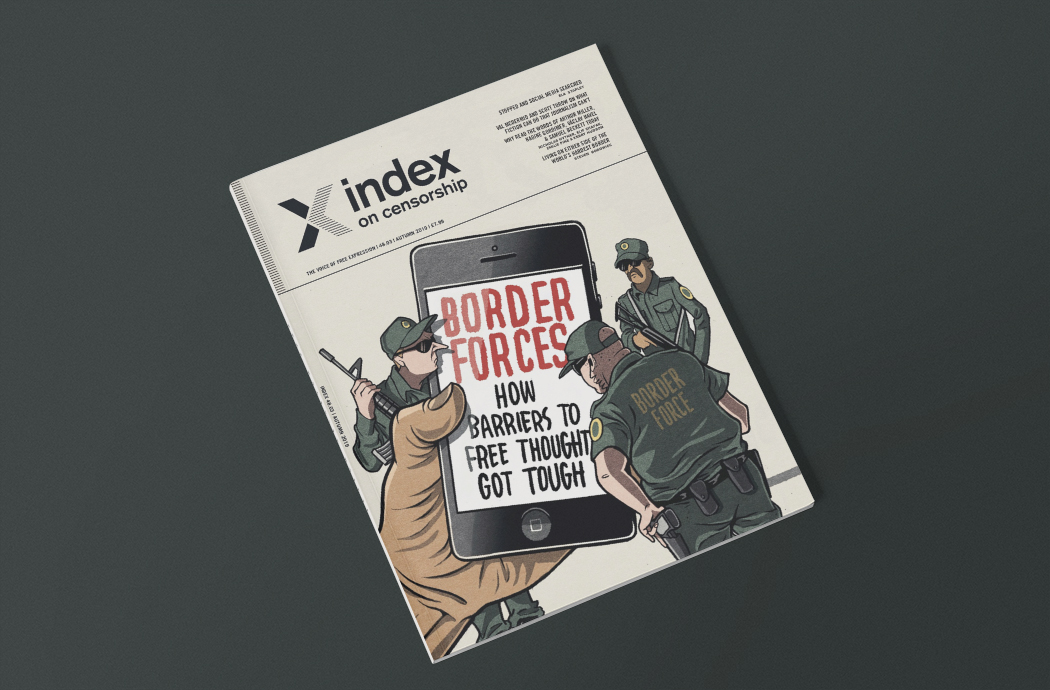
Challenging barriers to free thought

Index on Censorship [via Eurozine Review 3/2019]


Index looks at the increasing barriers to free thought worldwide: including reports on journalistic self-censorship, freedom of expression for LGBT travellers, the roll-out of Chinese surveillance tech; and Germany’s latest spyware bill.

Index on Censorship looks at the increasing barriers to free thought worldwide. Reports from China, Germany, Hungary and the United States focus not only on increasing restrictions on free movement, but also the implicit demands that journalists self-censor and that LGBT travellers hide their identities when in countries where their very existence is illegal.

Full text (PDF 2pp)


Monday, 14 October 2019

Multinational enterprises in time and space: The effect of trade policy shocks

a column by Stefania Garetto, Lindsay Oldenski and Natalia Ramondo for VOX: CEPR’s Policy Portal

Multinational enterprises play an important role in coordinating production around the globe.

This column presents a dynamic quantitative model of multinational enterprise expansion that can be used to analyse the effects of policies that affect the cost of the operations of such firms. It uses this model to estaimte the impact of potential implementations of Brexit.

Continue reading


Thursday, 19 September 2019

Bilateral and aggregate trade balances: Finding the right focus

a column by Johannes Eugster, Florence Jaumotte, Margaux MacDonald and Roberto Piazza for VOX: CEPR’s Policy Portal

Bilateral trade balances have come under scrutiny recently, with some policymakers concerned that their large and rising size may reflect asymmetric obstacles to trade.

This column argues that macroeconomic factors – rather than bilateral tariffs – have been the key drivers of the evolution of bilateral trade balances. While tariffs have played a modest role in the evolution of bilateral balances, declines in tariffs have lifted productivity by allowing a greater international division of labour, including through participation in global value chains.

A sharp increase in tariffs would therefore create significant spillovers, leaving the global economy worse off.

Continue reading


Wednesday, 11 September 2019

National borders don't stop in the physical world – they're in cyberspace too Virtual borders have also been subtly dividing the wo

a post by Meicen Sun for the Big Think blog

Virtual borders have also been subtly dividing the world


Cairo murals from the 2011 revolution
Frédéric Soltan/Corbis via Getty Images

Murals and graffitis to protest against the regime in Cairo during the Revolution of 2011, which was organized on the internet.

To the globalists' dismay, recent years have seen the strengthening of national borders. State sovereignty rages on with each vehicle returned and each visa revoked.

But in case you thought the divisions were just physical, virtual borders have also been subtly dividing the world. You land in Country A with every hope for a romantic getaway, only to find that the dating app you had just used at the airport now no longer works on your phone. That's fine. But minutes before your big business meeting in Country C, you fall into a total panic when the cloud drive on which you'd stored all your files in Country B somehow won't open on your laptop. This is bad.

The state's power to disrupt and exclude goes far beyond the flow of people, goods and money. In erecting virtual borders, states are asserting an even more formidable type of power through controlling the flow of information on the internet. Unlike physical borders, virtual borders are at once everywhere and nowhere, and one may never even know for certain whether they exist.

Continue reading


Friday, 2 August 2019

Trade wars may ‘bloc up’ world trade

a column by David Jacks and Dennis Novy for VOX: CEPR’s Policy Portal

Against the backdrop of new tariffs imposed by the Trump administration and retaliation from targeted countries, notably China, the trade wars of the 1930s have received renewed attention.

This column argues that they mainly served to intensify a pre-existing trend towards the formation of trade blocs. The trade wars of the present day may therefore serve a similar purpose as those in the 1930s, that is, the intensification of China- and US-centric trade blocs.

Continue reading


Friday, 19 July 2019

The end of the liberal world as we know it?

an article by James Wang published in Eurozine

While the rest of the world concentrated on the fall of the Berlin Wall, another wall in China brought about a different type of change. The economic power the most populous country has accumulated is now challenging the western claim that only liberal democracy would provide ideal circumstances for capitalism.

Walls are perhaps the most iconic and enduring images from 1989. The political imaginary of Americans and Europeans alike centres on one iconic photo: that of exuberant East and West Germans breaking down the Berlin Wall on the night of November 9th that year. The wall was the physical embodiment of Cold War division and authoritarian rule; its destruction reflected liberal aspirations for a world soon to be remade in the image of America and western Europe. Yet, for those of us who care to remember, in China we start with images of another wall. This one culminates not in a story of liberation, however, but in the violent drama at Tiananmen Square on June 4, 1989.

Full text (PDF 6pp)


Thursday, 23 May 2019

Big brands like H&M, Adidas, Gap are entangled in China's brutal campaign against Uighur Muslim minority

a post by Xeni Jardin for the Boing Boing blog


“Officials have gathered up more than 4,000 residents over the past two years for deradicalization and textile-making courses.”

An important and difficult read in the Wall Street Journal today [16 May] about the Chinese government's indoctrination camps for the Muslim Uighur minority, and how those concentration camps provide essentially slave labor for factories that supply big Western brands like H&M, Adidas, Gap -- even Kraft Heinz, the ketchup makers.

Continue reading


Monday, 6 May 2019

The global macroeconomics of a trade war: Findings from the EAGLE model

a column by Wilko Bolt, Kostas Mavromatis and Sweder Van Wijnbergen for VOX: CEPR’s Policy Portal

Increasing protectionism will slow down world trade and may dampen global economic growth.

This column examines the global macroeconomic consequences of a major trade conflict between the US and China, and shows that the two countries would be the biggest losers from a 10% ‘tit-for-tat’ trade war between them. As long as it does not get involved in the conflict, the euro area may temporally gain from trade diversion, as competitiveness improves and imports from regions whose exports are blocked elsewhere become cheaper.

Continue reading


Friday, 3 May 2019

Tariffs and politics: Evidence from Trump’s trade wars

a column by Thiemo Fetzer and Carlo Schwarz for VOX: CEPR’s Policy Portal

Tariff retaliation is widely believed to be politically motivated.

This column presents evidence that retaliation against the Trump administration's tariff hikes seems to be systematically targeted against the Republican voter base. China appears to have been able to achieve a high degree of political targeting but likely harmed its own economy by targeting agricultural goods for which the US is a major supplier.

The EU, on the other hand, appears to be more successful in navigating the trade-off. It also finds some evidence suggesting that Republican candidates fared worse in the mid-term elections in the US counties most exposed to retaliation.

Continue reading


Trade wars and global value chains: Shooting oneself in the foot

a column by Cecilia Bellora and Lionel Fontagné for VOX: CEPR’s Policy Portal

Since 2018, the US administration has implemented several measures limiting free trade with China and other countries.

Using cross-country data and a general equilibrium model, this column argues that a trade war hurts not only the targeted countries but also the country imposing the tariffs.

Global value chains prompt countries to decrease tariffs when the domestic content of foreign-produced final goods and the imported content of domestic production of final goods are high. Once imposed, tariffs have an indirect effect on third sectors and countries through global value chains.

Continue reading


Tuesday, 11 December 2018

You are needed but not your skills: Challenges to manufacturing workers in the wake of globalisation

a column by Hâle Utar for VOX: CEPR’s Policy Portal

The impact of trade shocks on labour market shifts is usually studied in the context of re-training and social welfare frictions.

Using evidence from Denmark, this column shows how workers can experience long-run reductions in earnings no matter how easy it is to change sector. A sudden and obligatory shift toward a new sector may, by its nature, generate some worker dissatisfaction.

Continue reading


Wednesday, 9 May 2018

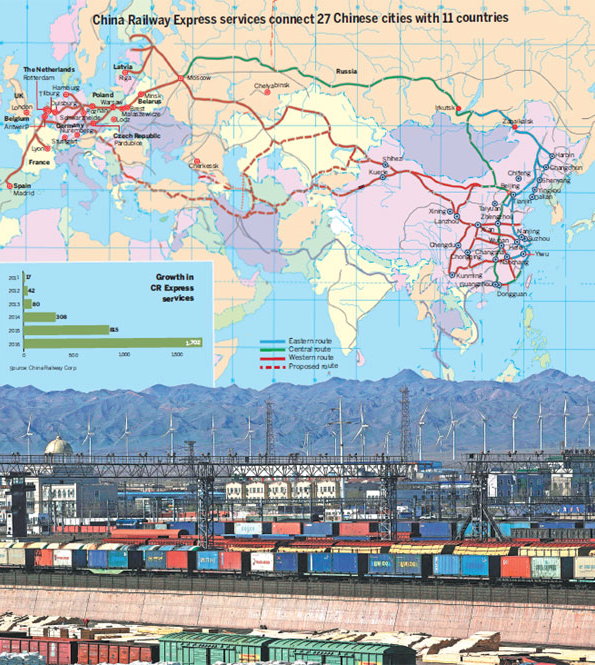
The Eurasian Landbridge and China's Belt and Road Initiative

a column by Richard Pomfret for VOX: CEPR’s Policy Portal


Source: ChinaDaily.com

China’s Belt and Road Initiative has the potential to extend the Eurasian Landbridge to include both the current China-Poland mainline to western Europe and a China-Istanbul mainline with spurs to the Middle East and North Africa.

This column, the second in a two-part series, outlines the history of the initiative and argues that future construction on the network could be a major step towards Eurasian integration and greatly improve rail's competitiveness relative to air for time-sensitive shipments.

Continue reading

Worth looking at if only for the maps. Trains to Africa from Asia? Why not.


Saturday, 5 May 2018

The natural geography of regional trade agreements and why it is changing over time

a column by Lionel Fontagné and Gianluca Santoni for VOX: CEPR’s Policy Portal

Country-pairs self-select in regional trade agreements, and this endogeneity biases the estimation of the impact of such agreements within a gravity framework. This column uses a framework for predicting which countries should engage in RTAs based solely on economic determinants, including global value chains, and compares this ‘natural’ geography of agreements with the actual geography. The results suggest that the endogenous geography of RTAs is shaped by the development of GVCs.

Continue reading


Thursday, 26 October 2017

Labour reallocation is not why China’s economy is slowing: Busting the myth of surplus peasants in China’s growth

a column by Peter Robertson and Longfeng Ye for VOX: CEPR’s Policy Portal

The conventional wisdom is that labour reallocation has been a key driver of China’s growth miracle, and slowing migrant labour flows and rapid wage growth have raised concerns over whether this source of growth has run its course. This column argues that the literature on growth and labour reallocation in China has been dominated by a method that, relative to the now standard growth accounting model, substantially overstates the gains. Allowing for this and for human capital differences across sectors, sectoral labour reallocation has not been a key source of productivity growth in China.

Continue reading


Monday, 20 February 2017

Status insecurity and temporality in world politics

an article by Joshua Freedman (Northwestern University, USA) published in European Journal of International Relations Volume 22 Number 4 (December 2016)

Abstract

International Relations scholars concerned with explaining status-seeking behaviour in the international system draw heavily from social comparison theory and its observations that individuals judge their worth, and accordingly derive self-esteem, through social comparisons with others. According to this logic, states become status seekers because, like individuals, they have an innate desire for favourable social status comparisons relative to their peers.

Thus, the great power status literature is often framed in the language of accommodation, and adjustment, which presupposes that status insecurities develop from unfavourable social comparisons and can be resolved through relative social improvements. This article challenges these assumptions by noting, as psychology has acknowledged for some time, that individuals use both social and temporal forms of comparison when engaging in self-evaluation.

Where social comparisons cause actors to ask “How do I rank relative to my peers?” temporal comparisons cause actors to evaluate how they have improved or declined over time. This article advances a temporal comparison theory of status-seeking behaviour, suggesting that many of the signalling problems associated with status insecurity emerge from basic differences in how states evaluate their status, and whether they privilege temporal over social comparisons.

The implications are explored through China’s contemporary struggle for status recognition, situating this struggle within the context of China’s civilisational past and ongoing dispute over Taiwan.

Full text (PDF)

Thursday, 5 January 2017

Urban entrepreneurialism,global networks and export support: Are UK cities looking east?

an article by Matthew Cocks (University of Birmingham, UK) published in Local Economy Volume 31 Number 6 (2016)

Abstract

Since the 1970s urban localities in advanced capitalist nations have taken a more central role in their economic development. This urban ‘entrepreneurialism’ has taken place within the context of an increasingly place-competitive international economy, and has been the subject of substantial academic study.

However, there has been a lack of consideration for the role of export promotion in this process.

This article suggests that export promotion is an increasingly significant but often overlooked component of entrepreneurial strategies, and draws upon a study of export promotion activities in the UK’s regions in relation to the emerging Chinese economy.

Full text (PDF)


Thursday, 25 October 2012

Determinants of information retweeting in microblogging

an article by Zhiming Liu, Lu Liu,and Hong Li (Beihang University, Beijing, China) published in Internet Research Volume 22 Issue 4 (2012)

Abstract

Purpose
The purpose of this paper is to propose a conceptual model to investigate the determinants of information retweeting in microblogging based on Heuristic-Systematic Model.
Design/methodology/approach
Microblogging data about emergency events from Sina microblogging (http://weibo.com) are collected and analyzed with text mining technology. The proposed hypotheses are tested with logistic and multiple linear regressions.
Findings
The results show that source trustworthiness, source expertise, source attractiveness, and the number of multimedia have significant effects on the information retweeting. In addition, source expertise moderates the effects of user trustworthiness and content objectivity on the information retweeting in microblogging.
Practical implications
This study provides an in-depth understanding of what makes information about emergency events in microblogging diffuse so rapidly. Based on these findings the emergency management organizations in China can apply the microblogging to spread useful information, and these findings also provide practical implications for microblogging system designers.
Originality/value
The primary value of this paper lies in providing a better understanding of information retweeting in microblogging based on Heuristic-Systematic Model. Organizations that would like to adopt the microblogging platform in emergency situations to improve the ability of emergency response can benefit from the findings of this study.

Hazel’s comment:
This is probably of less relevance to careers practitioners than it is to librarians. Twitter abounds in librarians, most careers professionals using social media seem to be using LinkedIn.


Wednesday, 11 April 2012

Censorship and deletion practices in Chinese social media

an article by David Bamman, Brendan O'Connor and Noah Smith published in First Monday Volume 17 Number 3 (March 2012)

Abstract

With Twitter and Facebook blocked in China, the stream of information from Chinese domestic social media provides a case study of social media behavior under the influence of active censorship. While much work has looked at efforts to prevent access to information in China (including IP blocking of foreign Web sites or search engine filtering), we present here the first large-scale analysis of political content censorship in social media, i.e., the active deletion of messages published by individuals.

In a statistical analysis of 56 million messages (212,583 of which have been deleted out of 1.3 million checked, more than 16 percent) from the domestic Chinese microblog site Sina Weibo, and 11 million Chinese-language messages from Twitter, we uncover a set a politically sensitive terms whose presence in a message leads to anomalously higher rates of deletion. We also note that the rate of message deletion is not uniform throughout the country, with messages originating in the outlying provinces of Tibet and Qinghai exhibiting much higher deletion rates than those from eastern areas like Beijing.

Full text: HTML