a column by Michael Bordo and Mickey Levy for VOX: CEPR’s Policy Portal
The history of tariffs and immigration and capital barriers provides clear lessons of the potentially sizeable economic costs of anti-globalisation policies.
This column describes how the US-China tariff war and policy-related uncertainties are harming economic performance, and are also distorting the Federal Reserve’s monetary policy and undermining its credibility and independence. Tariffs and discretionary monetary policy are a toxic mix, and the authors encourage a de-escalation of burdensome barriers to trade and urge the Fed to adopt a systematic, rules-based approach to monetary policy.
Continue reading
Showing posts with label trade_war. Show all posts
Showing posts with label trade_war. Show all posts
Friday, 25 October 2019


Thursday, 25 July 2019
Trump's trade war cost the world $2t, wiping 6% off the global one percent's books
a post by Cory Doctorow for the Boing Boing blog
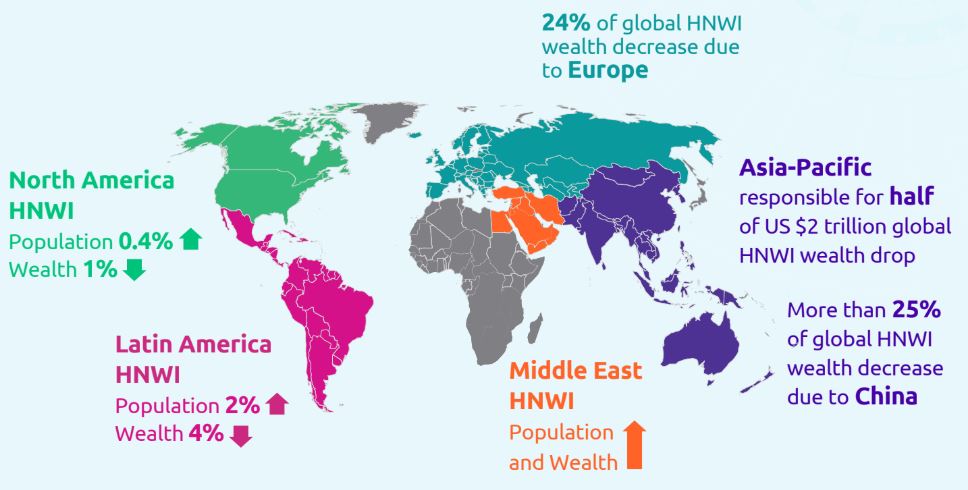
Trump's trade war has reduced the world's net worth by $2 trillion ($1.5 trillion of which came off the balance sheets of the 1%), with losses most deeply felt in China and Europe; North and South Americans took smaller losses, while the Middle East actually made gains: the richest Saudis have grown 7% richer during the trade war, while the richest Kuwaitis are 8% richer.
All in all, the global 1% saw a 6% decline in their wealth.
Continue reading
Trump's trade war has reduced the world's net worth by $2 trillion ($1.5 trillion of which came off the balance sheets of the 1%), with losses most deeply felt in China and Europe; North and South Americans took smaller losses, while the Middle East actually made gains: the richest Saudis have grown 7% richer during the trade war, while the richest Kuwaitis are 8% richer.
All in all, the global 1% saw a 6% decline in their wealth.
Continue reading
Monday, 6 May 2019
The global macroeconomics of a trade war: Findings from the EAGLE model
a column by Wilko Bolt, Kostas Mavromatis and Sweder Van Wijnbergen for VOX: CEPR’s Policy Portal
Increasing protectionism will slow down world trade and may dampen global economic growth.
This column examines the global macroeconomic consequences of a major trade conflict between the US and China, and shows that the two countries would be the biggest losers from a 10% ‘tit-for-tat’ trade war between them. As long as it does not get involved in the conflict, the euro area may temporally gain from trade diversion, as competitiveness improves and imports from regions whose exports are blocked elsewhere become cheaper.
Continue reading
Increasing protectionism will slow down world trade and may dampen global economic growth.
This column examines the global macroeconomic consequences of a major trade conflict between the US and China, and shows that the two countries would be the biggest losers from a 10% ‘tit-for-tat’ trade war between them. As long as it does not get involved in the conflict, the euro area may temporally gain from trade diversion, as competitiveness improves and imports from regions whose exports are blocked elsewhere become cheaper.
Continue reading
Friday, 3 May 2019
Tariffs and politics: Evidence from Trump’s trade wars
a column by Thiemo Fetzer and Carlo Schwarz for VOX: CEPR’s Policy Portal
Tariff retaliation is widely believed to be politically motivated.
This column presents evidence that retaliation against the Trump administration's tariff hikes seems to be systematically targeted against the Republican voter base. China appears to have been able to achieve a high degree of political targeting but likely harmed its own economy by targeting agricultural goods for which the US is a major supplier.
The EU, on the other hand, appears to be more successful in navigating the trade-off. It also finds some evidence suggesting that Republican candidates fared worse in the mid-term elections in the US counties most exposed to retaliation.
Continue reading
Tariff retaliation is widely believed to be politically motivated.
This column presents evidence that retaliation against the Trump administration's tariff hikes seems to be systematically targeted against the Republican voter base. China appears to have been able to achieve a high degree of political targeting but likely harmed its own economy by targeting agricultural goods for which the US is a major supplier.
The EU, on the other hand, appears to be more successful in navigating the trade-off. It also finds some evidence suggesting that Republican candidates fared worse in the mid-term elections in the US counties most exposed to retaliation.
Continue reading
Trade wars and global value chains: Shooting oneself in the foot
a column by Cecilia Bellora and Lionel Fontagné for VOX: CEPR’s Policy Portal
Since 2018, the US administration has implemented several measures limiting free trade with China and other countries.
Using cross-country data and a general equilibrium model, this column argues that a trade war hurts not only the targeted countries but also the country imposing the tariffs.
Global value chains prompt countries to decrease tariffs when the domestic content of foreign-produced final goods and the imported content of domestic production of final goods are high. Once imposed, tariffs have an indirect effect on third sectors and countries through global value chains.
Continue reading
Since 2018, the US administration has implemented several measures limiting free trade with China and other countries.
Using cross-country data and a general equilibrium model, this column argues that a trade war hurts not only the targeted countries but also the country imposing the tariffs.
Global value chains prompt countries to decrease tariffs when the domestic content of foreign-produced final goods and the imported content of domestic production of final goods are high. Once imposed, tariffs have an indirect effect on third sectors and countries through global value chains.
Continue reading
Subscribe to:
Posts (Atom)

