Sunday, 21 April 2019

5 Steps to Lower Your Financial Stress When You're Drowning in Debt

a post by Sam Theron for the Tiny Buddha blog


“You can’t calm the storm, so stop trying. What you can do is calm yourself. The storm will pass.” ~Timber Hawkeye

I never anticipated the stress and pressure that come when you are no longer able to pay your bills on time.

Knowing that you owe money, and that your current income isn’t going to cover it, is a heavy reality to face.

I found myself starting to envy low-income, salaried employees. Even though they don’t earn a lot, which I’m sure brings its own challenges, they aren’t eligible to receive huge credit. This protects them from ever finding themselves owing millions.

My husband and I have recently gone through a time when we found ourselves way overextended. Due to a series of bad beats and various twists of fate, we found ourselves in over our heads. And this is not a good space to be in.

It’s a sickening feeling that has seemed to overshadow all the other areas of our lives. We’ve felt unable to breathe, knowing that debt is hanging over us. When the phone rings from an unknown number, we’re hesitant to answer it. It could be someone wanting to know when we will pay a bill.

Continue reading


Saturday, 20 April 2019

10 for today starts with Arab horsemen (and there's me thinking they always rode camels but then I remembered about Arabian horses)

Towards a postcolonial nineteenth century
via the OUP blog by Charles Forsdick and Jennifer Yee

Arab Horsemen by Eugene Fromentin. Public domain via Wikimedia Commons
French and Francophone Studies is a vibrant and diverse field of study, in which research on nineteenth century literature, and research from the perspective of postcolonial theory, are thriving—and indeed represent particular areas of growth. What does it mean, then, to argue for a “postcolonial nineteenth century”? It would certainly be misleading to see the two areas as completely divorced or discordant. Postcolonial theory was, in part, born out of nineteenth-century studies and an interest in colonial discourse, with a comparative literary focus ranging across English- and French-language texts. This was, after all, among the principal specialisms of Edward Said, author of one of the founding texts of postcolonial studies, Orientalism, published forty years ago in 1978.
Continue reading

==============================
Battle of Thebes 335 BC Between Alexander the Great and the City State of Thebes
via About History by Alcibiades
Battle of Thebes 335 BC Between Alexander the Great and the City State of Thebes
The battle and destruction of Thebes in 335 BC by Alexander the Great, destroyed the strongest city-state in Greece at that time and allowed him to control all of Greece. Thebes was, if not geographically, then strategically in the center of Greece. From the north, the Thermopylae Pass, the so-called gate to Greece, separated the Possessions of Thebes from the plains of Thessaly. The warlike Aetolians lived to the west of Thebes along with other mountainous Greek tribes. The southeast of Thebes bordered on the land of Attica, the possessions of Athens, and on the southwest began the isthmus on the peninsula Peloponnese, inhabited by many famous cities, the most famous of which was Sparta. Whoever controlled Thebes, could control the whole of Greece. Therefore, Alexander’s father, King Philip II, tried to weaken the influential city. After the victory in the battle of the Chaeronea in 338 BC, many Thebans were expelled, and Philip stationed a Macedonian garrison in Cadmeia, a fortress on the southern outskirts of Thebes.
Continue reading

==============================
Squids used to have shells. Here's how they lost them.
via Boing Bong by Andrea James

Squid ancestors were happy creatures with shells until about 400 million years ago, when the emergence of fish with jaws set off an evolutionary arms race between fish and cephalopods.
Continue reading [and watch an interesting video]

==============================
A Short Analysis of Emily Dickinson’s ‘I started Early – Took my Dog’
via Interesting Literature
‘I started Early – Took my Dog’ is one of those Emily Dickinson poems that repay careful consideration of not only its literal meaning but the symbolic, other meaning which its images and double meanings appear to gesture towards. The poem requires a bit of close analysis to tease out this other interpretation, however, so here goes…
Continue reading

==============================
This Prohibition-era map is a love letter to alcohol
via the Big Think blog by Frank Jacobs
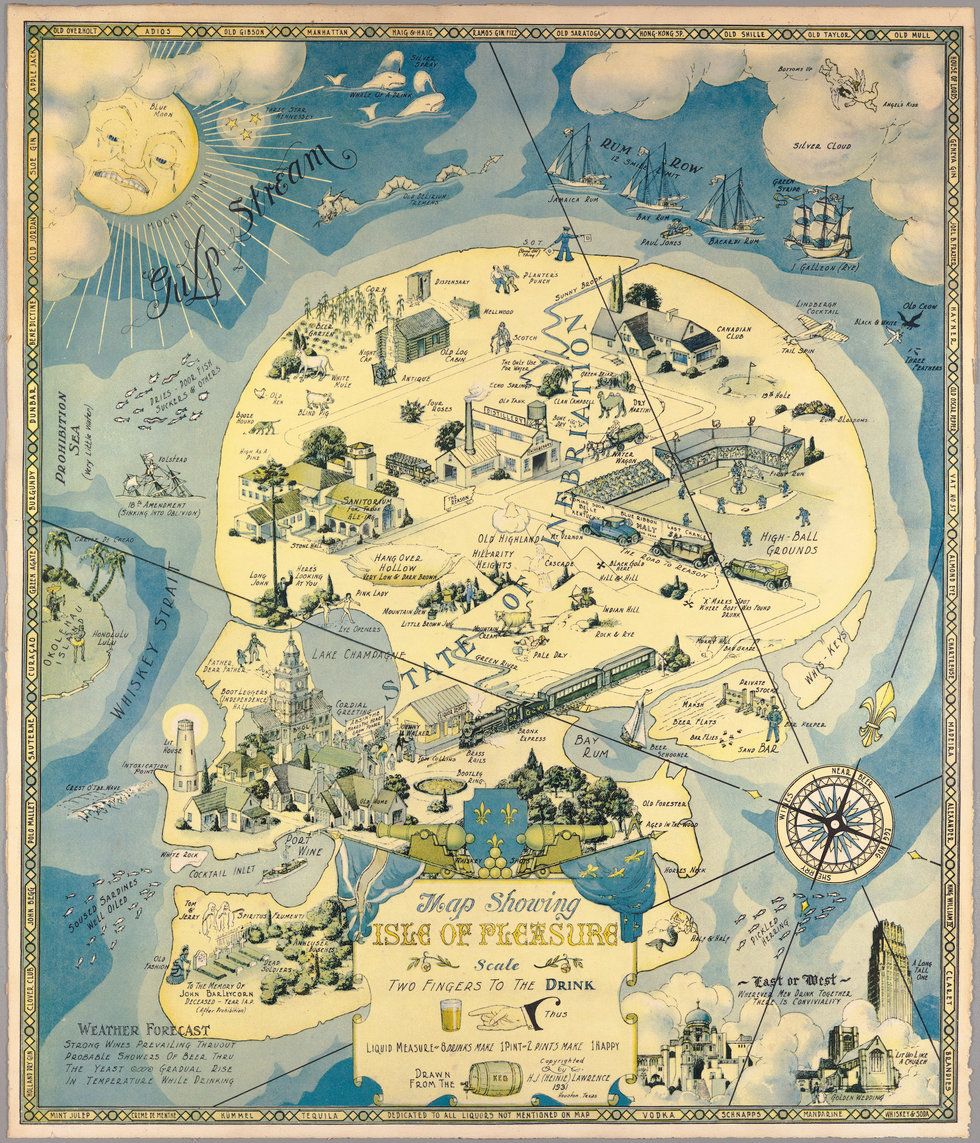
Throughout the 19th century, cartography was often used to promote sobriety. Here’s a counter-example: a map that celebrates alcohol, in various guises – published two years before the end of Prohibition.
The Temperance movement, which from the early 1800s sought to reduce the consumption of alcohol in the U.S., had a curious affinity for cartography. It produced numerous 'Temperaaxnce maps', so called because they used fictional topographies to warn against the wickedness of drinking and promote the benefits of sobriety.
Continue reading [it is long but very interesting. Cocktail recipes, explanations of weird terms etc etc]

==============================
How do male hummingbird dance moves alter their appearance?
via the OUP blog by Richard Simpson

"Hummingbird landing on pink flower with green stem" by Andrea Reiman. Public domain via Unsplash
Many animals use colorful ornaments and exaggerated dances or displays to attract mates, such as birds of paradise. Some animals go even further and have colors that can change as they dance, such as in peacocks or morpho butterflies. This special type of color is called iridescence, and its appearance changes based on the angles of observation and illumination. Thus, the appearance of iridescent coloration can be easily manipulated by specific movements, postures, and orientations to potentially exhibit a lot of changes in color appearance during a particular dance—in other words iridescent coloration can produce a flashy color display.
Continue reading

==============================
Plants 'talk to' each other through their roots
via the Guardian by Hannah Devlin Science correspondent
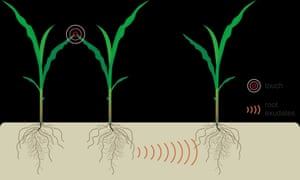
Illustration of above ground interactions between neighbouring plants by light touch and their effect on below-ground communication.
Illustration of above ground interactions between neighbouring plants by light touch and their effect on below-ground communication. Photograph: Elhakeem et al (2018)
Scientists studying corn seedlings believe that they send signals under the soil, advising each other of the proximity of other plants
Plants use their roots to “listen in” on their neighbours, according to research that adds to evidence that plants have their own unique forms of communication.
The study found that plants in a crowded environment secrete chemicals into the soil that prompt their neighbours to grow more aggressively, presumably to avoid being left in the shade.
“If we have a problem with our neighbours, we can move flat,” said Velemir Ninkovic, an ecologist at the Swedish University of Agricultural Sciences in Uppsala and lead author. “Plants can’t do that. They’ve accepted that and they use signals to avoid competing situations and to prepare for future competition.”
Continue reading

==============================
10 things you'll be surprised to learn about dinosaurs
via Boing Boing by Mark Frauenfelder
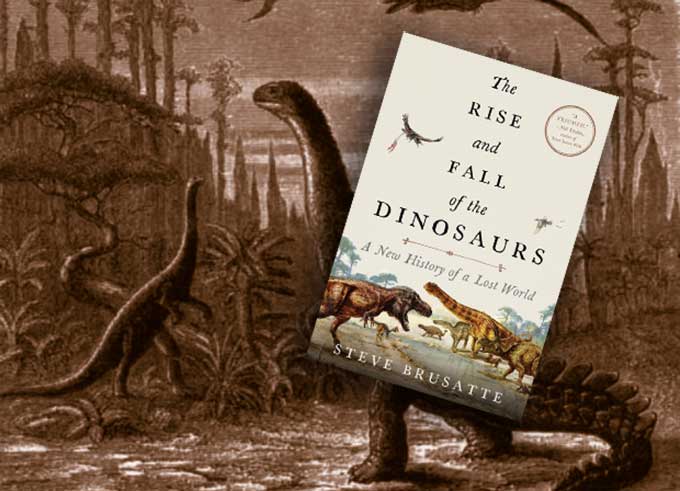
Steve Brusatte is a paleontologist at the University of Edinburgh and a specialist on the evolution of dinosaurs. He has a new book out called The Rise and Fall of the Dinosaurs. Here's a list of surprising facts about dinosaurs he wrote for Boing Boing. Enjoy -- Mark
Continue reading

==============================
Is human civilization Earth's first?
via the Big Think blog by Robby Berman
Earth is old enough to have been home to other industrialized civilizations so far back in the past we have no idea they were there. What we’ll leave behind may offer clues of what we could look for as evidence.
A paper recently published in International Journal of Astrobiology asks a fascinating question: “Would it be possible to detect an industrial civilization in the geological record?” Put another way, “How do we really know our civilization is the only one that’s ever been on earth?” The truth is, we don’t. Think about it: The earliest evidence we have of humans is from 2.6 million years ago, the Quarternary period. Earth is 4.54 billion years old. That leaves 4,537,400,000 years unaccounted for, plenty of time for evidence of an earlier industrial civilization to disappear into dust.
Continue reading

==============================
10 of the Best Poems about Music
via Interesting Literature
The greatest poems about music and singing
Music and poetry were once natural bedfellows, with many ‘poems’ being sung to music for entertainment at feasts and royal courts, or in local taverns. If, as Walter Pater said, all art constantly aspires towards the condition of music, then it’s little surprise that so many poets have tried to write poetry that is ‘musical’ in some sense. Here are ten of the best poems about music, song, dance, instruments, and the like.
Continue reading


‘Vox Twitterati’: Investigating the effects of social media exemplars in online news articles

an article by Andrew R N Ross and Delia Dumitrescu (University of East Anglia, UK) published in New Media & Society Volume 21 Issue 4 (April 2019)

Abstract

There is a growing trend among online news outlets to include Twitter posts as an equivalent to the traditional “vox pop” or “man-on-the-street” interview.

Media effects research has documented the ability of vox pops to influence consumer perceptions of news issues within the traditional media environment, but there is limited research on the possible effects that including social media exemplars as vox pops within editorially curated articles might have on issue perceptions.

Drawing on the exemplification effects literature to inform the experimental design, we conduct two studies on two topics of either low or high national salience and find strong evidence that vox pop tweets can influence perceptions of public opinion and, indirectly, readers’ own opinions on an issue.

Results are discussed in light of implications for journalistic practice, media effects research and the wider democratic process.


Why home bias can decrease civil service performance: Evidence from India

a column by Guo Xu, Marianne Bertrand and Robin Burgess for VOX: CEPR’s Policy Portal

How the personnel of the state perform is likely to have important implications for its effectiveness and economic performance.

This column combines administrative records with survey data on the performance of Indian Administrative Service officers to examine how social proximity affects bureaucrat performance. The results suggest that officers allocated to their home state perform worse than comparable officers who are allocated to non-home states.

Continue reading

Hazel’s comment:
I can understand this. As a very junior member of staff in what was then the Employment Exchange I was partially responsible for someone’s benefit being stopped. Bumping into him in the pub the following week was not a pleasant experience.
Reminds me of the old saying about shitting on your own doorstep.


Friday, 19 April 2019

10 for today starts with creativity and provides some interesting items before ending up with a poem by D H Lawrence

Creativity, the brain, and society
via the OUP blog by Elkhonon Goldberg

Child painting by EvgeniT. CC0 via Pixabay
Creativity research has come of age. Today, the nature of the creative process is investigated with every tool of modern cognitive neuroscience: neuroimaging, genetics, computational modeling, among them. Yet the brain mechanisms of creativity remain a mystery and the studies of the brains of “creative” individuals have so far failed to produce conclusive results.
Continue reading

==============================
A Summary and Analysis of ‘Jack and the Beanstalk’
via Interesting Literature
What is the meaning of this classic fairy tale?

What is the story of ‘Jack and the Beanstalk’ all about? And what is the moral of this story? It’s one of the best-known and best-loved fairy tales in Britain, and also – as we will see – one of the oldest.
Continue reading

==============================
3,600-year-old tattoo kit found
via Boing Boing by Clive Thompson

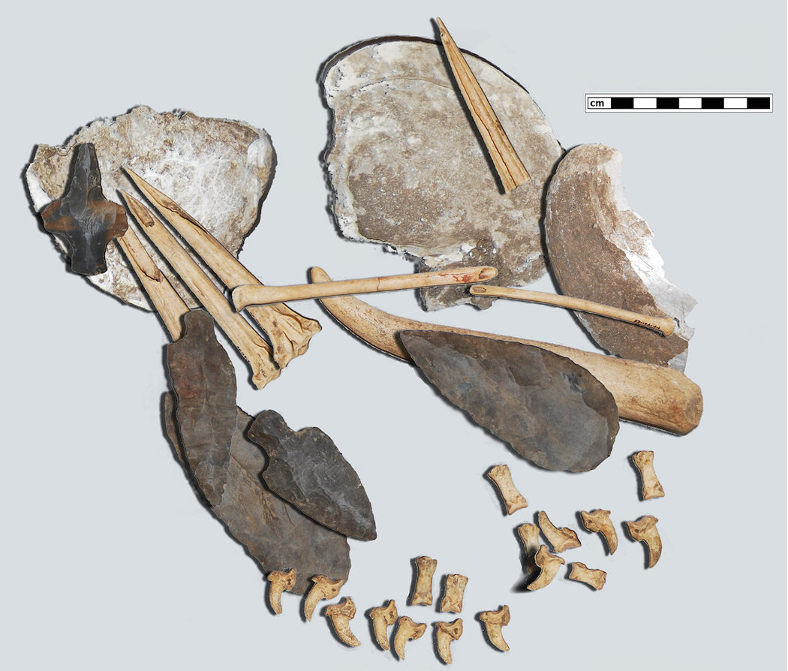
Archaeologists have long known that tattooing goes back for millennia. But recently they made a cool find: what appears to be a Native American tattoo kit that's at least 3,600 years old.
The kit, which includes a bunch of pointy wild-turkey bones, was unearthed decades ago, but recently came under closer scrutiny.
Continue reading

==============================
The History of Taoism
via About History by Alcibiades
The History of Taoism
Taoism or Daoism is a Chinese philosophy and folk religion of people primarily in the rural areas of China. The primary idea and focus of Taoism is the Tao (way, path), which is important to be followed, not taking any action that is contrary to nature and finding the place in the natural order of things. Taoism has had a big impact on Chinese civilization and, surprisingly, on science. Researching the natural world, to help humankind, a number of important discoveries were made. For example, the search for the “elixir of immortality” led to the invention of gunpowder and improved Chinese medicine in the effort to align human life with cosmic energy, the magnetic compass was discovered, and other contributions that had an impact on Chinese culture and the world.
Continue reading

==============================
Fossil sheds light on evolutionary journey from dinosaur to bird
via the Guardian by Nicola Davis
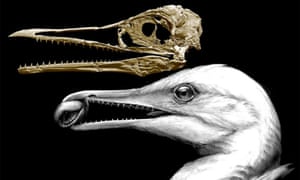
toothed seagull. Caption: CT-scan-based skull restoration and life reconstruction of the toothed stem bird Ichthyornis dispar showing that the first form of the avian beak was a precision pincer-tip probably used for fine manipulation.
Flying dinosaurs still had dinosaur-like skulls, but gradually more birdlike features evolved. The Ichthyornis dispar looks like a bird, but still has the sharp teeth of a dinosaur. Photograph: Michael Hanson and Bhart-Anjan S. Bhullar
Scientists have reconstructed the skull of an Ichthyornis dispar, a very early bird species that still had the sharp teeth of a dinosaur
It was one of the fossils Darwin hailed as evidence of evolution. Now scientists have unveiled four skulls of an ancient toothed seabird in a study experts say reveals the face of early birds.
Thought to have lived between 66 and 100m years ago the gull-like bird, known as Ichthyornis dispar, was first written about in the 19th century by American palaeontologist Othniel Marsh after fossil remains were unearthed in the US.
These revealed that the animal’s body was similar to modern birds in many respects. But there was a startling difference: it had jaws which housed sharp teeth.
Continue reading

==============================
City as Character
via Arts & Letters Daily: Tyler Malone in Lapham’s Quarterly
Getting lost in the text-cities of Joyce, Döblin, and Dos Passos.

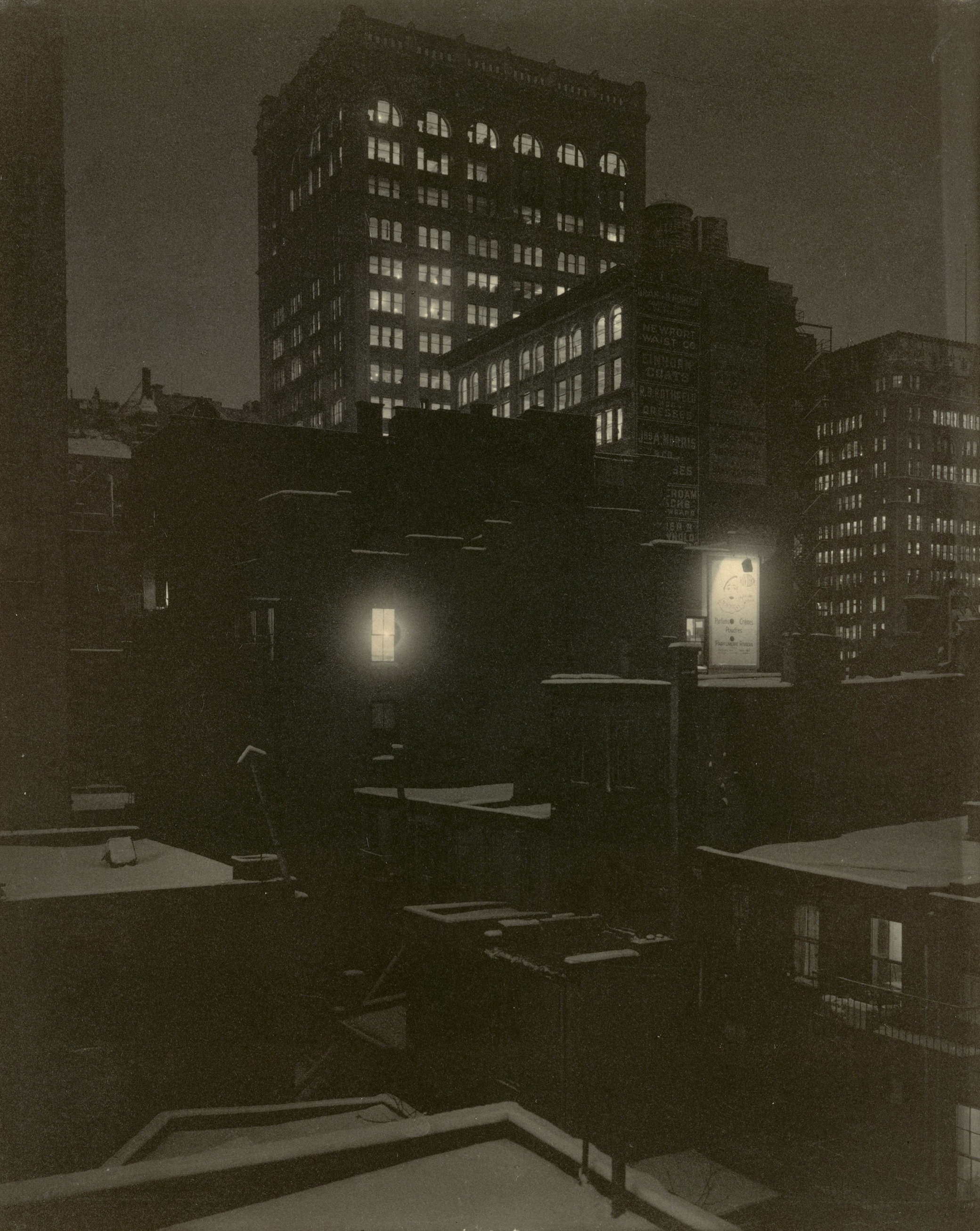
From the Back Window—291, 1915. Photograph by Alfred Stieglitz. The Metropolitan Museum of Art, Alfred Stieglitz Collection, 1949.
Sometimes I forget that I’ve never been to Dublin. I feel its cobblestones under my feet. I hear the “shouts in the street” of Irish schoolboys—what Stephen Dedalus calls “God” in James Joyce’s Ulysses—as clearly as I do the susurrations of my dog Bloom beneath my desk as I write. I picture the cemetery where my dog’s namesake, Leopold Bloom, attends the funeral of Paddy Dignam, spying at the edges of the funeral party a “lankylooking galoot” wearing a mackintosh, more vividly than I can any of the cemeteries in which my grandparents are buried. I have an uncanny familiarity with what Dedalus elsewhere calls the “items in the catalogue of Dublin’s furniture”: the Martello Tower at Sandycove, the Forty Foot promontory, the “scrotumtightening sea” below, the “unwholesome sandflats” of Sandymount Strand, the residence at 7 Eccles Street, Sweny’s Chemist, Trinity College, Merchant’s Arch, where a man might buy a smutty book like Sweets of Sin for his wife, and on through to the Liffey.
Continue reading

==============================
Look at this comet's terrifically chaotic surface
via Boing Boing by David Pescovitz

Landru79 created this spectacular GIF from images captured in 2016 on the surface of Comet 67P/Churyumov–Gerasimenko by the European Space Agency lander Philae deployed by the Rosetta probe. The video is significantly sped up, compressing 25 minutes into a few seconds of intense action. But what exactly are we looking at in this pandemonium?
Continue reading

==============================
The salon reinvented
via 3 Quarks Daily: Jonathan Beckman in 1843 Magazine
The marriage of sated appetites and adventurous conversation has a long history. In Ancient Greece, philosophical discourses were washed down with jugs of wine at banquets known as symposia. There was always a risk that some people would over-indulge. In the most famous description of a symposium, Plato describes how the guests, who included Socrates and Aristophanes, were expounding on the nature of love when they were interrupted by the arrival of a boozed-up general, Alcibiades. Table talk was considered an art to be mastered. Athenaeus, a Greek grammarian of the third century AD, wrote a 15-volume work entitled Deipnosophistae (“The Learned Banqueters”) about a series of dinners in which conversation ranged from philology to homosexuality.
Continue reading

==============================
For thousands of years, humans slept in two shifts. Should we do it again?
via the Big Think blog by Robby Berman
Researchers believe that the practice of sleeping through the whole night didn’t really take hold until just a few hundred years ago.
She was wide awake and it was nearly two in the morning. When asked if everything was alright, she said, “Yes.” Asked why she couldn’t get to sleep she said, “I don’t know.” Neuroscientist Russell Foster of Oxford might suggest she was exhibiting “a throwback to the bi-modal sleep pattern." Research suggests we used to sleep in two segments with a period of wakefulness in-between.
Continue reading

==============================
A Short Analysis of D. H. Lawrence’s ‘New Heaven and Earth’
via Interesting Literature
Although he is better-known as a novelist, D. H. Lawrence also wrote a great deal of poetry. ‘New Heaven and Earth’, a long poem he wrote in 1917 during the First World War, captures Lawrence’s anger and despair over the destruction of the war, and might be regarded as a forerunner to greater (and longer) poems written by Lawrence’s fellow modernists, such as T. S. Eliot’s The Waste Land.
Continue reading


Thursday, 18 April 2019

Ketamine rebuilds connections between neurons lost during stress

a post by Mark Frauenfelder for the Boing Boing blog


Ketamine has been used as a horse tranquilizer, infant anesthetic, recreational drug, and most recently, a surprisingly effective treatment for depression (which the US Food and Drug Administration approved last month). Now researchers are starting to understand how ketamine works: by rebuilding connections between neurons lost during stress.

Continue reading


Why humor is an essential life skill

a post by Matt Davis for the Big Think blog

From your health to leadership, a good sense of humor can improve nearly every aspect of life.


  • Studies have shown that a sense of humor can improve your mental and physical health, boost your attractiveness, and improve your leadership skills.
  • There are a variety of theories and styles of humor, each of which can improve your understanding of the subject.
  • Humor may be a critical life skill, but can it be taught?

Mark Twain said that "Humor is the great thing, the saving thing after all. The minute it crops up, all our hardnesses yield, all our irritations, and resentments flit away, and a sunny spirit takes their place." He's certainly not wrong. Humor may very well be the great thing. It touches upon nearly every facet of life—90% of men and 81% of women report that a sense of humor is the most important quality in a partner, it's a crucial quality for leaders, and it's even been shown to improve cancer treatments. There's no doubt that humor is a life skill that everybody needs. But how do we define humor, and can it be taught?

Continue reading