a post by Laura Gardiner and Torsten Bell for the Resolution Foundation blog
Generational politics is nothing new, but the extent of the profound generational cleavage that has emerged in British electoral politics is novel. The Brexit vote and the 2017 general election put generational politics centre‐stage, eclipsing in some ways the traditionally dominant role of class. Our two main parties now rely on age‐based coalitions of support—on the votes of the young in the case of Labour and the old in the case of the Conservatives. Both are severely constrained in their ability to spread their support to other age groups and, partly as a result, to form a government with a significant majority. This matters for understanding the cut and thrust of British politics today, but its importance only grows when we look ahead.
Both sides may be tempted to view this as an equilibrium they can live with, as Labour believes it has the voters of the future and the Conservatives rely on the age groups most likely to actually vote. But the risk is that this ‘generational lock’ on our politics blocks a much‐needed progressive governing shift for post‐Brexit Britain—a shift to address two crucial, but generationally charged, economic challenges.
First, the need to support young people’s living standards, because the expectation of each generation doing significantly better than their predecessors is not being met for younger cohorts today.
And second, delivering and, crucially, paying for the health and care that a growing older population will need as the large baby boomer generation retires. Such a governing agenda will involve trade‐offs that a generationally polarised politics hinders at best, and blocks at worst.
Continue reading
Monday, 1 April 2019


A woman's work is never done: twice as many still going at 65
an article by Amelia Hill published in the Guardian
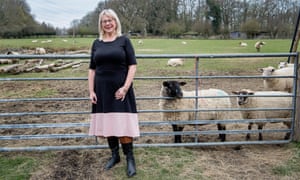
Dee Flower joined the autism charity Little Gate Farm as a consultant after trying out retirement. Photograph: Linda Nylind/The Guardian
Dee Flower tried to retire last year, at the age of 68. It seemed, the former recruitment specialist said, like a good idea. “I found myself thinking, ‘I guess it’s about time to retire now.’”
Flower’s decision to reverse the move a month later is one of the reasons the British economy set a new employment record this week. The number of people employed in the UK is at its highest since records began in 1971 – 32.7 million people – and workers over the age of 50 are a key factor in the peak.
Describing her U-turn, Flower added: “I thought, ‘Oh my God, what have I done? I don’t want to retire!’ I felt I’d lost my sense of purpose.”
Advertisement
Still ambitious for a challenge, however, Flower decided not to return to her old job. “I felt I needed to think about something completely different,” she said.
Flower attended job fairs, and after eight months joined the Sussex-based autism charity, Little Gate Farm, as a consultant, promoting their young people to employers.
“My new line managers are the same age as my children,” she said. “And that’s completely fine with me. In fact, it’s great. I feel so much happier now than when I was retired.”
Flower also represents another twist to the official job figures. According to new research, twice as many women over the age of 65 are employed in the workplace today compared with a decade ago.
Continue reading
How to Embrace Your Sensitive Superpower and Stop Feeling Overwhelmed
a post by Ben Fizell for the Tiny Buddha blog

“With realization of one’s own potential and self-confidence in one’s ability, one can build a better world.” – Dalai Lama
Sensitivity can feel like a gift or a burden, depending on our relationship to it.
If you often feel completely overwhelmed by an overload of stimulation, then your sensitivity probably doesn’t feel like an asset. Maybe more like a liability. But it doesn’t have to be this way.
As an introvert and sensitive person, I’ve navigated these waters my whole life, and I’ve come to realize that sensitivity is more than a gift—it’s a superpower! But first we need to understand what sensitivity is and what it’s not.
Continue reading
How confident are we in forecasting the automation of work?
an article by Elliot Jones for the DEMOS blog
Earlier today I blogged what the BBC Business News was saying about the ONS forecast, this one is more detailed.
This week, the Office for National Statistics released their first statistics on which occupations they believe are at the highest risk of automation across England. They estimate about 7.4% of all jobs are at high risk of automation, i.e. there is a 70%+ probability that workers in that occupation will be replaced with some combination of software and robotics. In particular, they predict:
Continue reading
Earlier today I blogged what the BBC Business News was saying about the ONS forecast, this one is more detailed.
This week, the Office for National Statistics released their first statistics on which occupations they believe are at the highest risk of automation across England. They estimate about 7.4% of all jobs are at high risk of automation, i.e. there is a 70%+ probability that workers in that occupation will be replaced with some combination of software and robotics. In particular, they predict:
- Over 10% of roles held by women are at high risk of automation, compared to 4% of men’s roles.
- 15.7% of 20-24-year-olds are in roles that are at high risk of automation, more than any other age group.
- The North-East, the East of England, Cornwall and Devon have the highest average risk of local jobs being automated, whereas the rest of the South and London have the lowest average risk of automation.
Continue reading
Age War as the New Class War? Contemporary Representations of Intergenerational Inequity
an article by Susan Pickard (University of Liverpool, UK) published in Journal of Social Policy Volume 48 Issue 2 (April 2019)
Abstract
This paper examines intergenerational justice discourses that feature prominently in both the contemporary UK media and beyond, arguing that these constitute both a continuation of previous debates about the economic and social burden of the dependent ‘fourth age’ and a newer and more prominent denigration of the ‘third age’, both of which possess deep cultural and psychological roots.
Both themes are subsumed in the trope of the old as in some ways stealing the future of the nation, represented by youth. Analysing media depictions of intergenerational injustice across several themes, the paper suggests that, whilst justifying welfare retrenchment and other aspects of neoliberalism, the portrayal of social problems in terms of generational war emerges from age ideology and an age system that, among other things, intersects with and naturalises other forms of stratification.
This partly accounts for the fact that the attack on the ‘third age’ is particularly prevalent in left of centre, or progressive, media on both sides of the Atlantic. That the age system has been overlooked and underplayed in sociological terms is an important oversight since the former materially and ideologically facilitates the ever-growing socio-economic inequality that is a feature of our times.
Full text (PDF 18pp)
Loneliness in Seniors
a post by Janet Singer for the World of Psychology blog

It’s no surprise to most of us that loneliness has become an epidemic. In fact, those with mental health issues experience loneliness at an alarming rate. The one group most affected, however, appears to be the elderly, with millions of older adults across the Unites States feeling lonely. Major health risks such as heart disease and dementia often come along with this loneliness.
In October 2018, the University of Michigan National Poll on Healthy Aging asked a national sample of adults age 50-80 about their health, health behaviors, and experiences and feelings related to companionship and social isolation. The results are sobering.
The poll explored many aspects of social connection and health and asked about feelings of companionship, feelings of social isolation, and social contact among people age 50 to 80.
Continue reading
Automation could replace 1.5 million jobs, says ONS
a post by Jonty Bloom for the BBC Business News blog

Some 1.5 million people in England are at high risk of losing their jobs to automation, according to the Office for National Statistics (ONS).
It says 70% of the roles at high risk of automation are currently held by women. Part-timers and the young are the next most at risk.
The ONS analysed the jobs of 20 million people in 2017 and found 7.4% of these were at high risk of being replaced.
It has developed a "bot" to show the risks for particular occupations.
The ONS defines automation as tasks currently carried out by workers being replaced with technology. That could mean computer programs, algorithms, or even robots.
The three occupations with the highest probability of automation are waiters and waitresses, shelf fillers and elementary sales occupations, all of which are low-skilled or routine.
Those at the lowest risk are medical practitioners, higher education teaching professionals, and senior professionals in education.
Continue reading
Subscribe to:
Posts (Atom)

