Saturday, 2 December 2017

10 for today moves from the Bolshoi Theatre to driftwood sculpture

How the Bolshoi Theatre Museum built its massive online archive of historic documents
via ResearchBuzz Firehose: Chloe Dobinson in ComputerworldUK
bolshoi theatre1
The Bolshoi Theatre Museum has completed a major project to digitise a range of historical documents, with the aim of making the information publicly accessible and searchable via its website.
Four thousand volunteers helped scan 8,000 historic posters, 120,000 programmes and 100,000 rare photographs from the 192-year-old Russian theatre's museum archives, in order to convert them into digital formats.
“The three key objectives of the project are to rediscover, preserve and share the Bolshoi Theatre’s history, as part of the world’s cultural heritage,” Bolshoi Theatre director, Lidia Kharina, told Computerworld UK.
“The project helps to uncover previously overlooked facts, patterns and insight. It also helps protect and preserve the artefacts by creating digital copies. And lastly, it is important to make the archive easily searchable and accessible to the public all over the world.”
Continue reading

=============================
The paradox of Margery Kempe
via OUP Blog by Johanna Luthman

“Abbey, glass…” by 1899441. CC0 Public Domain via Pixabay.
After a period of chastity, Margery Kempe’s husband described one of those hypothetical scenarios that couples sometimes use to test each other. “Margery, if a man came with a sword and wanted to chop off my head unless I had sexual intercourse with you as I used to before, […] [would you] allow my head to be chopped off, or else allow me to have sex with you as I previously did?” When pressed to answer, Margery finally told him she would “rather see [him] slain than that [they] should return to [their] uncleanliness.” Did that make her a bad wife, as her husband initially complained, or a devout Christian, as she believed?
The fifteenth-century English mystic Margery Kempe has divided opinions for centuries. For supporters, Kempe’s earnest spiritual struggles, vivid visions, and difficult journey to grace were laudable and inspiring. For opponents, her loud expressions of faith seemed fake and showy, her constant talk of—and with—God was annoying at best and potentially heretical at worst, and her independence and seemingly unwomanly behavior were problematic. Both sides agreed that she was uncommonly persistent in trying to live her life on her own terms. Since the rediscovery of the account of her life in the 1930s, modern scholars and readers have variously suggested that Kempe was a significant example of late medieval religiosity, a proto-feminist, a mentally ill hysteric, or a woman suffering from post-partum depression and menopausal symptoms. In any case, Kempe was, and still is, a difficult woman to ignore, and the autobiographical The Book of Margery Kempe, originally written in the 1430s, provides a fascinating view into both the spiritual and profane world that she inhabited.
Continue reading

=============================
Herman Melville's mystery: was Billy Budd black?
via New Statesman by Philip Hoare
A newly unearthed photograph identifies the African-American Trafalgar survivor who appears in Melville’s final novel. Could the book’s hero have been black, too?
The photograph below tells a remarkable tale. I discovered it in the Royal Collection at Windsor Castle while researching my new book. The image, taken by John Havers, was acquired by Prince Albert in the 1850s and it portrays veterans of Trafalgar at the Royal Navy hospital in Greenwich in 1854. Sitting on a bench overlooking the Thames, these aged faces and bodies were a familiar sight in south London in their 18th-century-style frock coats and cocked hats, earning them the nickname “Greenwich geese”.
One figure in particular stands out. Using the hospital records, I identified the third man from the left as Richard Baker, an African American, born in Baltimore in 1770, who served at Trafalgar on HMS Leviathan; he entered the hospital in 1839. Seventeen men born in Africa fought for the British during the battle; 123 from the West Indies. There is a black man portrayed on the Westminster-facing bronze plaque on Nelson’s Column in Trafalgar Square. But the records show only one Trafalgar veteran from Baltimore: Baker, who is likely to have been a freed or even escaped slave.

Continue reading

=============================
Dead heads: Turkish site reveals more evidence of neolithic ‘skull cult’
via the Guardian by Ian Semple, Science editor
A carving found on a pillar at Göbekli Tepe, apparently showing a figurine holding a head.
A carving found on a pillar at Göbekli Tepe, apparently showing a figurine holding a head. Photograph: German Archaeological Institute (DAI)
Fragments of carved bone unearthed at an ancient site on a Turkish hillside are evidence that the people who spent time there belonged to a neolithic “skull cult” – a group that embraces rituals around the heads of the dead.
The remains were uncovered during field work at Göbekli Tepe, an 11,000-year-old site in the south-east of the country, where thousands of pieces of human bone were found, including sections of skulls bearing grooves, holes and the occasional dab of ochre.
Pieces of three adult skulls recovered from the sitehave hallmarks of being carved with flint after being scalped and defleshed first. Evidence that the latter was not always an effortless affair is found in multiple scrape marks where the muscles once attached to the bone.
Continue reading

=============================
Decolonising archaeology in Iraq?
a post by Dr Juliette Desplat for The National Archives Blog
A new Law of Antiquities was approved in Iraq in 1924, as the country was under a British Mandate. Drawn up by Gertrude Bell, it was very generous towards foreign archaeologists, allowing them to receive and export a substantial share of the artefacts uncovered.
It all started to change in 1933, a year after the Kingdom of Iraq was granted independence. The ‘Arpachiyah Scandal’, involving Agatha Christie’s husband Max Mallowan, was the first step on a long and winding road towards an attempt to decolonise archaeology.
Continue reading

=============================
If diplomacy did not exist, we would need to invent it
via OUP Blog by Tom Fletcher

“Apple Device Blur” by Pexels. CC0 Public Domain viaPixabay.
We now face a century of change like no other in history. Technology will transform how we meet our needs for peace, dignity and community. This will shatter the global political equilibrium, and shift power away from governments towards individuals. States, ideas and industries will go out of business. Inequality could grow.
Already, the internet has changed the world faster than any previous technology. The smartphone has given a superpower to much of the world’s population. For many, the web is no longer for our downtime, but for all our time. We have access not just to more information than we can process, but more than we can imagine. From self driving cars to artificial intelligence, as Nobel Prize winning geneticist Richard Smalley says – “when a scientist says something is possible, they’re probably underestimating how long it will take. If they say it is impossible, they’re probably wrong”.
Continue reading

=============================
How genetics is settling the Aryan migration debate
via 3 Quarks Daily: Tony Joseph in The Hindu
The thorniest, most fought-over question in Indian history is slowly but surely getting answered: did Indo-European language speakers, who called themselves Aryans, stream into India sometime around 2,000 BC – 1,500 BC when the Indus Valley civilisation came to an end, bringing with them Sanskrit and a distinctive set of cultural practices? Genetic research based on an avalanche of new DNA evidence is making scientists around the world converge on an unambiguous answer: yes, they did.
Continue reading

=============================
How ping pong balls are made
via Boing Boing by David Pescovitz

A fine example of factory porn: The International Table Tennis Federation paid a visit to Double Happiness, manufacturers of balls and other ping pong products.
Continue to see the video

=============================
The 20 Most Useless Websites on the Internet
via MakeUseOf by Anya Zhukova
On a normal day, we’re all about helping you make better use of all things technology in your day-to-day life.
But today is not one of those days.
Every once in a while, we go astray and give you a peek at some of the weirdest things the web has to offer. Big fan of odd physics in gaming? Love debunking weird science claims? We know just the right places for you online.
bacon sizzling
Much as I love bacon I do not want to watch it online.
Continue reading and discover more bizarre sites you would not believe!

=============================
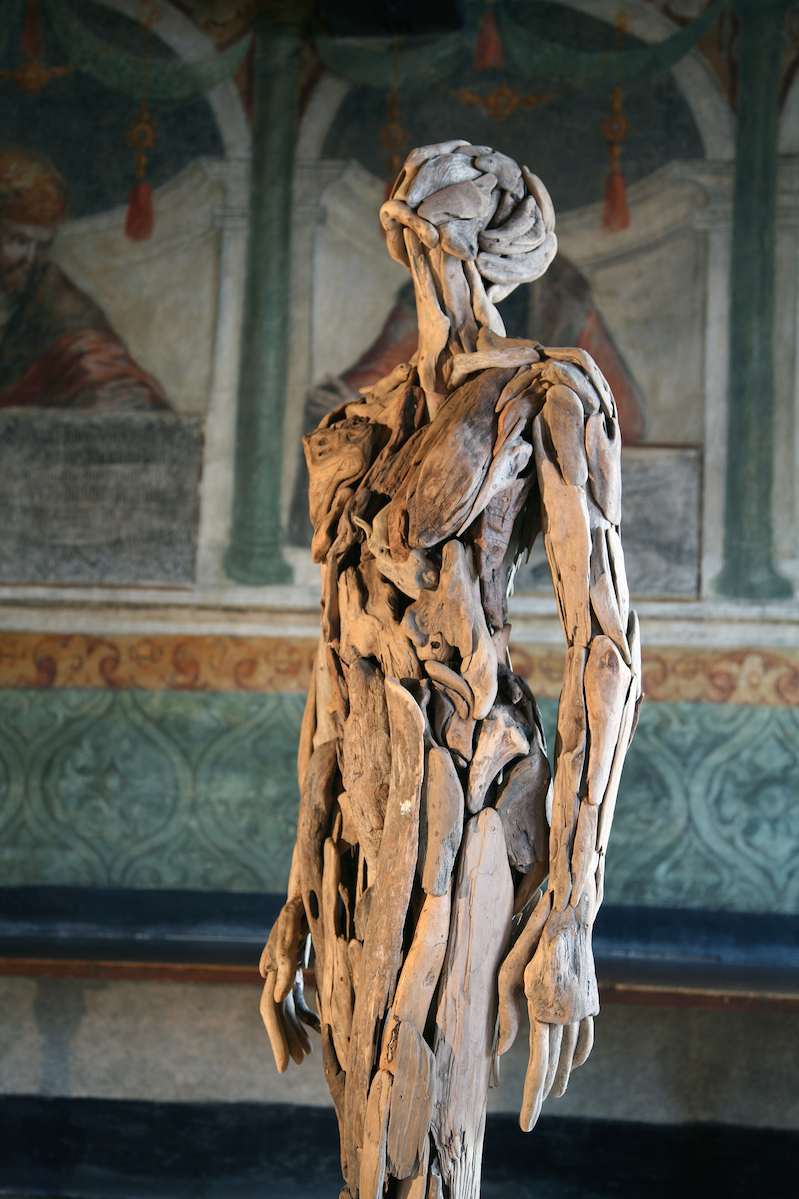
Beautiful and haunting human forms made of driftwood
via Boing Boing by Andrea James

Nagato Iwasaki scours beaches for driftwood he can repurpose into lovely sculptures.
Continue reading


How We Can Break the Cycle of Pain

a post by Joshua Kauffman for the Tiny Buddha blog


“Be the change you wish to see in the world.” ~Gandhi    

Pain is and isn’t just like energy. According to the first law of thermodynamics, energy can neither be created nor destroyed but is merely converted from one form to another.

For example, the light energy from the sun can be harnessed by plants, which, through photosynthesis, convert it to chemical energy. Plants use this energy to grow fruit, which we eat. We store this energy for when we need to exert ourselves, when we convert it to kinetic energy. The energy never disappears, but is instead just displaced.

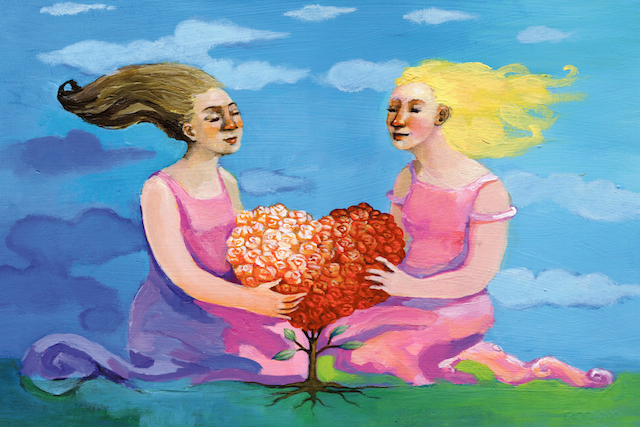
Pain is in a sense the same, creating a parallel to the first law of thermodynamics which I call the cycle of pain.

The manager is belittled by his boss because the boss was frustrated with the latest quarterly results, which disappointed because the customers were unhappy with the product. Upset, the manager comes home and mouths off to his wife, who is carrying her own tribulations from work.

The wife and mother then loses her temper with her son, who is hurt by his mother’s outburst. In pain and having witnessed a bad example from his mother about what to do with frustration, the son then goes to school the next day and causes a fight in the classroom during the teacher’s lesson.

His plans in tatters with the class disrupted, the teacher then exacts collective punishment on the whole class, who then each go and act out the negativity in their own separate ways.

The form of the pain changes, but it doesn’t go away – it’s spread out and perpetrated on new victims in a seemingly endless cycle of pain.

Continue reading

I have included more than usual from this post as there was no point at which I could stop the story of the cycle of pain. However, the rest of the post is much more upbeat so do, please, read it. All the way through to the end. Each of us has the power to stop someone’s cycle sometime. If all my contacts on social media (Facebook, Twitter, LinkedIn, Ele Friends etc) stopped just one cycle each year think what a power for good we could be.

Love to all and, for those who are not offended by my posting this, may God bless you all.


Friday, 1 December 2017

Happiness at work

CentrePiece Autumn 2017

What roles do work, employment and joblessness play in shaping our happiness? Jan-Emmanuel De Neve and George Ward summarise global evidence from the World Happiness Report on which elements of people’s working lives drive their reported job satisfaction, engagement at work and overall well-being.

Continue reading

This article summarises ‘Happiness at Work’ by Jan-Emmanuel De Neve and George Ward, CEP Discussion Paper No. 1474 (http://cep.lse.ac.uk/pubs/download/dp1474.pdf) and published as a chapter in the World Happiness Report 2017 (http://worldhappiness.report/ed/2017/).

What is happiness anyway? I am not sure that I always recognise it when it happens but can look back and think “yes, I was happy then”.


How to Identify Your Emotional Triggers and What to Do About Them

a post by Kerry Campbell for the Tiny Buddha blog


“Awareness is the birthplace of possibility. Everything you want to do, everything you want to be, starts here.” ~Deepak Chopra

Ever wonder why some people respond in the same destructive way over and over even though they keep getting the same bad results?

Many of us can relate to having unhealthy coping mechanisms and responses to things like stress, fear, or other agitating emotional states. Often, we are unaware of the subconscious processes going on and we may, for example, instinctively reach for an alcoholic beverage at the end of a long, hard day, never realizing we are setting ourselves for an addictive pattern that may one day claim our health, or possibly our life.

I know this was certainly my situation. But, I was unable or unconscious of how to get out of this pattern of behavior – until I learned to identify my emotional triggers and re-route my unhealthy habitual responses.

Continue reading

Been there, done that, lost the t-shirt and learned a lot on the way.


Having a mental illness doesn’t mean you can’t work – I’m proof

an article by Hannah Jane Parkinson published in the Guardian

Government research has confirmed that mental health costs the nation £99bn. It doesn’t make financial sense for employers to discriminate

Side profile on a businesswoman with coworkers in the background
‘The trust I am under has had some incredible professionals who have cared for me, but in many ways I have been catastrophically let down.’ Photograph: Getty Images/Xixinxing

It’s official. The government-commissioned Thriving at Work report has found that many of us are not, in fact, thriving at work. About 300,000 of us with long-term mental health problems lose their job each year in the UK. For me, this is news alongside sky is blue; Liverpool FC are perpetually underachieving; David Davis understands the Brexit process as much as he does superstring theory.

We have been saying this for a long time. We the people who know. The people with mental illness; the mental health professionals; the experts and charity heads; and in some cases, the employers. It’s a positive step that Theresa May commissioned this report. It’s a travesty that it was such a long time coming.

The tactics shifted a while ago. Some of us stopped appealing to this government’s sense of altruism and began arguing that “it’s the economy, stupid.” Once again, it has been confirmed that the annual cost to the country of poor mental health is £99bn. This isn’t a revelation. I’ve been writing about it for four years, so have many others. The UK’s productivity is in the doldrums. The financial cost to employers is about £42bn.

Continue reading


Boundaries: Learn How to Stand Your Ground

a post by Christiana Star for the World of Psychology blog

Boundaries Are Important

From a psychological perspective, boundaries are the mental, emotional, spiritual or relational limits on who and what kind of influences you accept into your life. How you expect to be treated depends on your personal history and self-evaluation. This is different for each person and circumstance. What is acceptable in one case and with one person, may not be tolerated in other instances.

The Cost of Weak Boundaries

People with damaged self-esteem and low self-acceptance usually have weak psychological and energetic boundaries. They may easily feel suffocated or ‘sucked’ into the other person’s world. They find it difficult to assert themselves and make decisions. They are easily influenced and often defer to the other person rather than expressing their own opinion and wishes. Feeling vulnerable, they may even avoid or withdraw from close contact with others so that physical distance takes the place of firm energetic and psychological borders.

Continue reading for suggestions on:
  • strengthening your boundaries
  • saying “no”
  • standing up for yourself (being assertive)


Are Refugees' Labour Market Outcomes Different from Those of Other Migrants? Evidence from the United Kingdom in the 2005–2007 Period

an article by Isabel Ruiz and Carlos Vargas-Silva (University of Oxford, UK) published in Population, Space and Place Volume 23 Issue 6 (August 2017)

Abstract

We compare the labour market outcomes of recent refugees in the 2005–2007 period with those of other migrants in the UK. We compare refugees with a full sample of migrants and with a sample of recent migrants.

Controlling for relevant characteristics, we find that 8 and 15 months after the grant of protection, refugees have significantly worse outcomes than other migrants, including a lower likelihood of being in employment and higher likelihood of unemployment (i.e. not currently employed, but looking for work).

However, 21 months after the grant of protection, the labour market outcomes of recent refugees are not statistically different from those of recent migrants, and the difference with those in the full sample of migrants becomes smaller.

Results also show that female refugees are at a substantial economic disadvantage compared with male refugees and other female migrants.