Monday, 7 August 2017

Ten items from Mickey Mouse to Bob Dylan via "not climate change"

Why do cartoon characters wear white gloves?
via Boing Boing by David Pescovitz

The short answer is efficiency! But it was also an artistic choice that became a creative convention…
“We didn't want (Mickey Mouse) to have mouse hands, because he was supposed to be more human,” Walt Disney wrote. “So we gave him gloves. Five fingers looked like too much on such a little figure, so we took one away. That was just one less finger to animate.”
Continue reading

=============================
The Time Machine: an audio guide
via OUP Blog by Roger Luckhurst

“Banner, Header, time, Ancient Clock” by PeteLinforth. Public Domain via  Pixabay
The first book H. G. Wells published, The Time Machine, is a scientific romance that helped invent the genre of science fiction and the time travel story. Even before its serialization had finished in the spring of 1895, Wells had been declared “a man of genius”, and the book heralded a fifty year career of a major cultural and political controversialist. This dystopian vision of Darwinian evolution is a sardonic rejection of Victorian ideals of progress and improvement and a detailed satirical commentary on the decadent culture of the 1890’s.
Continue reading

=============================
Beautiful Patagonia avalanche
via Boing Boing by Mark Frauenfelder
These guys taped a a beautiful avalanche at Torres del Paine National Park in Patagonia, Chile. It stopped right before it reached them, and just hovered over them.
Continue reading

=============================
Giant Australian Creatures, the Megafauna, Were Wiped Out By Humans, Not Climate Change
via Big Think by Paul Ratner
Article Image
About 50,000 years ago giant animals called “megafauna” roamed Australia. We are talking about 1,000-pound kangaroos, 500-pound flightless birds, 25-foot-long lizards and tortoises the size of cars. And after the arrival of the first humans, more than 85% of these animals went extinct.
Continue reading

=============================
From bombs to bytes: How Beirut's tech scene is thriving
Happy hookah
via BBC Business by Monty Munford
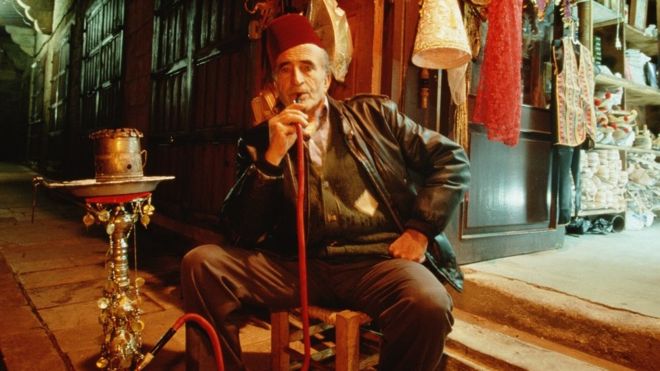
Old man smoking hookah pipe
One of the most familiar sights in the Middle East is of local citizens gathering in cafes smoking hookah pipes as they drink coffee strong enough to knock out an Arabian horse.
But in Beirut, Lebanon's capital, such traditional pastimes are being given a hi-tech twist.
Not only is the city as hip and cool as any city in the West, Lebanese technology is even changing the nature of the hookah pipe.
Continue reading

=============================
Chinese Labour Corps on the Western Front
via The National Archives Blog by Pad Kumlertsakul
As the First World War progressed, the need for more manpower became acutely problematic. The increased use of ammunition and supplies necessitated by trench warfare led to increased imports, which in turn put enormous strain on the transportation services. Depots, workshops, factories and ports were all desperate for manpower. At the start of the war in August 1914, there was no body of men trained or designated for these tasks. The British War Office had to put forward its troops for manual work near the front lines in the form of Pioneer Battalions, which were added to each Division.
Continue reading

=============================
Guilty Thing: A Life of Thomas De Quincey by Frances Wilson
via 3 Quarks Daily: Levi Stahl at Open Letters Monthly
The vast majority of writers leave no lasting posthumous trace. They die, and their work, successful as it may have been in its time, simply fades away. A lucky few – the Dickenses, Trollopes, Woolfs – end up firmly ensconced in the culture, their major works widely read, their minor ones remaining in print, and even their ephemera published. Then there’s the middle ground: the writers who are known for one or two pieces drawn from a vast body of work that is otherwise almost wholly forgotten.
Continue reading

=============================
We Used To Have 6 More Letters In Our Alphabet: where have all the letters gone?
via Medium: Hannah Poindexter in OMG Facts

Along quaint New England streets, you’ll probably spot a sign or two declaring itself “Ye Olde Tavern” or “Ye Old Soda Shoppe.” But before you adopt a British accent and order a pint of ale inside, there’s a bit of history you should know.
Continue reading

=============================
Programming in the early days of the computer age
via BBC Technology
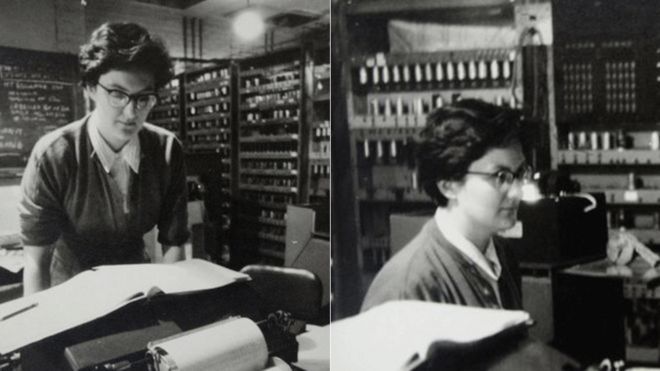
Joyce Blackler using Edsac
Everyone remembers the first computer they ever used. And Joyce Wheeler is no exception. But in her case the situation was a bit different. The first computer she used was one of the first computers anyone used.
The machine was Edsac - the Electronic Delay Storage Automatic Calculator - that ran for the first time in 1949 and was built to serve scientists at the University of Cambridge.
Joyce Wheeler was one of those scientists who, at the time, was working on her PhD under the supervision of renowned astronomer Fred Hoyle.
Continue reading

=============================
Bob Dylan's “Only A Pawn In Their Game”
via Boing Boing by Jason Weisberger
Dylan performing his song on the assassination of civil rights activist Medgar Evers at the same rally, 1963, where Doctor Martin Luther King Jr. gave his “I Have A Dream” speech.
Continue reading

Friday, 4 August 2017

'The higher the inequality, the more likely we are to move away from democracy'

an article by Branko Milanovic published in the Guardian on 2 May 2017

In every political system, the rich tend to hold more power – but the relationship between politics, economics and inequality is complex. To better understand these critical issues, we must look to Big Data

View down from the top of Rio de Janeiro Rocinha favela, Brazil.
View down from the top of Rio de Janeiro Rocinha favela, Brazil. Inequality is high in Latin America and perpetuates across generations. Photograph: Alamy

I am asked this question very often: why should we care about inequality? There are three reasons.

First, every inequality in the treatment or position of individuals – including inequality in income and wealth – requires understanding and justification, because we are all fundamentally the same. That does not mean we should all have the same incomes because our effort and luck may vary, but we need to think about the reasons for any and every inequality.

…
Second, we want to study inequality and its effects on economic growth – not only on the growth of the mean, like GDP per capita, but along the entire income distribution: for the poor, the middle class and the rich.

…
Finally, we need to look at the relationship between inequality and politics.

Continue reading

Well explained with some data to illustrate the text and links to further information.


What can be done to help low-achieving teenagers?

an article by Dominique Goux (CREST, Paris) and Marc Gurgand and Eric Maurin (Paris School of Economics) published in CentrePiece Volume 22 Number 1 (March 2017) (Paper No CEPCP499)

Young people who drop out of school are far more likely to experience unemployment and poverty than their peers. Experimental research by Eric Maurin and colleagues in deprived neighbourhoods of Paris shows the effectiveness of low-cost interventions that clarify educational options for low-achievers and dramatically reduce the number of dropouts.

Continue reading

This article summarises ‘Adjusting Your Dreams? High School Plans and Dropout Behaviour’ by Dominique Goux, Marc Gurgand and Eric Maurin, which is forthcoming in the Economic Journal.


Tuesday, 1 August 2017

Ten more interesting items for you to enjoy

Totes annoying: words that should be banned
via the Guardian by Justin Myers
Illustration of all the feels
We all have a watershed word – the word that tells us it’s all over, that the internet has won, and our youth is gone for ever. For me, it was Yolo, or You Only Live Once. It was born, I used it, and rooms fell eerily silent as soon as it left my mouth. Yolo belonged to the others, the younger people; it carbon-dated me and I was envious.
Continue reading

=============================
John Green asks: How young is history?
via Boing Boing by Caroline Siede
In this new Vlogbrothers video, John Green tries to put human history into perspective.
Watch it here

=============================
Palaeontologists reveal 350m-year-old tropical Scotland bursting with life
via the Guardian by Elsa Panciroli
An early tetrapod from Scotland.
Photograph: Elsa Panciroli/National Museums Scotland/Elsa Panciroli

I held in my hands one of the first animals to drag itself out of the water and onto land. Christened “Tiny”, she (I like to think it was female, but we can’t actually tell) is entombed in a chunk of boring, black rock. I ran my hands over the surface, feeling the bumps betraying a stone pregnant with fossils. Yet, from the outside there’s no sign of the treasure within: no one has ever actually seen it.
Continue reading

=============================
How C.S. Lewis and T.S. Eliot redrafted the Anglican Book of Common Prayer
via 3 Quarks Daily: Miranda France at Granta
Alan Jacobs identifies World War I as the time when moves to reform the prayer book gathered pace. Chaplains returning from the Front pushed for a liturgy that soldiers could understand. Cranmer had written at a time when people’s lives were so different. Seventeenth century men and women feared the dark and the malign effect of the moon or night air. They worried with good cause that none of their children would survive infancy. Not only had ordinary life changed beyond recognition, but the language was now too arcane to be understood by many in the congregation, or no longer meant what it once had. It made no sense to use ‘thee’ and ‘thou’ in church when you didn’t use it anywhere else. It felt so much worse to call yourself a miserable offender in the twentieth century than in the sixteenth, when ‘miserable’ had simply meant ‘deserving of mercy’.
Continue reading
The above quote comes about half way through a long, and to me very interesting, article.

=============================
This Artist Cleverly Brings His Cartoons To Life With Only Paper And Pen
via Lifehack by Nina Bonander
Check out these cool works by Danish cartoon artist HuskMitNavn, who creates amazing 3D cartoons using nothing but ingenuity and one sheet of paper. He folds the paper with his 2D illustrations to ultimately create a 3D effect! It is absolutely amazing. Samples of his work can be seen below. Each of them bursting with character, it’s unbelievable how a few simple tricks can create so much animation.
Continue reading

=============================
Why do our cell’s power plants have their own DNA?
via 3 Quarks Daily: Laurel Hamers in Science
Mitochondria (the brown, oval-shaped structures) contain their own DNA.
It’s one of the big mysteries of cell biology. Why do mitochondria – the oval-shaped structures that power our cells – have their own DNA, and why have they kept it when the cell itself has plenty of its own genetic material? A new study may have found an answer. Scientists think that mitochondria were once independent single-celled organisms until, more than a billion years ago, they were swallowed by larger cells. Instead of being digested, they settled down and developed a mutually beneficial relationship developed with their hosts that eventually enabled the rise of more complex life, like today’s plants and animals.
Continue reading

=============================
Painting Damnation: Celebrating 500 Years of Bosch
via Arts & Letters Daily: Nina Siegal in The New York Times

Detail from “A Dark Premonition: Journeys to Hieronymus Bosch.”Credit

Museo Nacional del Prado, Madrid

In case you missed it, we’re coming to the end of “Bosch Year 2016”, the quincentenary celebration of the death of the late-medieval Dutch master known for his surrealistic images of the hereafter, and particularly for the fantastical hybrid demons that populate his hell.
Continue reading

=============================
Trump’s forbidden city
via 3 Quarks Daily: David Rennie in The Economist
It says a lot about the Qing emperors’ worldview that, for much of the time their dynasty lasted, relations with foreign powers were handled by an Office of Barbarian Control. Jump to late 2016 and the dawn of the Trump era in America, and life for the nearly 180 ambassadors resident in Washington, DC is almost as humiliating. Before the election, modern-day envoys spent months talking to foreign-policy experts signed up with Hillary Clinton’s campaign – a veritable administration-in-waiting, housed in think-tanks, universities and consulting firms, comprising several hundred advisers organised into working groups and sub-groups and busy holding conference calls and sending one another memos. Even the farthest-flung country had friends within this system: a former National Security Council director with a passion for the Caucasus, say, who might soon serve as a principal deputy assistant secretary of state (an actual job title).
In contrast, embassies anxious to know what Republican foreign-policy grandees were telling Trump faced an unusual hurdle. During 2016 dozens of conservative thinkers and bigwigs from both Bush presidencies signed “Never Trump” letters declaring the businessman a terrifying menace to global security – though since his win, Washington being what it is, some are now pondering whether they might work for him anyway.
Continue reading

=============================
The secret of Namibia's ‘fairy circles’ may be explained at last
Using computer models, ecologists think they have finally hit upon the reason for the strange polka dot patches scattered across the Namib desert
via the Guardian by Ian Semple, Science Editor
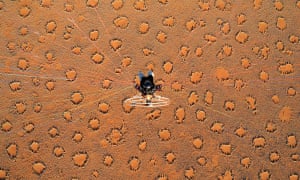
The “fairy circles” of the Namib desert as seen from above.
 The “fairy circles” of the Namib desert as seen from above.
Photograph: Theo Allofs/Barcroft Media
The marks on the ground in the Namib desert resemble a vast sheet of polka dots, or to the less romantic observer, perhaps a bad case of chickenpox.
In local myths, the bare, red circles fringed with grass are footprints of the gods, or patches of land once poisoned by the breath of a subterranean dragon. But even among scientists, who strive for more convincing theories, the curious, repetitive patterns have proved hard to explain.
Continue reading

=============================
Friends find abandoned 1955 VW van on a mountain and repair it onsite
via Boing Boing by Andrea James
Continue reading

How the tax system is driving people into insecure work in unexpected ways

A guest blog in Touchstone by Meredith McCammond

Benefits section of UK tax return

I work for the Low Incomes Tax Reform Group, a group of tax and welfare rights specialists with expertise in the tax and related welfare issues of the low-paid. Often, people contact us describing their problems with tax, National Insurance, tax credits and interactions with other means-tested benefits. A good number of the problems have arisen in the context of non-standard ‘flexible’ forms of employment such as agency work, zero-hours contracts and self-employment.

What we are seeing in our work supports other evidence and research (including the TUC’s) showing that the numbers of people in such forms of employment are rising. While much intellectual debate to date has revolved around how National Insurance contributions reform might help reverse this trend, correspondence we receive into our mailbox from workers exposes that, in practice, there are wider aspects of the system driving workers into these precarious forms of employment.

We wanted to share this insight to help inform the debate and because, in our experience, reforms which tackle only part of the problem are rarely effective in the long term.

Continue reading


Latest Longitudinal Outcomes (LEO) shows that the gender pay gap is present just one year after graduation

via AGCAS (Association of Graduate Careers Advisory Services) on 19 June 2017

The Department for Education (DfE) have released the third in a series of higher education data releases using Longitudinal Outcomes (LEO) data. LEO data shows how much UK graduates of different courses at different universities were earning, after one, three and five years after graduation. The data, which is still in a very raw format and comes with a number of caveats, has allowed analysts to start to identify a number of significant trends within the graduate labour market and see how these evolve over time.

Emerging data trends

Indeed, one of the most alarming trends to emerge from initial analysis of the data was the influence of gender. The data clearly indicates that the gender pay gap exists from the very beginning of the graduate career. The DfE found that in twelve subjects, male earnings are greater than female earnings at more than 75% of institutions. They also found that only one year after graduation, men’s median salaries outperform women’s by £2,000, rising to a gap of £3,400 after three years. Whilst university admissions have overall seen a higher proportion of women than men enrolling in recent years, the gender pay gap remains a problem for women entering the graduate labour market.

In addition to the clear gender differential, the data allows highlights a number of other factors that influence graduates’ medium to long term earning potential.

Unsurprisingly, the analysis shows higher earnings potential for STEM courses compared to arts and humanities courses. This shows that the labour market continues to have greater demand for graduate skills in STEM subjects. However, these courses remain the most expensive courses to teach, often requiring cross-subsidy from cheaper courses in the arts.

Issues with the data

It is important to remember that the LEO data is not contextualised in any way, meaning that certain factors are ignored when comparing different institutions, such as regional variations in salary. The DfE states in the supporting document that further analysis will be conducted which will look to contextualise this data set.

The 23 subject areas are based on an amalgamation of JACS codes. These depend heavily on how institutions have coded their courses and can throw up some anomalies in analysis. The subject areas also amalgamate courses where the career trajectories and destinations may be hugely different - Architecture, Building and Planning is a good example where Architecture students would have a very different career trajectory to those choosing Town Planning, for example.

An important element of the dataset revolves around graduates’ attainment prior to commencing their undergraduate degree. However, the assessment of students’ prior attainment merely covers their A-level scores and still doesn’t factor in any other qualifications (e.g. BTECs). It is also possible that other factors could be at play, such as gender, which could account for the large discrepancies in the data.

The LEO data has not been designed to identify the universities with the best teaching or ‘value added’ potential, nor can it be viewed as a performance or earning indicator. Instead it is purely historical data, and whilst it is very useful, future labour market outcomes are arguably far too complex for predictions to be made based upon previous outcomes. However, the stark gender and subject contrasts revealed in this report are simply too great to be ignored and need to be addressed within future policy making.

View the full report


Leadership and approaches to the management of workplace bullying

an article by Chris Woodrow (Henley Business School, University of Reading, UK) and David E Guest (School of Management and Business, Kings College London, UK) published in European Journal of Work and Organizational Psychology Volume 26 Issue 2 (2017)

Abstract

Leadership behaviour has been identified as an important antecedent of workplace bullying since managers may prevent, permit, or engage in the mistreatment of others. However, the issue of how managers respond when bullying occurs has received limited attention.

With this in mind, the aim of this study was to explore how managers behave when bullying occurs in their work group and to elucidate the contextual issues that underlie this behaviour. This was achieved through analysis of in-depth interviews with individuals involved in cases of bullying.

The findings revealed a typology of four types of management behaviour in cases of bullying, each underpinned by contextual factors at the individual, group, and organizational levels.

The study shows that the role of leadership in workplace bullying is more complex than previously thought and suggests several ways in which managers and organizations could deal with bullying behaviour.