Showing posts with label creativity. Show all posts

Friday, 6 December 2019

Art Therapy: A Crash Course

a post by Bonnie McClureLast for the World of Psychology blog


Many adults shy away from artistic activities because they believe themselves to be lacking in this skillset. While you may not be able to duplicate The Starry Night, I believe Van Gogh himself would agree that anyone could benefit from artistic expression and exploration.

Art Therapy is widely used as a tool for expression and also exploration in therapeutic environments. It has the ability to provide opportunity for reflection that can be very revealing or make way for conversations that are very difficult. Individuals can attempt art activities with a therapeutic intent, keeping these basic things in mind:

Concrete Materials
…

Let Go of Preconceived Ideas
…
Creation and Destruction
…
Interpretation
…
Continue reading


Wednesday, 27 November 2019

Information literacy, creativity and work performance

an article by Ming-Shian Wu (Aletheia University, Taiwan) published in  Information Development Volume 35 Issue 5 (November 2019)

Abstract

In the digital age, information literacy, defined as the ability to effectively identify information needs, access needed information, and evaluate and use information, is a crucial skill set for both individuals and organizations.

Therefore, understanding the relationships between information literacy, creativity, and work performance could not only help enterprises recognize the importance of information literacy and its influence on the workplace, but also provide educators with guidance for planning related training programs. This empirical study explores the relationships between self-efficacy in information literacy, creativity and work performance.

The findings show that:
  1. self-efficacy in defining information needs, self-efficacy in evaluating information and self-efficacy in using information can significantly positively affect creativity;
  2. creativity can significantly positively affect work performance; and, 
  3. creativity mediates the association between self-efficacy in information literacy and work performance.
Implications based on the findings are also discussed.


Wednesday, 11 September 2019

Imaginary friends are a sign of a lively, creative mind. But they are leaving us

an article by Daisy Buchanan published in the Guardian

Research suggests that fewer children have invisible playmates. We must help them rediscover the art of being bored

Child looking at tablet
Nursery workers believe children have fewer imaginary friends than they did five years ago, with 63% believing this to be a result of increased screen time.’ Photograph: Alamy

When I was three, I had a very good friend named Gemma. She was fearless where I was fretful, rebellious where I was conservative and dexterous where I was clumsy. She was also entirely imaginary. With Gemma’s help and support, I almost made it to the top shelf of the bookcase before my parents found me – and “Gemma said it was OK!” did not save me from a telling off. Gemma was also very fond of Discos crisps and Bourbon biscuits, and I became very good at smuggling them into my bedroom for her.

Continue reading

Hazel’s comment:
I cannot remember. I wish I could but I have lost a lot of my childhood memories. Ah well, I have now learnt how to be bored and to be creative as an adult and I love it – just no imaginary friends.


Thursday, 16 May 2019

Why ceasing to be creative is a mistake

a post by Matt Davis for the Big Think blog

Even drawing stick figures has its benefits.

  • Many of us stop making art at a young age, convinced, perhaps, that we just don't have the talent for it.
  • This belief, however, may be wrong, and the benefits that producing art can bring aren't contingent on talent.
  • Is creating art an activity that all of us should pursue? Can artistic skill be taught?

When we think of life skills, we usually think of things like learning to cook, becoming financially literate, learning to de-escalate conflict, or cultivating our emotional intelligence. We don't typically think of becoming better artists as a life skill. Indeed, artistic talent is seen as something innate — "Some people are artists, and some people are not."

However, for those of us who profess to have no artistic talent whatsoever, it may be that cultivating this skill is even more important than for those who have, allegedly, "innate" artistic talent. So, is creating art a life skill? What kind of benefits can it bring? And, crucially, can it be taught, or is the act of creating something limited only to the lucky few?

Continue reading


Monday, 13 May 2019

Counterintuitive Ways to Combat Anxiety

a post by Tracy Shawn for the World of Psychology blog


Through the years I’ve learned to douse the ongoing wildfire of fear with productive tools such as exercise, meditation, replacing negative, irrational thoughts with positive, rational statements, and tapping into my creativity (studies show that anxious people are often more creative — as it takes a lot of imagination to come up with those what-if scenarios — so it helps to channel that artistry into a positive outlet).

Yet there are other ways I combat my anxiety that don’t sound as constructive. And they certainly don’t sound very positive, either. In fact, some tactics could be construed as downright depressing. But they work. In fact, they work so well, that I feel it’s my duty to share them.

Continue reading


Wednesday, 20 February 2019

Misbehaving: being clever and wicked is a form of creativity

a post by Hansika Kapoor for the Big Think blog

Creativity can bring about unchecked harm, but it's up to us how we wield it.

Suppose you forgot it was your partner's birthday, but you know that they would appreciate the smallest of gestures, say a bouquet. It's late at night and no florists are open. The cemetery on your way home has recently had a funeral, and you walk across the site and pick up a good-looking bouquet of roses from someone's grave. You then head home, and the flowers are happily received by your partner.

Would you say that you hurt anyone?

This isn't so much a moral dilemma as it is a creative misbehaviour. More specifically, it is an instance of the dark side of creativity – the side that few people acknowledge or talk about. Variously referred to as malevolent or negative, dark creativity uses the creative process to do something socially unappealing and guided by self-interest. You might not intend to harm someone else, yet harm is often a byproduct of your actions. In the instance above, you found an original solution (stealing flowers from a graveyard) to a problem (upset partner) that was effective (happy partner).

That is what makes up the crux of creativity – originality and effectiveness in behaviour.

But can we call such an act truly creative? For one thing, it violates moral codes of conduct (stealing); for another, it involves deception (omitting the truth about where you got the flowers).

Continue reading


Tuesday, 12 February 2019

Create More, Consume Less: A Surefire Way to Feel More Excited About Life

a post by Lori Deschene for the Tiny Buddha blog
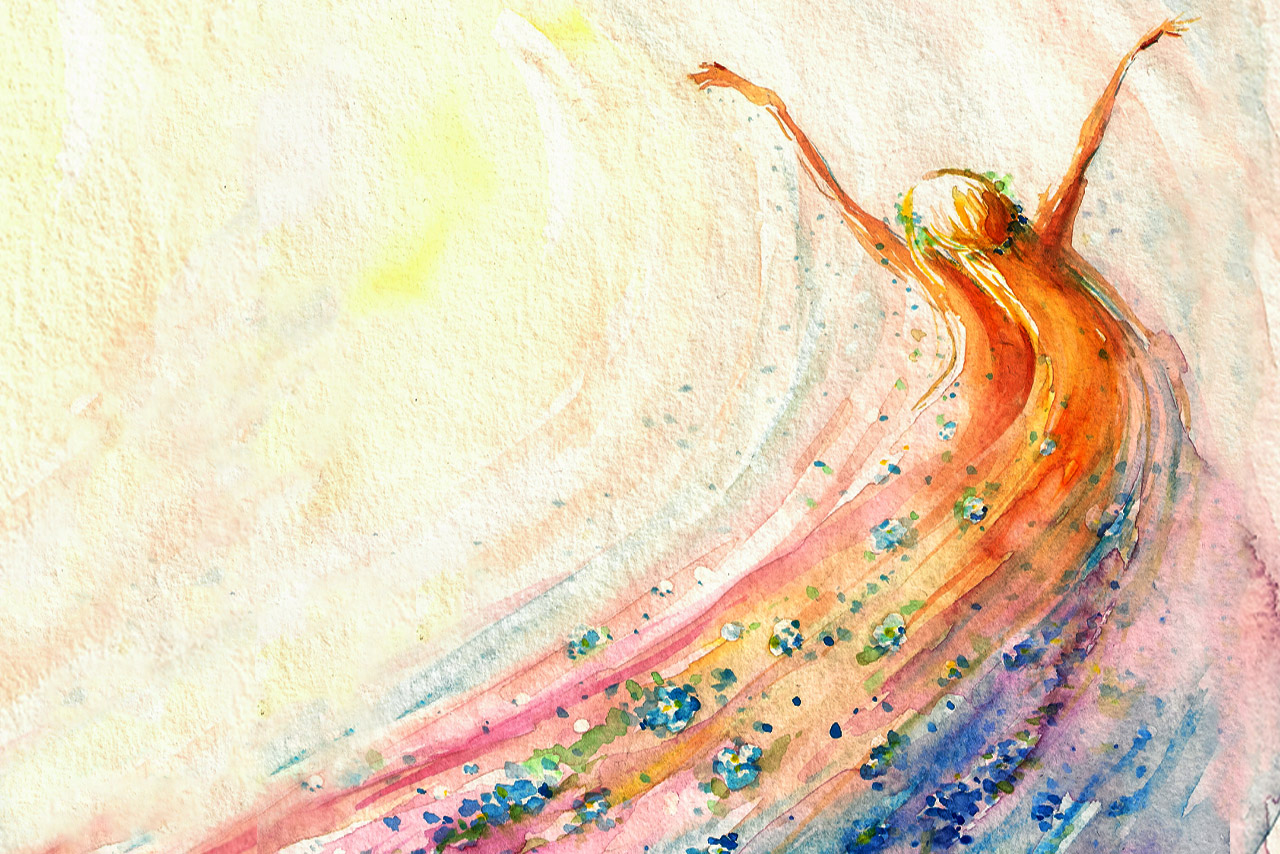

“Creating means living.” ~Dejan Stojanovic

We live in a consumer culture. We love to eat, drink, and be merry—while binge watching whatever’s trending on Netflix and getting a dopamine hit for every item added to our cart on Amazon Prime.

We love to take it all in—information, entertainment, status updates, news reports, substances, and an endless array of stuff. There’s never a shortage of things we can consume, often to keep our minds distracted and our feelings silenced.

Now don’t get me wrong. I love a good meal, a Jim Beam or two, and an afternoon spent zoned out on my couch, Penn Badgley haunting me hour by hour as his stalking escalates from creepy to criminal.

And I’m all for staying educated and updated, on issues both important and inane. I’ve spent hours obsessively researching all things health-related, and I’m embarrassed to admit that my search history reveals more than a healthy number of celebrity websites, if such a number exists.

I also understand the instinct to shut down for a while. Our minds can get intolerably loud, and sometimes, external demands can be overwhelming. A little disengagement can be a good thing in a world that often requires us to be on.

But there needs to be some kind of balance. If we spend our whole lives ingesting information and scarfing down an assortment of stuff meant to soothe us, we’ll never have the time or space to connect with ourselves and create the things we want to create.

I’m not talking just about artistic expression, though I personally feel more alive when I’m bringing some type of creative vision to life. I’m talking about filling the void inside with our own curiosity, passion, and awe instead of constantly stuffing it with external pleasures.

It may not seem like it in the moment when our shows, social media, or shopping carts beckon, but often the greatest pleasure stems from actively working toward a life that excites us.

Continue reading


Thursday, 7 February 2019

Out my window there’s nothin’ where a city used to be

a post by Wil Wheaton for his blog

I feel like I should be doing more, making more — hell, making anything — and generally being more productive.

But I just have nothing. No motivation. No ideas. No compulsion to create. I keep feeling like I’m just wasting time, just keeping my head down and hoping that today will be better than the day before and that this string of days will come to an end in a spectacular rebuke of Depression and Anxiety.

But that doesn’t seem to be how this is going. I’m not really living right now. I’m just existing and the frustrating thing is that I know it doesn’t have to be this way, while also knowing that my brain is wired a little sideways and it’s going to be like this until it isn’t, and there’s not a lot I can do about that except realize that this isn’t forever, that I’ll heal the grief that opened up a few months ago, and the fresh pain and grief that recently opened up will eventually join it.

I sit here at my desk and stare are a blinking cursor for what seems like hours. I type a few words and delete them. I get up and walk around the house and up and down the block, trying to shake loose whatever is blocking up my ability to be creative, to feel like it’s worth the effort, and it just doesn’t seem to be working.

Continue reading


Monday, 19 November 2018

9 Ways to Rewire Your Brain for Creativity

a post by Deep Patel for enterpreneur.com [via World of Psychology’s Psychology Around the Net]

9 Ways to Rewire Your Brain for Creativity

Creativity isn’t necessarily a characteristic you’re born with; it's a trait that can be honed through habit. With the right practice and persistence, you can rewire your brain to make the most of your inherent ability to generate original ideas.

The best way build your creative mind is through practice. Pick your favorite creative pursuits and do them regularly – daily if you can. The more you flex your creative muscle, the more your mind will naturally innovate. Research shows that creative practice reduces stress and improves problem-solving.

Continue reading


Monday, 29 October 2018

When Life Hands You (Rotten) Lemons

a post by Lucy Coats for An Awfully Big Blog Adventure


I've written several times on these pages about mental health and well-being. I think that it is important to talk openly and honestly about the struggle that many writers, including me, have with depression, anxiety, panic attacks and associated conditions, although I am aware that not everyone is able or wants to do this. Despite the enormous strides which have been made in widening public conversations and awareness about mental health in general, it is still a sad fact that, as an 'invisible illness', there are those who still dismiss it as a self-indulgence, or think we should just 'pull ourselves together'. I wish it was that easy.

For personal reasons, which I will not go into, this summer has been full of the (rotten) lemons which title this piece, hurled at me one after another. I do not wish to make lemonade (the normal advice for when life hands you them). For one thing it would taste bitter and vile for lack of sugar and sweetness, and for another, nobody would wish to drink it. These particular rotten lemons have been toxic to both mind, body and creativity. Not only do I feel physically poisoned, (not least because my physical body has reacted very badly to the combined stress of anxiety, depression and panic attacks, enhanced by what my doctor tells me is an excess production of cortisol), but my creativity levels have gone through the floor.

Continue reading


Friday, 31 August 2018

A Creative Way to Cope with Depression

a post by Margarita Tartakovsky for the Make a Mess: Everyday Creativity [via World of Technology blog]


“Ghostlike, you watch me in my morning shower,

You hover in the corner of the kitchen.

You sit seductively on the soft sofa

Wearing an evil smirk,

Beckoning for me to spend

My precious hours there with you.”

These are the first few lines of Elizabeth Maynard Schaefer’s poem about her own depression in her powerful book Writing Through the Darkness: Easing Your Depression with Paper and Pen. Schaefer, who has bipolar disorder, believes that writing saved her life. She also takes medication, and has received electroconvulsive therapy (ECT). As she writes in the book, “Writing was as healing to me as all my medical treatments—this did matter. Writing helped bring me back.”

Continue reading


Tuesday, 14 August 2018

Why the Time to Embrace Your Creativity is Now–and Always Will Be

a post by Juliana Hahn for the Tiny Buddha blog


“The most creative act you will ever undertake is the act of creating yourself.” ~Deepak Chopra

As a child you loved it—making something out of anything.

Whatever the medium, you were all over it and had a blast. Being creative came naturally to you.

But lately, you haven’t found the time and inspiration to engage in any new creative projects. Sure, you still want to do crafts, paint, write, practice photography, (insert yours here), but life gets in the way.

And when you find the time, inspiration leaves you hanging. No good ideas come to mind, which is frustrating because now you’ve just sat around wasting precious time.

Continue reading


Tuesday, 3 April 2018

How Creativity Creates Mindfulness, Happiness, and Peace

a post by Kathy Rausch for the Tiny Buddha blog


“Mindful and creative, a child who has neither a past, nor examples to follow, nor value judgments, simply lives, speaks and plays in freedom.” ~Arnaud Desjardins

No human being lives without experiencing the duality of life.

Good and bad. Love and hate. Life and death. Acceptance and rejection. Success and failure. Joy and jealousy. Compassion and judgment.

So why do we spend so much time trying to pretend that it’s bad to experience all of it, the good, the bad, and the ugly?

Even our weather men and women tell us it’s a going to be a bad day because it’s raining or snowing. I mean, come on! The earth rejoices when it rains; snow is a natural part of our eco-system.

Why do we try so hard to suppress the difficult feelings and experiences in our lives? Because our brains are wired that way? Because we were traumatized? Because our parents, teachers, and God knows who else told us to?

Does it really matter, as we heal, who, where, and why?

I remember the first time I heard the quote “Thoughts are things”.

I knew instantly that if that was true, I was in trouble because I had a lot of thoughts I wasn’t proud of and never voiced out loud. I was taught at a very young age not to “rock the boat” or be “too dramatic” and the worst, “Your mom is unhappy because of you kids”. Yikes!

So, when things got bad at home or at school or at church, they got stuffed. In me. In my heart. In my gut and in my head.

Continue reading

I've seen that image, or one very similar, before together with a video showing how to create the layers. The highest points may have as many as ten layers of paint on them. I have not tried this myself but it looks complex enough to be absorbing.


Saturday, 10 February 2018

Creativity and freedom

a column by Michel Serafinelli and Guido Tabellini for VOX: CEPR’s Policy Portal

Innovation is often concentrated in certain geographic areas, or ‘creative clusters’. This column uses novel data on famous births to explore the dynamics of creativity in European cities between the 11th and 19th centuries. The results show that creativity tends to precede economic prosperity, and that city institutions that protect personal and economic freedoms are conducive to radical innovation in a variety of domains.

Continue reading


Monday, 5 January 2015

The power to create

an article by Adam Lent published in RSA Journal Issue 2 (2014)

Governments, business and our institutions need to make the most of the technologies and methods that are transforming our economy.

The economist Eric Beinhocker once wrote that for 130,000 years of human history not much happened economically before all hell broke loose 250 years ago. He was not wrong. There were explosions of inventiveness, such as during the Roman Empire, but these would come to an end with the fall of the political system that sustained them. Average incomes improved at glacial rates: in the first century, most people could expect an income of around $1.20 a day; by the 18th, it had risen to $1.70.

This all changed in the late 1700s. Britain became the birthplace of an extraordinary revolution that would come to transform the world. Modern capitalism was being built on the back of an enormous flowering of commercial innovation: new machines, new products, new production systems, new business structures and new markets came to life.

Continue reading


Wednesday, 19 June 2013

The Inter-Life project: researching the potential of art, design and virtual worlds as a vehicle for assisting young people with key life changes and transitions

an article by Victor Lally (University of Glasgow, UK) and Madeleine Sclater (Glasgow School of Art, UK) published in British Journal of Guidance & Counselling Volume 41 Issue 3 (2013)

Abstract

Careers work in the twenty-first century faces a key challenge in terms of digital technologies: to evaluate their potential for careers work in challenging settings.

Given the rapidity of developments, technologies require evaluation in research innovations and naturalistic settings. Virtual worlds offer potential for careers and guidance work, and the therapeutic domain. To illustrate this, we present examples in which young people explore their feelings and ideas, plans and difficulties, while preparing for film-making. During this they develop important life transition skills.

We argue that the power of virtual worlds – to support emotional and cognitive engagement – could be utilised in practice settings.

We conclude that they are serious candidates as digital tools in the careers and guidance domain.

Full text (PDF 22pp)