Showing posts with label business. Show all posts

Monday, 16 September 2019

They told us DRM would give us more for less, but they lied

a post by Cory Doctorow for the Boing Boing blog


Image: Cryteria, CC-BY, modified

My latest Locus Magazine column is DRM Broke Its Promise, which recalls the days when digital rights management was pitched to us as a way to enable exciting new markets where we'd all save big by only buying the rights we needed (like the low-cost right to read a book for an hour-long plane ride), but instead (unsurprisingly) everything got more expensive and less capable.

For 40 years, University of Chicago-style market orthodoxy has promised widespread prosperity as a natural consequence of turning everything into unfettered, unregulated, monopolistic businesses. For 40 years, everyone except the paymasters who bankrolled the University of Chicago's priesthood have gotten poorer.

Continue reading and if you are not angry by the time you get to the end of the Boing Boing post and the Locus Magazine article then words fail me. 


Thursday, 25 July 2019

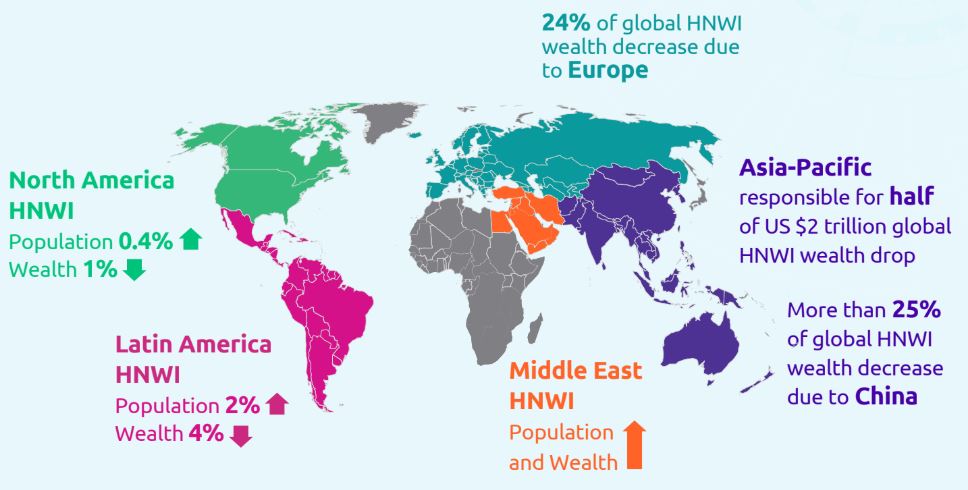
Trump's trade war cost the world $2t, wiping 6% off the global one percent's books

a post by Cory Doctorow for the Boing Boing blog


Trump's trade war has reduced the world's net worth by $2 trillion ($1.5 trillion of which came off the balance sheets of the 1%), with losses most deeply felt in China and Europe; North and South Americans took smaller losses, while the Middle East actually made gains: the richest Saudis have grown 7% richer during the trade war, while the richest Kuwaitis are 8% richer.

All in all, the global 1% saw a 6% decline in their wealth.

Continue reading


Friday, 17 May 2019

Collecting user data is a competitive disadvantage

a post by Cary Doctorow for the Boing Boing blog


Warren Buffet is famous for identifying the need for businesses to have "moats" and "walls" around their profit-centers to keep competitors out, and data-centric companies often cite their massive collections of user-data as "moats" that benefit from "network effects" to make their businesses good investments.

In a smart, eye-opening essay, Martin Casado and Peter Lauten from the VC firm Andreesen Horowitz dismantle the idea that data benefits from "network effects" and that it presents any kind of "moat" to protect businesses: instead, the VCs demonstrate how collecting data gets more expensive, and less useful, over time.

To understand why, think of Netflix's data-collection, performed in service to its famous recommendation engine, which suggests programs you might enjoy based on the preferences of people who are similar to you. When Netflix is starting out, it needs to develop a "minimum viable corpus" in order to produce recommendations, but once that data is in place, new data produces diminishing returns in recommendations. Going from 100 to 1,000,000 users allows Netflix to dramatically improve its recommendations, but going from 1,000,000 to 1,000,100 (or even 2,000,000) produces very little new benefit.

Continue reading


Thursday, 9 May 2019

Hand dryers v paper towels: the surprisingly dirty fight for the right to dry your hands

an article by Samanth Subramanian published in the Guardian


Illustration: Leon Edler

For a century, the humble paper towel has dominated public toilets. But a new generation of hand dryers has sparked a war for loo supremacy

In the summer of 2005, a Chicago marketing consultant named George Campbell received a tantalising call from a headhunter. Was he open to an interview at Dyson? The company was secretively preparing to launch a new appliance, and it needed a sales strategy for the US: that was all the headhunter would divulge. Campbell was excited; he saw Dyson as “a company with the iconic quality of Apple, and an ability to take a basic product like a vacuum cleaner and make an 80% margin on it”.

He went along to Dyson’s office, a factory-like space with lofty ceilings and timber beams next to the Chicago river. In his first few conversations, he recalled, they wouldn’t even reveal what the product was. Finally, Campbell was told in strict confidence: it was a hand dryer. And he’d thought he was joining Dyson for the glamour. “My heart dropped to my stomach.”

Continue reading


Wednesday, 23 January 2019

Not customers: doctors have patients, libraries have patrons, lawyers have clients and teachers have students

a post by Cory Doctorow for the Boing Boing blog


Professionalization isn't perfect: historically, professional societies "were structured around hierarchies of gender and race and laypeople were expected to obey expert judgment without even asking questions."

But professionals were also organized around ethics of service and morals, with professional standards that required practitioners to use their expertise to further the public good.

Decades of neoliberal marketization has flattened out these service-based ethics, turning every kind of professional into just another kind of business with customers who expect "customer service," and "value for money." When teachers have "students," they are meant to teach those students the truth. But once teachers have "customers," they are expected to teach the things that deliver "satisfaction" -- Young Earth Creationism, eugenics, Lost Cause historical revisionism, and so on.

Continue reading


Tuesday, 11 December 2018

Why paying tax can be good news for companies

a post by Colin Mayer for the OUP blog


Building Glass Architecture by Mikes Photos. CC0 via Pixabay

For the past 35 years, Ipsos MORI, the UK market research company, has undertaken a survey of which professions in Britain people trust. Each year, they ask 1,000 people whether they trust people in different professions to tell the truth.

Every year, close to the bottom come business leaders, just above estate agents, professional footballers, journalists, and politicians, below trade union leaders and “the man in the street”, and usually even below bankers.

Mistrust in business is pervasive, persistent and profound.

Continue reading


Thursday, 30 July 2015

Exploring the growing link of ethnic entrepreneurship, markets, and Pentecostalism in London (UK): An empirical study

an article by Ayantunji Gbadamosi (University of East London, UK) published in Society and Business Review Volume 10 Issue 2 (2015)

Abstract

Purpose
This paper aims to unravel how membership of Pentecostal fellowships aids the entrepreneurial activities of African-Caribbean (AC) members. While many issues about the entrepreneurial engagements of AC people have been discussed in the literature, there are far less studies documented about the link of these activities to faith, especially in the context of Pentecostalism.

Design/methodology/approach
Adopting the interpretive research paradigm, a total of 25 tape-recorded, semi-structured, in-depth interviews were conducted with AC entrepreneurs who are members of Pentecostal faith-based organisations in London, and pastors in this same sphere. Sixteen of the respondents are entrepreneurs running and managing their businesses, seven are pastors and the remaining two fall in both categories, as they are both entrepreneurs and still serving as pastors in churches in London. Rather than merely serving as gatekeepers for information, the pastors are active participants/respondents in the study.

Findings
The paper highlights the challenges confronting the AC ethnic entrepreneurs, but also suggests that those in the Pentecostal faith are motivated and emboldened by the shared values in this religion to navigate the volatile marketing environment. It unveils participants’ faith in God as their key business survival strategy. It also shows the unwavering confidence of the respondents that this religious stance results in outstanding business successes like increase in sales and profits, competitive edge, divine creativity and innovation, opportunity recognition, networks, institutional support and other factors that underpin entrepreneurship.

Originality/value
This study unpacks the thickly blurred link between Pentecostalism as a thriving religious orientation among the AC ethnic group in the UK and their entrepreneurial engagements.


Friday, 16 January 2015

Gamification Making work fun, or making fun of work?

an article by Steve Dale (Collabor8now Ltd, UK) published in Business Information Review Volume 31 Number 2 (June 2014)

Abstract

Gamification is about understanding and influencing human behaviours that organisations want to encourage amongst their workforce or customers. Gamification seeks to take enjoyable aspects of games – fun, play and challenge – and apply them to real-world business processes.

Analysts are predicting massive growth of gamification over the next few years, but is there any substance to the benefits being touted?

This article takes a critical look at the potential of gamification as a business change agent that can deliver a more motivated and engaged workforce.


Tuesday, 9 July 2013

Changing demographics: are companies meeting the development needs of an ageing workforce?

an article by Kevin Young (General Manager EMEA at Skillsoft, UK) published in Development and Learning in Organizations Volume 27 Issue 4 (2013)

Abstract

Purpose
The aim of the viewpoint article was to raise awareness around training and development opportunities made available to the over-60s workforce. Recent Skillsoft research, conducted by Opinion Matters, discovered that 93 per cent of UK CEOs do not invest in training and development for their employees who are over the age of 60.

Design/methodology/approach
This paper is a viewpoint article which raises awareness around training and development opportunities made available to the over-60s workforce, following recent Skillsoft research on this issue.

Findings
It is found that 93 per cent of UK CEOs do not invest in training and development for their employees that are over the age of 60.

Practical implications
It is encouraging to see that the UK Government is starting to initiate programs that are aimed at enhancing the over-60s working life and it is time for businesses to take note and not ignore this valuable part of their workforce. If forgotten and not given the appropriate development opportunities, it will be businesses that miss out on this untapped resource.

Originality/value
The paper addresses issues around training and development opportunities made available to the over-60s workforce, in the light of recent research.


Monday, 18 June 2012

Business information literacy teaching at different academic levels: ...

An exploration of skills and implications for instructional design

an article by Mariela Gunn and Cynthia E. Miree (Oakland University, USA) published in Journal of Information Literacy Volume 6 Issue 1 (June 2012)

Abstract

This study investigates the difference among students’ discipline-specific information literacy (IL) skills by studying first-year and final-year undergraduate business students.

An online IL tutorial was designed and delivered to both student groups with a two-fold goal.

First, the researchers wanted to compare students’ IL skills to test the faculty’s assumptions that business students who are about to graduate have already acquired the requisite IL despite the lack of mandatory business-specific IL sessions. The findings suggest that first-year and final-year business students are not significantly different in their performance and that both groups received a significant positive impact as a result of taking the same IL tutorial online.

Second, the study analyses how well the online IL tutorial, with its focus on combining instructional videos with active learning exercises, performs in delivering content related to different elements of IL, as defined by the Association of College and Research Libraries (ACRL 2010). The findings indicate that the online IL tutorial is more effective for some skills than for others, suggesting that it will be beneficial to explore different instructional designs in collaboration with the departmental faculty to improve the current IL tutorial in these areas.

This study adds to research on the effectiveness of online tutorials and raises questions related to their design. The findings can inform librarians’ decisions on how to design online learning targeting students from different academic levels.

Full text (PDF 18pp)