an article by Daniel K. Acquah, Hayley Limmer and Debra Malpass (Centre for Education Research and Practice, AQA Education, Manchester, UK) published in Research Papers in Education Volume 32 Issue 2 (2017)
Abstract
Recent policies in England have enacted significant changes to careers information advice and guidance (CIAG) and work-related learning (WRL). This paper offers insight into these changes from the perspective of young people studying engineering at University Technical Colleges (UTCs) as well as ‘comprehensive’ schools.
Face-to-face CIAG was conspicuously absent from the young people’s decision to pursue engineering. Whilst they were studying engineering, the young people at the comprehensive schools had quite variable experiences of receiving CIAG and WRL. Although there were instances of young people receiving careers advice from teachers, careers advisors or employers, many young people had not received this input.
As well as accessing advice from a careers teacher or advisor more frequently, the UTC students were also much more inclined to be explicitly positive about this advice. Many young people had positive work experience placements.
They felt that the experience had given them a greater understanding of ‘what it’s like to be in a workplace’. However, not all students had such positive experiences. They told us that it could be ‘extremely hard’ to find a place, especially one related to the course of study.
We relate the findings to the current policy context and implications for the UTC model.
Thursday, 23 March 2017


Wednesday, 22 March 2017
Tuesday's Trivia. I wonder what Facebook will do with matching image to words!!
The Mystery of Hieronymus Bosch
via 3 Quarks Daily: Ingrid D. Rowland at The New York Review of Books
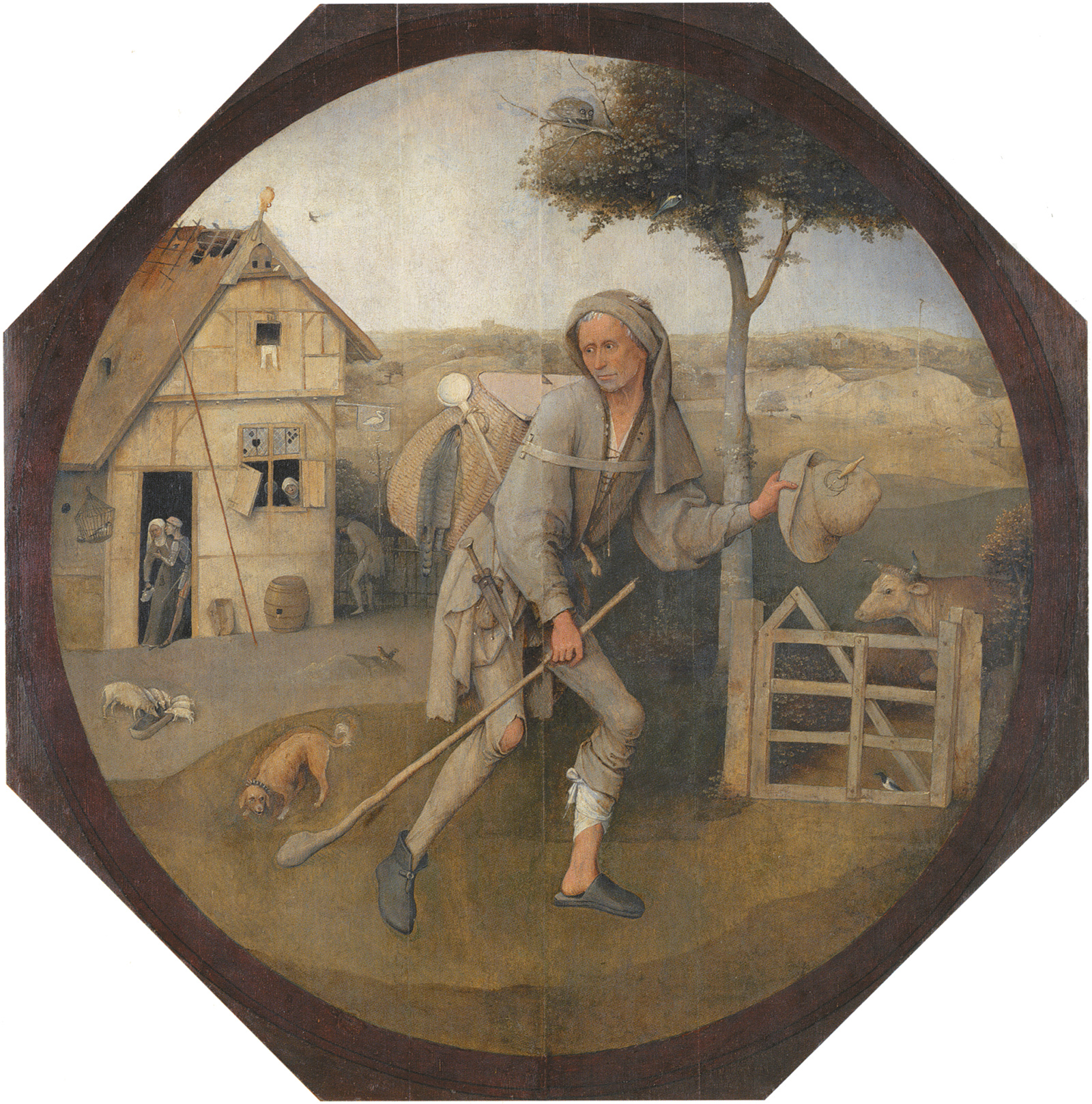
Hieronymus Bosch: The Wayfarer, circa 1500–1510
Museum Boijmans Van Beuningen, Rotterdam
There has never been a painter quite like Jheronimus van Aken, the Flemish master who signed his works as Jheronimus Bosch. His imagination ranged from a place beyond the spheres of Heaven to the uttermost depths of Hell, but for many of his earliest admirers the most striking aspect of his art was what they described as its “truth to nature”. The five hundredth anniversary of his death in 1516 has inspired two comprehensive exhibitions, at the Noordbrabants Museum in his hometown of ’s-Hertogenbosch and at Madrid’s Museo Nacional del Prado, as well as an ambitious project to analyze all of his surviving work, drawn, painted, and printed, according to the latest scientific techniques (the Bosch Research and Conservation Project). Yet despite all we have learned through these undertakings – and it is a great deal – the man his neighbors knew as “Joen the painter” remains as mysterious as ever.
Continue reading
===================================
Twice bottled grief: the defiant life of Tony Garnett
via the New Statesman by Melissa Benn
Garnett’s potent memoir The Day the Music Died shows a life defined by the refusal of even the most ordinary levels of mendacity.
Unlike Ken Loach, his friend and frequent collaborator, Tony Garnett remains a shadowy figure in the story of British radical film-making – yet has been just as vital, responsible for a string of pioneer productions from Cathy Come Home and Kes to Law and Order and This Life. Reflecting on some of the emotional reasons for his relatively low public profile, he comes to the conclusion that it is because “I didn’t want to lie”.
Continue reading
===================================
A Copernican eye-opener
via OUP Blog by Owen Gingerich
Approximately 500 years ago a Polish lawyer, medical doctor, and churchman got a radical idea: that the earth was not fixed solidly in the middle of all space, but was spinning at a thousand miles per hour at its equator, and was speeding around the sun at a dizzying rate. Unbelievable, critics said. If that were true, at the equator people would be spun off into space. And it would be much harder to walk west than east.
Continue reading
===================================
Amazing, horizontal lightning bolt
via Boing Boing by Cory Doctorow

If this was a special effect, we'd call it fakey looking, but apparently it’s real lightning, captured in Tampa and posted to Reddit by UnobtrusiveElephant.
Continue reading
===================================
10 facts about the trombone
via OUP Blog by Aviva Leshaw

Tuba, trumpet, trombone…which one should you pick up this fall? Read below to learn what makes the trombone the right choice, and to find out a little more about this bass instrument’s long history.
Continue reading
===================================
This Website Shows Which Movies Are Perfect For You
via MakeUseOf by Joel Lee
Here’s the weird thing about our brains: we think that having more choice is good, but that often leads us to analysis paralysis. We spend so much effort trying to pick one of the many choices that we end up giving up and picking none thanks to indecision!
One way to solve this problem is to “sift” through and separate the quality movies from the not-so-quality ones. But that can be a time-consuming process. Wouldn’t it be awesome if there was a tool that handled all of that for you?
Well, thanks to a user on Reddit, that tool now exists.
Check it out for yourself
===================================
This titanium-infused quartz crystal is totally mesmerizing
via Boing Boing by Zeni Jardin
You have to see for yourself
===================================
Landmarks, shelter, air filters – trees are our friends
We may no longer rely on their wood for wheels or fish hooks, but trees are essential to our lives
Via The Guardian by Fiona Stafford
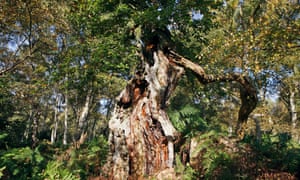
An oak tree in Sherwood Forest. Photograph: David Sillitoe for the Guardian
Burnt Oak, Gospel Oak, Poplar, St John’s Wood. These are all stops on the Transport for London map, but their names carry dim recollections of a world older than the Underground. The rail network is haunted by memories of trees – Poplar is called after the trees that once flourished there, along the banks of the Thames and the Black Ditch, one of London’s many lost rivers. In centuries past, St John’s Wood was part of the great forest of Middlesex, variously feared for its robber gangs and famous as a rich hunting ground for kings. Gospel Oak was a huge oak tree, marking the parish boundary of St Pancras and Hampstead, which became an outdoor church for nonconformist preachers and their enormous congregations during the 18th century.
Continue reading
===================================
Ozone Hole Could Be Completely Healed by 2050
via Big Think by Natalie Shoemaker

The Earth’s atmosphere is on the mend, according to an article published in Science. It took almost 30 years for the ban on ozone-depleting substances, like chlorofluorocarbons (CFCs), to work and scientists are saying if this trend continues, the ozone could be completely healed by the middle of the century. It’s a wonder what environmental policies can do for our health.
Continue reading
===================================
How China is rewriting the book on human origins
via 3 Quarks Daily: Jane Qiu in Nature
On the outskirts of Beijing, a small limestone mountain named Dragon Bone Hill rises above the surrounding sprawl. Along the northern side, a path leads up to some fenced-off caves that draw 150,000 visitors each year, from schoolchildren to grey-haired pensioners. It was here, in 1929, that researchers discovered a nearly complete ancient skull that they determined was roughly half a million years old. Dubbed Peking Man, it was among the earliest human remains ever uncovered, and it helped to convince many researchers that humanity first evolved in Asia.
Continue reading
via 3 Quarks Daily: Ingrid D. Rowland at The New York Review of Books
Museum Boijmans Van Beuningen, Rotterdam
There has never been a painter quite like Jheronimus van Aken, the Flemish master who signed his works as Jheronimus Bosch. His imagination ranged from a place beyond the spheres of Heaven to the uttermost depths of Hell, but for many of his earliest admirers the most striking aspect of his art was what they described as its “truth to nature”. The five hundredth anniversary of his death in 1516 has inspired two comprehensive exhibitions, at the Noordbrabants Museum in his hometown of ’s-Hertogenbosch and at Madrid’s Museo Nacional del Prado, as well as an ambitious project to analyze all of his surviving work, drawn, painted, and printed, according to the latest scientific techniques (the Bosch Research and Conservation Project). Yet despite all we have learned through these undertakings – and it is a great deal – the man his neighbors knew as “Joen the painter” remains as mysterious as ever.
Continue reading
===================================
Twice bottled grief: the defiant life of Tony Garnett
via the New Statesman by Melissa Benn
Garnett’s potent memoir The Day the Music Died shows a life defined by the refusal of even the most ordinary levels of mendacity.
Unlike Ken Loach, his friend and frequent collaborator, Tony Garnett remains a shadowy figure in the story of British radical film-making – yet has been just as vital, responsible for a string of pioneer productions from Cathy Come Home and Kes to Law and Order and This Life. Reflecting on some of the emotional reasons for his relatively low public profile, he comes to the conclusion that it is because “I didn’t want to lie”.
Continue reading
===================================
A Copernican eye-opener
via OUP Blog by Owen Gingerich
Approximately 500 years ago a Polish lawyer, medical doctor, and churchman got a radical idea: that the earth was not fixed solidly in the middle of all space, but was spinning at a thousand miles per hour at its equator, and was speeding around the sun at a dizzying rate. Unbelievable, critics said. If that were true, at the equator people would be spun off into space. And it would be much harder to walk west than east.
Continue reading
===================================
Amazing, horizontal lightning bolt
via Boing Boing by Cory Doctorow
If this was a special effect, we'd call it fakey looking, but apparently it’s real lightning, captured in Tampa and posted to Reddit by UnobtrusiveElephant.
Continue reading
===================================
10 facts about the trombone
via OUP Blog by Aviva Leshaw
Tuba, trumpet, trombone…which one should you pick up this fall? Read below to learn what makes the trombone the right choice, and to find out a little more about this bass instrument’s long history.
Continue reading
===================================
This Website Shows Which Movies Are Perfect For You
via MakeUseOf by Joel Lee
Here’s the weird thing about our brains: we think that having more choice is good, but that often leads us to analysis paralysis. We spend so much effort trying to pick one of the many choices that we end up giving up and picking none thanks to indecision!
One way to solve this problem is to “sift” through and separate the quality movies from the not-so-quality ones. But that can be a time-consuming process. Wouldn’t it be awesome if there was a tool that handled all of that for you?
Well, thanks to a user on Reddit, that tool now exists.
Check it out for yourself
===================================
This titanium-infused quartz crystal is totally mesmerizing
via Boing Boing by Zeni Jardin
You have to see for yourself
===================================
Landmarks, shelter, air filters – trees are our friends
We may no longer rely on their wood for wheels or fish hooks, but trees are essential to our lives
Via The Guardian by Fiona Stafford
An oak tree in Sherwood Forest. Photograph: David Sillitoe for the Guardian
Burnt Oak, Gospel Oak, Poplar, St John’s Wood. These are all stops on the Transport for London map, but their names carry dim recollections of a world older than the Underground. The rail network is haunted by memories of trees – Poplar is called after the trees that once flourished there, along the banks of the Thames and the Black Ditch, one of London’s many lost rivers. In centuries past, St John’s Wood was part of the great forest of Middlesex, variously feared for its robber gangs and famous as a rich hunting ground for kings. Gospel Oak was a huge oak tree, marking the parish boundary of St Pancras and Hampstead, which became an outdoor church for nonconformist preachers and their enormous congregations during the 18th century.
Continue reading
===================================
Ozone Hole Could Be Completely Healed by 2050
via Big Think by Natalie Shoemaker
The Earth’s atmosphere is on the mend, according to an article published in Science. It took almost 30 years for the ban on ozone-depleting substances, like chlorofluorocarbons (CFCs), to work and scientists are saying if this trend continues, the ozone could be completely healed by the middle of the century. It’s a wonder what environmental policies can do for our health.
Continue reading
===================================
How China is rewriting the book on human origins
via 3 Quarks Daily: Jane Qiu in Nature
On the outskirts of Beijing, a small limestone mountain named Dragon Bone Hill rises above the surrounding sprawl. Along the northern side, a path leads up to some fenced-off caves that draw 150,000 visitors each year, from schoolchildren to grey-haired pensioners. It was here, in 1929, that researchers discovered a nearly complete ancient skull that they determined was roughly half a million years old. Dubbed Peking Man, it was among the earliest human remains ever uncovered, and it helped to convince many researchers that humanity first evolved in Asia.
Continue reading
The Quality of Work in a Changing Labour Market
an article by Duncan Gallie (Nuffield College, University of Oxford, Oxford, UK) published in Social Policy & Administration Volume 52 Number 2 (March 2017)
Abstract
There have been sharply contrasting scenarios of the long-term pattern of change in the quality of work and employment in the advanced societies.
Three broad perspectives have dominated enquiry in the last three decades:
Full text (PDF)
Abstract
There have been sharply contrasting scenarios of the long-term pattern of change in the quality of work and employment in the advanced societies.
Three broad perspectives have dominated enquiry in the last three decades:
- an optimistic tradition emphasizing progressive improvement in skills and the quality of work;
- a pessimistic tradition underlining emerging threats to employment and job quality; and, lastly,
- an institutional tradition pointing to long-term structural differences between societies.
Full text (PDF)
Steady improvement of European labour market conditions according to Joint Employment Report
European Commission: Employment, Social Affairs & Inclusion News
On 3 March, the European Council of employment and social policy ministers adopted the 2017 Joint Employment Report.
The report takes a snapshot of the employment and social situation across the EU. It also highlights the extent of reforms carried out in the Member States over the past year. A draft version was presented by the Commission in November 2016 as part of the Autumn Package launching the European Semester.
The report points out the steady improvement of labour market conditions in Europe. The unemployment rate kept falling and stood at 8.5% (10% in the euro area) in the third quarter of 2016. The employment rate in 2016 was, for the first time, above the levels recorded before the crisis. If the current trend continues, the 75% employment rate target set by the Europe 2020 strategy for 2020 could be within reach.
The report also shows that, despite first signals of convergence among Member States, employment and social outcomes continue to vary significantly across countries.
As also shown by the scoreboard of Key Employment and Social Indicators, which is part of the report,
PDF but on my laptop it is not readable online and has to be downloaded
On 3 March, the European Council of employment and social policy ministers adopted the 2017 Joint Employment Report.
The report takes a snapshot of the employment and social situation across the EU. It also highlights the extent of reforms carried out in the Member States over the past year. A draft version was presented by the Commission in November 2016 as part of the Autumn Package launching the European Semester.
The report points out the steady improvement of labour market conditions in Europe. The unemployment rate kept falling and stood at 8.5% (10% in the euro area) in the third quarter of 2016. The employment rate in 2016 was, for the first time, above the levels recorded before the crisis. If the current trend continues, the 75% employment rate target set by the Europe 2020 strategy for 2020 could be within reach.
The report also shows that, despite first signals of convergence among Member States, employment and social outcomes continue to vary significantly across countries.
As also shown by the scoreboard of Key Employment and Social Indicators, which is part of the report,
- unemployment, youth unemployment and poverty levels remain far too high in many parts of Europe;
- labour market and social outcomes also vary by gender, age and education for example;
- despite a recent overall stabilisation, income inequality remains high in many EU countries with potential negative implications for economic output and inclusive and sustainable growth.
- removing barriers to labour market participation,
- tackling labour market segmentation and undeclared work,
- ensuring that social protection systems provide adequate income support,
- enabling services to all while encouraging transitions into employment and making work pay.
PDF but on my laptop it is not readable online and has to be downloaded
Combining Labour Force Survey data to estimate migration flows: the case of migration from Poland to the UK
an article by Arkadiusz Wiśniowski (University of Manchester, UK) published in Journal of the Royal Statistical Society: Series A (Statistics in Society)
Volume 180 Issue 1 (January 2017)
Summary
In May 2004, Poland and seven other countries from central and eastern Europe joined the European Union. This led to a massive emigration from Poland, especially to the UK. However, relatively little is known about the magnitude of migration flows after the 2004 enlargement of the European Union.
In the paper Labour Force Survey data from the sending and receiving countries are utilized in a Bayesian model to estimate migration flows. The estimates are further combined with the output of the ‘Integrated modelling of European migration’ model.
The combined results with accompanying measures of uncertainty can be used to validate other reported estimates of migration flows from Poland to the UK.
Full text (PDF)
Tuesday, 21 March 2017
Steady improvement of European labour market conditions according to Joint Employment Report
On 3 March, the European Council of employment and social policy ministers adopted the 2017 Joint Employment Report.
The report takes a snapshot of the employment and social situation across the EU. It also highlights the extent of reforms carried out in the Member States over the past year. A draft version was presented by the Commission in November 2016 as part of the Autumn Package launching the European Semester.
The report points out the steady improvement of labour market conditions in Europe. The unemployment rate kept falling and stood at 8.5% (10% in the euro area) in the third quarter of 2016. The employment rate in 2016 was, for the first time, above the levels recorded before the crisis. If the current trend continues, the 75% employment rate target set by the Europe 2020 strategy for 2020 could be within reach.
The report also shows that, despite first signals of convergence among Member States, employment and social outcomes continue to vary significantly across countries.
As also shown by the scoreboard of Key Employment and Social Indicators, which is part of the report,
- unemployment, youth unemployment and poverty levels remain far too high in many parts of Europe;
- labour market and social outcomes also vary by gender, age and education for example;
- despite a recent overall stabilisation, income inequality remains high in many EU countries with potential negative implications for economic output and inclusive and sustainable growth.
- removing barriers to labour market participation,
- tackling labour market segmentation and undeclared work,
- ensuring that social protection systems provide adequate income support,
- enabling services to all while encouraging transitions into employment and making work pay.
Judgement without justice: on the efficacy of the European human rights régime
an article by Petra Guasti (Czech Academyu of Sciences, Institute of Sociology, Czech Republic), David S. Siroky (Arizona State University, Tempe, USA) and Daniel Stockemer (University of Ottawa, Canada) published in Democratization Volume 24 Issue 2 (2017)
Abstract
The European Court of Human Rights (ECtHR) is widely regarded as the most important human rights court worldwide. This article investigates the extent to which the court addresses cases from countries with the worst human rights performance. Using a new data set on all ECtHR judgments from 1995–2012, the analysis suggests that the ECtHR does not deliver its judgments against members of the Council of Europe with the worst human rights records, but instead against more democratic and affluent states.
The reason is that litigating in front of a supranational court requires capacities that vulnerable people are unlikely to possess, except when aided by transnational advocacy groups.
However, more judgements are issued against countries that lack independent judiciaries, where cases are less likely to be resolved at the domestic level. While the ECtHR might not address the worst human rights crimes, it plays a subsidiary role in the European human rights protection system by compensating for weak domestic judiciaries.
However, the court's inability to independently pursue litigation, together with the lack of capacity in some countries to bring cases forward, have hampered more effective protection of human rights for the most vulnerable in Europe.
Subscribe to:
Posts (Atom)

