Sunday, 30 April 2017

Ten more interesting items (taken me longer than I planned to assemble these)

Powerful symbols chiselled into a shepherd’s shelter
via the Guardian by Ed Douglas
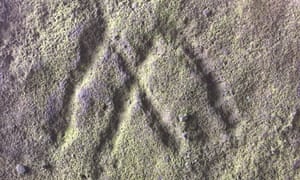
Two inverted Vs make an M
Two inverted Vs make an M in the gritstone. Photograph: Ed Douglas
The long flowing line of Stanage Edge is, for rock climbers, one of the world’s great crags, segmented, like a gritstone worm, into various buttresses and features, each of them named, each providing many different routes to the top, each of those – and there are hundreds – also named.
Continue reading

===================================
Six Wives in the archives: the trial of Anne Boleyn
via The National Archives Blog by Marianne Wilson and Neil Johnston
Detail of alleged incest between Anne and George Boleyn (catalogue reference: KB 8/9, f. 10r)
Tonight [14 December 2016] on BBC One’s Six Wives with Lucy Worsley, the spotlight falls on the trial of Anne Boleyn, and some of the records pertaining to this most famous inquiry are held at The National Archives.
Continue reading

===================================
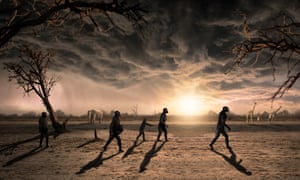
Stepping back 3.6m years: footprints yield new clues to humans’ ancestors
via the Guardian by Ian Sample
An artists impression of the Australopithecus afarensis walking through Tanzania.
Illustration: Dawid A Iurino
The footprints of five ancestors of humans who walked the Earth more than 3.6m years ago have been found preserved in volcanic ash that was dampened by ancient African rains. Researchers unearthed the tracks by accident when they began to excavate test pits that had been called for as part of an assessment of the impact of building a proposed museum on the site in Tanzania.
Continue reading

===================================
Aging Cheddar: a timeline of the world-famous cheese
via OUP Blog by Marissa Lynch
5516100246_40baefa99c_b
“Cheese!” by Roxanne Ready. CC BY-SA 2.0 via Flickr.
In the cheesemaking world, “Cheddar” is a generic term for cheeses that fall into a wide range of flavor, color, and texture. According to the US Code of Federal Regulations, any cheese with a moisture content of up to 39% and at least 50% fat in dry matter is legally considered a form of Cheddar. The varying processes involved in production have allowed regions around the world to create their own take on this globally consumed cheese.
Continue reading

===================================
9 Powerful Quotes on Atheism
via Big Think by Derek Beres
Article Image
Pope Benedict XVI celebrates the Vespers of the first Sunday of the advent inside St.Peter's Basilica at the Vatican, 01 December 2007. Filippo Monteforte/AFP/Getty Images
The disparity between how humans feel about themselves and how we treat the world has grown thanks to social media. Awareness of the impact of climate change and the stunning destruction of fundamentalist religious ideologies has intensified, yet a belief in our innate specialness persists.
Continue reading

===================================
A map of ships buried under San Francisco Financial District
via Boing Boing by Andrea James
satty-yerba-buena
Much of San Francisco's Financial District used to be Yerba Buena Cove, where Gold Rush ships were abandoned in such numbers that many just rotted away till they sank.
Continue reading

===================================
Virtue Ethics: A Moral System You've Never Heard of – But Probably Use
via Big Think by Scotty Hendricks
Article Image
Plato and Aristotle, as depicted by Raphael.
Are you the sort of person who always works for the greater good, or always sticks to moral rules? Perhaps you use a mixture of both? Or, maybe, are you neither of the above? Of course, do you know what you are if you are not one of those two?
Continue reading
And do not be put off by the start of the next paragraph “most people have heard …” because I haven’t and I do not know anyone who has ever used either of those words in my hearing!

===================================
Dark matter, black holes, and dwarf spheroidal galaxies
via OUP Blog by Manuel Arca Sedda
Featured image credit: Galaxy. CC0 Public Domain via Pixabay
Galaxy. CCO Public Domain via Pixabay
Our current understanding of the Universe suggests that it is composed of an invisible component called “dark matter“. This mysterious type of matter represents more than 25% of the entire matter and energy of which the Universe is made. The matter that we are used to “seeing” in our everyday life and that represents the building blocks for both our bodies and stars that shine in the sky, represents only 5% of the Universe. We call this “ordinary” or “baryonic” matter.
Continue reading

===================================
Treasure Palaces: Great Writers Visit Great Museums – review
via the Guardian by Alexandra Harris
Meeting point between art and everyday existence … William Wordsworth’s former home, Dove Cottage, in Grasmere, Cumbria.
Meeting point between art and everyday existence … William Wordsworth’s former home, Dove Cottage, in Grasmere, Cumbria. Photograph: Alamy
The 24 essays gathered here came about when distinguished writers were given what sounds like a most appealing brief: choose a museum that has played a part in your life, go back and write about it. It’s almost as good an opportunity as Desert Island Discs. Still, Richard Ford demurred, explaining that his eyes fail to focus after 45 minutes in a museum; David Sedaris said he prefers the cafe and gift shop. Alice Oswald clearly had her doubts. “I haven’t been to many museums,” she says. “I can’t help being depressed by the aloofness of things behind glass.”
Continue reading
Yes, the Prado was referenced with a photo of Garden of Earthly delights. But to my mind the best of the Prado is The Dauphin’s Treasure.Wikipedia has a number of images
Dragón de cristal de roca (Prado O-112) 01a.jpg
By Carlos Reusser, CC BY 2.0, https://commons.wikimedia.org/w/index.php?curid=7758671

===================================
Watch magnets do ballet in slow motion
via Boing Boing by David Pescovitz
Taofledermaus writes:
Neodynmium magnets and a high speed camera? It turns out it is, as the kids say, oddly satisfying. I was practicing with some macro shots with the Chronos high speed camera, using LED lighting and filming at around 4000 frames per second. I dropped some hard drive magnets and noticed the magnets behaved very oddly and unpredictably.
Continue reading and do not blame me if you get nothing productive done for several minutes!

Saturday, 29 April 2017

Unemployment in the EU regions in 2016

Eurostat news release 72/2017 - 27 April 2017

Unemployment rates in the EU regions ranged from 2.1% to 31.3%

Unemployment rates fell in 8 out of 10 EU regions

More than 80% of the NUTS 2 regions of the European Union (EU) saw their unemployment rate fall in 2016 compared with 2015, and around 60% recorded a decrease of at least 0.5 percentage points. However, regional unemployment rates continued to vary widely across the EU regions, with the lowest rates recorded in Niederbayern (2.1%) in Germany and Praha (2.2%) in the Czech Republic, followed by the German regions of Oberbayern (2.4%), Mittelfranken and Unterfranken (both 2.5%) and Tübingen (2.6%).

At the opposite end of the scale, the highest unemployment rates were registered in Dytiki Makedonia (31.3%) in Greece, Ciudad Autónoma de Melilla (30.8%) in Spain, Dytiki Ellada (29.8%) in Greece, Andalucía (28.9%) and Extremadura (27.5%) in Spain and Mayotte (27.1%), an overseas region of France.

Continue reading (PDF 10pp)


Thursday, 27 April 2017

Ten fun, quirky items including fusion, Dr Seuss, and an album of gay love songs

Empire of Tolerance
via 3 Quarks Daily: Simon Winchester in The New York Times

Genghis Khan seated on his throne with his wife, as depicted in a 15th-century Persian work. CreditDeAgostini/Getty Images
It was in an earlier best-selling volume that [Jack] Weatherford persuasively argued that the 25-year blitzkrieg mounted by Genghis and his cavalries – who, in “the most extensive war in world history” beginning in 1206, swept mercilessly and unstoppably over the Altai Mountains to their west and the Gobi Desert to their south – brought civilization, fairness, meritocracy and avuncular kindliness to legions of undeserving satrapies across Eurasia. Those who believed Genghis to be a tyrant of monstrous heartlessness have thus lately come to think otherwise: Weatherford’s writings present us revisionist history on a grand scale, but one as scrupulously well researched (with ample endnotes) as such an intellectual overhaul needs to be.
Now, with “Genghis Khan and the Quest for God” he has taken his thesis still further, arguing with equal fervor and conviction that the Khan, though godless himself, favored total religious freedom for his subjugated millions. While his empire encompassed “Muslims, Buddhists, Taoists, Confucians, Zoroastrians, Manichaeans, Hindus, Jews, Christians and animists of different types” (Weatherford’s passions for lists can sometimes seem like stylistic overkill), he was eager that all should “live together in a cohesive society under one government.” No walls to be built, no immigration bans, no spiritual examinations.
Continue reading

===================================
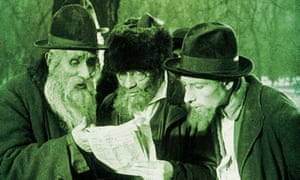
‘Lost’ Austrian film predicting rise of Nazism restored and relaunched
via the Guardian by Philip Oltermann
City Without Jews premiered in Vienna in 1924. Now the original version, lost for 90 years, has been saved from decay
A still from the film City without Jews
A still from the film City without Jews, which was based on a dystopian novel by the Jewish publicist Hugo Bettauer. Photograph: Filmarchiv Austria
It is the end of the first world war, inflation is soaring and the inhabitants of a German-speaking city are starting to turn on each other. Politicians are quick to find a scapegoat: “The people,” the chancellor announces, “demand the expulsion of all Jews.”
Continue reading

===================================
The Side of Dr. Seuss You Don’t Know
via Big Think by Derek Beres
Article Image
Theodor Geisel was a political thinker. The lifelong cartoonist drew hundreds of confrontational and thoughtful panels highlighting not only his disdain for Hitler and war, but for American inactivity and politicking during World War II as well. Most people don’t know this side of the man, for it was his middle name used in his most famous works.
Seuss.
Continue reading

===================================
Literal music video interpretation of Queen's “Bohemian Rhapsody”
via Boing Boing by David Pescovitz
Advert is an integral part of the video at the end!
Of course, after this I had to go and listen to the real thing
===================================

The Lightness of Errol Flynn
via 3 Quarks Daily: Brian Doyle at The American Scholar

I know this sounds crazy – believe me, I know – but I just saw 19 Errol Flynn movies in a row (from Captain Blood, the 1935 film that made him instantly famous, to 1953’s The Master of Ballantrae, his last decent film and good performance before he died in 1959, only 50 years old), and I just read all three of the books he wrote, and I have read an awful lot written and said about him by other people.
Continue reading
But I'll have to hunt to find an Errol Flynn movie in my collection – something which needs to be remedied.

===================================
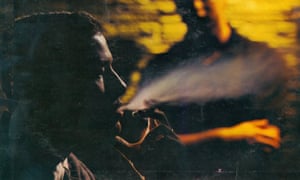
Love Is a Drag: the story behind the groundbreaking secret 60s gay album
via the Guardian by Jim Farber
‘At a time when gay people were deep in the closet, here was an album for them’ ... the 1962 release Love Is A Drag.
It was Liberace’s favorite LP and gained a cult following, but the collection of love songs was released at a time when those behind it had to stay in the shadows
Continue reading

===================================
Fusion Gets Closer as Scientists Discover Plasma’s Secret
via Big Think by Robby Berman
Article Image
99% of the universe is believed to be comprised of plasma, a hot ionized gas made up equally of positively charged ions and negatively charged electrons. It’s viewed as a fourth state of matter because it behaves differently than anything else: It’s electrically charged, responds to external magnetic fields, and contains its own magnetic fields. When the magnetic field lines in plasma come together, break apart, and re-join, they produce explosive bursts of energy in a process called “reconnection.” It results in solar flares, northern and southern lights, and cosmic gamma-ray bursts.
Continue reading

===================================
Inequality and new forms of slavery
via OUP Blog by Ilaria Ramelli
christ-898330_1920
The issues of social justice, poverty, and all the forms of human trafficking, deployment, and oppression that can be grouped under the umbrella concept of “slavery” are problems that sorely affect the world today and urgently need concrete solutions. But they are not at all new problems; on the contrary, they were prominent and discussed already in antiquity and especially in late antiquity – a period in history that bears impressive similarities to our contemporary multi-cultural, multi-religious, and interconnected (“globalized”) world, with many conflicts to mediate and increasing inequality to correct. Investigating, and reflecting on, late antique history, society, philosophy, and religion can prove extremely valuable for humanity today, and for the improvement of human condition – what philosophy and religion should aim at.
Continue reading

===================================
This shy octopus is too cute for scientists to handle
via Boing Boing by Caroline Siede
The scientists commenting on the E/V Nautilus live stream just can’t contain themselves when it comes to this adorable Flapjack Octopus.
[via The Dodo]
Click through for the video

===================================
Roy Hudd: 'I saw Dick Whittington and spent a fortnight on all fours impersonating a cat'
via the Guardian: Interview by John Hind
Roy Hudd as Mother Goose at Wilton’s Music Hall. Food from Gatherers at Wilton’s.
Photograph: Pal Hansen for the Observer

I don’t remember eating with Mum or Dad. Dad wasn’t around in Croydon, then Mum died while I was evacuated out in Maidford. Afterwards Gran managed to bring us up on her £2 and 15 shillings pension and still found spare coins for seats at the Croydon Empire every Tuesday evening. I remember seeing Dick Whittington there and then impersonating a cat for the next fortnight – lapping my milk from a saucer, taking my meals under the kitchen table, on all fours. And Gran never batted an eyelid. People would say “Roy’s half daft” and she’d say “Well, I like him”.
Continue reading

Monday, 24 April 2017

Let's start the week with non-work items -- items include skeletons, Samuel Pepys and chromosomes

Somerset skeletons are oldest evidence of monks found in UK
via the Guardian by Caroline Davies
Volunteers excavating the area that included the monastic graves in Somerset.
Skeletons excavated at a site near Glastonbury are the oldest examples of monks ever found in the UK, carbon dating has proved.
The remains, unearthed at the medieval Beckery chapel in Somerset, said to have been visited by legendary figures such as King Arthur and St Bridget, indicate a monastic cemetery dating back to the fifth or early sixth centuries AD, before Somerset was conquered by the Saxon kings of Wessex in the seventh century.
Continue reading

===================================
Peter Sellers recites the Beatles (in funny voices)
via Boing Boing by Cory Doctorow
Robbo writes, “Peter Sellers recorded a series of performances, in a variety of voices, reciting the lyrics of popular Beatles songs. It is demented weirdness - and perfect in all its madness.”
Continue reading

===================================
The Mortal Marx
via Arts & Letters Daily: Jeremy Adelman in Public Books
In the mid-1860s, as an anxious and ailing Karl Marx worked on the 30-page essay that would billow into Das Kapital, his daughter Eleanor – “Tussy” – would play under his desk. With her dolls, kittens, and puppies, Tussy turned the sage’s study into her playroom. Occasionally, Marx would take a break from his “fat book” (as the family friend and patron, Friedrich Engels, called the growing pile of pages) to work on a children’s story to recite to his daughter. It featured an antihero, Hans Röckle, who became Tussy’s favorite character, a dark-eyed, bearded magician devoted to creating marvels in his chaotic toy shop. Years later, Eleanor would recognize Röckle’s struggles as her father’s own and see the child’s tale as a send-up of his unorthodox life. Röckle’s magic was also a parable about making value out of things and accumulating capital out of debt, the fictive version of what Marx was determined to demystify in Das Kapital.
Continue reading

===================================
Adding 50 new tours for schools with Google Expeditions
via ResearchBuzz Firehose: Ben Schrom (Expeditions Product Manager, Google)
Since launching the Google Expeditions Pioneer Programme in September [2016], we’ve visited over 200,000 students across the UK. They’ve gone on hundreds of virtual journeys, from the peak of Mont Blanc to standing on the battlements of Edinburgh Castle. And today, we’re adding 50 new adventures to their classrooms with our virtual reality field trips taking the total number of expeditions now available to over 400.
Continue reading

===================================
The man who brought 'Civilisation' to a mass market
via 3 Quarks Daily: Michael Dirda at The Washington Post

In 1969 the BBC aired a 13-part documentary entitled “Civilisation: A Personal View”. Hosted by an upper-class Englishman with crooked teeth and a penchant for tweed, it traced the history of European art, music and literature from the Middle Ages to the 20th century, ending on a note of slightly qualified despair. The humanist values celebrated in the series were being lost or forgotten. More and more, we worshipped the machine and the computer, and instead of living with joy, confidence and energy, we dwelt gloomily in the valley of the shadow of global destruction. Still, there had been Dark Ages in the past, and humankind just might squeak through, by – as the very first episode declared – “the skin of our teeth”.
Continue reading

===================================
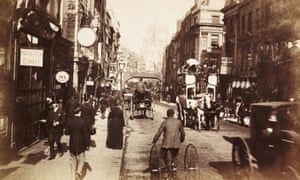
How cities took over the world: a history of globalisation spanning 4,000 years
via the Guardian by Greg Clark
By 1840 London had surpassed Beijing’s all-time population record, reaching two million.
History shows that cities have tended to embrace international opportunities in waves and cycles. They rarely break out into global activity by themselves. Cities participate in collective movements or networks to take advantage of new conditions, and often their demise or withdrawal from a global orientation is also experienced jointly with other cities as circumstances change, affecting many at once.
The world’s first great market-driven cities were established more than 4,000 years ago in the early bronze age, and their rich history is only now beginning to be understood. An urban revolution was taking place, with most residents of what is today southern Iraq living in cities, and this process of urbanisation was accompanied by trade on a new scale.
Continue reading

===================================
How About a New Theory of Evolution with Less Natural Selection?
via Big Think by Robbery Berman
Article Image
In early November, a group of preeminent biologists, doctors, anthropologists, and computer scientists met in London to consider making a major change to the concept of evolutionary biology introduced by Charles Darwin in Origin of the Species in 1859. It’s not that they’re interested in throwing out the idea of natural selection. It’s just that they think recent research suggests it doesn’t account for evolution all by itself. This isn’t the first time such a revision has happened, actually. And it’s not clear that it will this time: Conference co-host Kevin Laland told Quanta magazine mid-conference, “I think it’s going quite well,” Laland said. “It hasn’t gone to fisticuffs yet.”
Continue reading

===================================
The life and times of Samuel Pepys
via OUP Blog by Amelia Carruthers
het_verbranden_van_de_engelse_vloot_voor_chatham_-_the_dutch_burn_down_the_english_fleet_before_chatham_-_june_20_1667_peter_van_de_velde-1
Samuel Pepys penned his famous diaries between January 1660 and the end of May 1669. During the course of this nine year period, England witnessed some of the most important events in its political and social history. The diaries are over a million words long and recount in minute and often incredibly personal detail events such as the restoration of the monarchy, the Second Anglo-Dutch War, the Great Fire, and Great Plague of London. By detailing his daily life with such frankness (Pepys never anticipated his diaries to be so publicly scrutinized) he provided an unprecedented window into the everyday experiences of seventeenth century Londoners as well as major political events.
Continue reading

===================================
Almost Half of What’s In a Chromosome Is Still a Mystery
via Big Think by Robby Berman
Article Image
While it’s true that every chromosome contains some of 25,000 genes, it now turns out to be the case that this is only a little more than half the story. Computer modeling has revealed that up to 47% of each chromosome is an enigmatic sheath-like substance called the “chromosome periphery,” something about which little is known. That’s because it’s almost impossible to get a good look at actual chromosomes.
Continue reading

===================================
The best place to sit in a “suicide circle” if you really don’t want to die
via Boing Boing by Mark Frauenfelder
Math problems are more interesting when they are posed as horror stories.
Continue reading


Friday, 21 April 2017

What can be done to help low-achieving teenagers?

This article (CentrePiece Spring 2017) summarises ‘Adjusting Your Dreams? High School Plans and Dropout Behaviour’ by Dominique Goux, Marc Gurgand and Eric Maurin, which is forthcoming in the Economic Journal

Dominique Goux is at CREST, Paris. Marc Gurgand and Eric Maurin are at the Paris School of Economics. Maurin is also an international research associate in CEP’s education and skills programme and an expert adviser to the Centre for Vocational Education Research (CVER) at LSE. He presented these findings as a keynote address at CVER’s annual conference in September 2016.

Abstract

Young people who drop out of school are far more likely to experience unemployment and poverty than their peers. Experimental research by Eric Maurin and colleagues in deprived neighbourhoods of Paris shows the effectiveness of low-cost interventions that clarify educational options for low-achievers and dramatically reduce the number of dropouts.

Full text (PDF)


Labour Market Policy under Conditions of Permanent Austerity: Any Sign of Social Investment?

an article by Mattias Bengtsson and Kerstin Jacobsson (University of Gothenburg, Sweden) and Caroline de la Porte (Copenhagen Business School, Denmark) published in Social Policy & Administration Volume 51 Issue 2 (March 2017)

Abstract

Social investment (SI) is part of a strategy to modernise the European welfare states by focusing on human resource development throughout the life-course, while ensuring financial sustainability. Recognising that this strategy was only partially implemented by the EU member states prior to the financial and Eurozone crises, this article investigates whether reforms and expenditure patterns in labour market policy (LMP) have moved more towards or away from SI following the 2008 financial crisis.

We use quantitative and qualitative data to investigate the degree to which there have been shifts in the SI aspects of LMPs in eight countries across four welfare state regimes. We also investigate which aspects of LMPs have been strengthened and which have been weakened, enabling us to make a nuanced assessment of labour market SIs across the EU in a period of permanent austerity.

We find that although the eight countries under examination have different starting points, there is little evidence of increased SI-orientation of LMPs. Upskilling, which is at the heart of SI, did not increase from 2004–08 to 2009–13, while incentive reinforcement and employment assistance – more about labour market entry and marketing of skills – grew in importance.

If this trend continues across Europe, there is a risk that SI will become lost in translation and end up as a clearer neo-liberal version of workfarism.

Full text (HTML)


Welfare States and Labour Market Change: What is the Possible Relation?

an article by Bent Greve (Roskilde University, Denmark) published in Social Policy & Administration Volume 51 Issue 2 (March 2017)

Abstract

Welfare states in many countries have, at least since the financial crisis, been under strong pressure from high levels of unemployment. We are expecting dramatic changes to labour markets.

This article first presents the various arguments as to why there have or have not been substantial changes to labour markets, and whether there might be in the future, including arguments pro and con the possible impact thereof. The article thus provides a review of knowledge within the field, with a focus especially on how this can or might have an impact on welfare states, given the often strong connection between being on the labour market, access to a variety of welfare benefits and the ability to finance welfare states.

It uses concepts such as under-employment and new forms of jobs as indicators of change. These changes implying, more than ever, that having a job does not necessarily entail that a person has a stable and solid income above the poverty level.

Lastly, the article discusses whether some welfare states régime types are more prepared than others.

Full text (HTML)