an article by Philipp Wolfgang Lichtenthaler and Andrea Fischbach (Deutsche Hochschule der Polizei, Munster, Germany) published i Career Development International Volume 21 Issue 5 (2016)
Abstract
Purpose
The purpose of this paper is to examine how promotion- and prevention-focused job crafting impacts the motivation of older employees to continue working beyond retirement age. The authors hypothesised that promotion-focused job crafting (i.e. increasing social and structural job resources, and challenging job demands) relates positively and prevention-focussed job crafting (i.e. decreasing hindering job demands) relates negatively with motivation to continue working after reaching the official retirement age, and that these relationships are sequential mediated by work sense of coherence and burnout.
Design/methodology/approach
Data from 229 older employees (mean age=55.77) were analysed using structural equation modelling.
Findings
Promotion-focused job crafting was positively and prevention-focused job crafting was negatively related with employees’ work sense of coherence, which was predictive of employees’ burnout, which in turn was predictive of motivation to continue working beyond retirement age.
Research limitations/implications
Despite the cross-sectional study design, the results unfold how promotion- and prevention-focused job crafting are related with motivation to continue working beyond retirement age through work sense of coherence and burnout.
Practical implications
Given today’s ageing and shrinking workforce, older employees working beyond their official retirement age are a necessity for organisations’ functional capability. The results suggest that organisations should encourage employees’ promotion-focused job crafting and limit prevention-focused job crafting. Promotion-focused job crafting facilitates employees’ work sense of coherence, which keeps them healthy and motivates older employees to continue working beyond retirement age.
Originality/value
This study adds to the literatures on job crafting and motivation to continue working beyond retirement age and explicates intervening processes in this relationship.
Monday, 31 October 2016


Friday, 28 October 2016
Be a glitch in our benefits system, and the punishment is to starve
Faceless bureaucrats are tipping claimants into hunger.
so says Julia Rampen in New Statement (The Staggers)
So it’s official. If anyone still doubted that benefit sanctions are linked to food bank usage, a study by the University of Oxford and the Trussell Trust has found “a strong, dynamic relationship exists” between the number of sanctions in local authorities, and the number of adults receiving emergency food parcels.
Continue reading
Growing up before their time: The early adultification experiences of homeless young people
Rachel M. Schmitz and Kimberly A. Tyler (University of Nebraska-Lincoln, United States) published in Children and Youth Services Review Volume 64 (May 2016)
Highlights
• Early adultification among 40 homeless youth is qualitatively explored.
• Premature caregiving burdened participants with familial responsibility.
• Early independence forced young people to provide for their own needs.
• Parenthood thrust young people into the adult role of childcare once they left home.
Abstract
This paper explores the experiences of early adultification among 40 homeless youth aged 19 to 21. Findings from semi-structured, face-to-face interviews revealed the experiences of early adultification among homeless young people. We used both initial and focused coding and the final qualitative themes emerged naturally from the data.
Early adultification encompassed the following processes, which were closely tied to prominent descriptions of family conflict and caregiver neglect: premature caregiving, early independence and parenthood.
Premature caregiving burdened participants with familial responsibility such as caring for younger siblings prior to their leaving home.
Early independence occurred when young people provided for their own needs in the absence of caregiver guidance when they were still residing with family.
Parenthood thrust young people into the adult role of caring for an infant once they left home.
Early adultification complicated participants' experiences with leaving home by imbuing them with premature independence and familial detachment. Identifying the unique aspects surrounding young people's lives prior to and after leaving home is crucial in preventing residential instability and in alleviating the issues that homeless young adults experience.
Thursday, 27 October 2016
No trivia here, ten meaty items (well, maybe two of them aren't meaty)
The meatiest roles for women were written thousands of years ago
via Prospero by E.W.
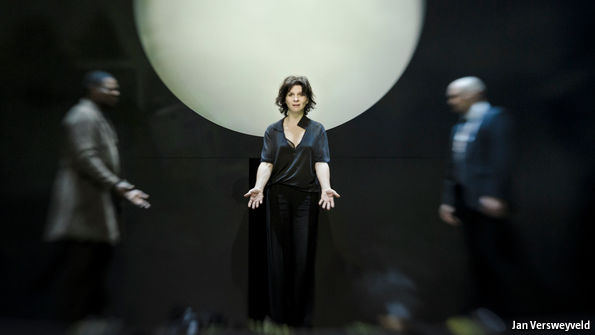
Those ancient Greeks could teach Hollywood a thing or two
On the bloodied Boeotian plains outside the seven gates of Thebes, Ismene struggles to persuade her sister Antigone to obey the edict of their uncle Kreon, the new head of state: “We’re girls,” she cries. “Girls cannot force their way against men.” Antigone will have none of it. She is determined to perform the sacred burial rites for her brother, Polyneikes, who was slain in a brutal civil war when he refused to relinquish the throne. Having deemed Polyneikes an enemy of the state, Kreon forbids any citizen from mourning his corpse. But Antigone is not easily cowed by the seemingly arbitrary decrees of men.
Continue reading
===================================
From Punch Cards to Holograms – A Short History of Data Storage
via MUO by Bryan Clark
In the world of data storage, there have been numerous breakthroughs, and even more flops that went absolutely nowhere. For every successful piece of data storage technology, there have been dozens more that were laughably bad.
Let’s take a look at some of the technologies that shaped modern data storage, as well as where we go from here.
Continue reading
===================================
Gershwin and color: how blue is the Rhapsody?
via OUP Blog by Olivia Mattis
Everyone knows George Gershwin as a composer, songwriter, pianist and icon of American music. But few know of his connections to the world of paintings and fine art. As a practising artist himself, Gershwin produced over 100 paintings, drawings, and photographs, most famously including his portrait of Arnold Schoenberg. “He was in love with colour and his palette in paint closely resembled the color of his music. Juxtaposition of greens, blues, sanguines, chromes, and greys, fascinated him,” recalled Merle Armitage. “Of course I can paint!” Gershwin was said to have told his girlfriend Rosamond Walling, an aspiring landscape painter. “If you have talent you can do anything. I have a lot of talent,” he added.
Continue reading
===================================
Charlie Chaplin’s scandalous life and boundless artistry
via Arts & Letters Daily: Richard Brody in The New Yorker

The most un-put-downable movie book of the season is also the most un-pick-uppable one: The Charlie Chaplin Archives (Taschen), which is the size of a small suitcase and weighs in at fourteen pounds, packed tightly with five hundred and sixty pages’ worth of thick and glossy paper bearing a treasure trove of superbly printed images alongside a relentlessly fascinating collage-like textual biography of Chaplin. It’s an apt tribute to the filmmaker, whose artistry transcends the cinema and spans world-historical dimensions.
Continue reading
===================================
Why can't we stop for death?
via 3 Quarks Daily: John Grey in New Statesman
When he was entering what he knew would be the final stage of his terminal illness, Bob Monkhouse used to joke that the terrible thing about dying was how stiff it left you feeling the next day. There is something pleasantly cavalier in the comedian’s quip. Why make a tragedy of something that will happen to us all? Perhaps we’d be wiser if we didn’t think of death at all, but instead – as the philosopher Spinoza recommended – only of life.
But that kind of wisdom seems to be beyond our capacity.
The human preoccupation with death is pervasive and universal, and every society offers remedies for the anxiety that the fact of mortality evokes. Religions have their afterlives, while secular faiths offer continuity with some larger entity – nations, political projects, the human species, a process of cosmic evolution – to stave off the painful certainty of oblivion. In their own lives, human beings struggle to create an image of themselves that they can project into the world. Careers and families prolong the sense of self beyond the grave. Acts of exceptional heroism and death-defying extreme sports serve a similar impulse. By leaving a mark, we can feel we are not just fleeting individuals who will soon be dead and then forgotten.
Continue reading
===================================
The Trouble with Theories of Everything: There is no known physics theory that is true at every scale – there may never be
via Arts & Letters Daily: Lawrence M. Krauss in Nautilus
Whenever you say anything about your daily life, a scale is implied. Try it out. “I’m too busy” only works for an assumed time scale: today, for example, or this week. Not this century or this nanosecond. “Taxes are onerous” only makes sense for a certain income range. And so on.
Surely the same restriction doesn’t hold true in science, you might say. After all, for centuries after the introduction of the scientific method, conventional wisdom held that there were theories that were absolutely true for all scales, even if we could never be empirically certain of this in advance. Newton’s universal law of gravity, for example, was, after all, universal! It applied to falling apples and falling planets alike, and accounted for every significant observation made under the sun, and over it as well.
Continue reading
===================================
New Database of Fictional Characters
via RB Firehose
“If you never see me again, it’s BoingBoing’s fault. It hipped me to a new database of fictional characters. ‘Basically CharacTour is an expansive online database for fictional characters. Like Facebook or a dating website, each character gets their own profile page. So far the site has over 4,500 spoiler-free profiles about characters’ origins, interests, skills, and journeys. Not only can you search for your favorites, you can find new characters to love as well.’
Jo March and Tony Stark were in the database, while Eve Dallas and Dirk Struan weren’t.“
Nor was Anne Shirley included
===================================
Scientific Revolutions in Optics Made Vermeer a Revolutionary Painter
via Big Think by Bob Duggan

Why do Vermeer’s paintings fascinate us so? Perhaps the reason lies behind a revolution in seeing in both art and science rooted in Vermeer’s 17th century Holland. During the heyday of tiny Holland’s position as a world power, in the city of Delft resided two remarkable men – the painter Johannes Vermeer and the scientist Antoni van Leeuwenhoek. While Vermeer painted images that changed forever how people see the world with their own eyes, Leeuwenhoek peered through microscopes to discover worlds only visible through technology. In Eye of the Beholder: Johannes Vermeer, Antoni van Leeuwenhoek, and the Revolution in Seeing, historian-philosopher Laura J. Snyder connects these two pioneers – born days apart, living close by all their lives, reunited in Vermeer’s death – to demonstrate how both modern art and modern science were born in that tiny city of Delft.
Continue reading
===================================
Yuval Noah Harari: the theatre of terror
via Arts & Letters Daily: Yuval Noah Harari in The Guardian

A fragment of the cockpit of the Pan Am Boeing 747 that exploded over the village of Lockerbie on 21 December 1988. Photograph: Letkey/AFP
Terrorists have almost no military strength so they create a spectacle. How should states respond? The author of Sapiens, a history of humanity, reflects on the past, and alarming future, of the fear factor.
Continue reading
===================================
Strangers Know What You Look Like Better Than You Do
via Big Think by Natalie Shoemaker

We’re bad at picking out pictures of ourselves that represent our true likeness, according to a new study. So, next time you’re picking out a picture for your dating profile, it may be better to get someone else to do it for you.
Continue reading
via Prospero by E.W.
Those ancient Greeks could teach Hollywood a thing or two
On the bloodied Boeotian plains outside the seven gates of Thebes, Ismene struggles to persuade her sister Antigone to obey the edict of their uncle Kreon, the new head of state: “We’re girls,” she cries. “Girls cannot force their way against men.” Antigone will have none of it. She is determined to perform the sacred burial rites for her brother, Polyneikes, who was slain in a brutal civil war when he refused to relinquish the throne. Having deemed Polyneikes an enemy of the state, Kreon forbids any citizen from mourning his corpse. But Antigone is not easily cowed by the seemingly arbitrary decrees of men.
Continue reading
===================================
From Punch Cards to Holograms – A Short History of Data Storage
via MUO by Bryan Clark
In the world of data storage, there have been numerous breakthroughs, and even more flops that went absolutely nowhere. For every successful piece of data storage technology, there have been dozens more that were laughably bad.
Let’s take a look at some of the technologies that shaped modern data storage, as well as where we go from here.
Continue reading
===================================
Gershwin and color: how blue is the Rhapsody?
via OUP Blog by Olivia Mattis
Everyone knows George Gershwin as a composer, songwriter, pianist and icon of American music. But few know of his connections to the world of paintings and fine art. As a practising artist himself, Gershwin produced over 100 paintings, drawings, and photographs, most famously including his portrait of Arnold Schoenberg. “He was in love with colour and his palette in paint closely resembled the color of his music. Juxtaposition of greens, blues, sanguines, chromes, and greys, fascinated him,” recalled Merle Armitage. “Of course I can paint!” Gershwin was said to have told his girlfriend Rosamond Walling, an aspiring landscape painter. “If you have talent you can do anything. I have a lot of talent,” he added.
Continue reading
===================================
Charlie Chaplin’s scandalous life and boundless artistry
via Arts & Letters Daily: Richard Brody in The New Yorker
The most un-put-downable movie book of the season is also the most un-pick-uppable one: The Charlie Chaplin Archives (Taschen), which is the size of a small suitcase and weighs in at fourteen pounds, packed tightly with five hundred and sixty pages’ worth of thick and glossy paper bearing a treasure trove of superbly printed images alongside a relentlessly fascinating collage-like textual biography of Chaplin. It’s an apt tribute to the filmmaker, whose artistry transcends the cinema and spans world-historical dimensions.
Continue reading
===================================
Why can't we stop for death?
via 3 Quarks Daily: John Grey in New Statesman
When he was entering what he knew would be the final stage of his terminal illness, Bob Monkhouse used to joke that the terrible thing about dying was how stiff it left you feeling the next day. There is something pleasantly cavalier in the comedian’s quip. Why make a tragedy of something that will happen to us all? Perhaps we’d be wiser if we didn’t think of death at all, but instead – as the philosopher Spinoza recommended – only of life.
But that kind of wisdom seems to be beyond our capacity.
The human preoccupation with death is pervasive and universal, and every society offers remedies for the anxiety that the fact of mortality evokes. Religions have their afterlives, while secular faiths offer continuity with some larger entity – nations, political projects, the human species, a process of cosmic evolution – to stave off the painful certainty of oblivion. In their own lives, human beings struggle to create an image of themselves that they can project into the world. Careers and families prolong the sense of self beyond the grave. Acts of exceptional heroism and death-defying extreme sports serve a similar impulse. By leaving a mark, we can feel we are not just fleeting individuals who will soon be dead and then forgotten.
Continue reading
===================================
The Trouble with Theories of Everything: There is no known physics theory that is true at every scale – there may never be
via Arts & Letters Daily: Lawrence M. Krauss in Nautilus
Whenever you say anything about your daily life, a scale is implied. Try it out. “I’m too busy” only works for an assumed time scale: today, for example, or this week. Not this century or this nanosecond. “Taxes are onerous” only makes sense for a certain income range. And so on.
Surely the same restriction doesn’t hold true in science, you might say. After all, for centuries after the introduction of the scientific method, conventional wisdom held that there were theories that were absolutely true for all scales, even if we could never be empirically certain of this in advance. Newton’s universal law of gravity, for example, was, after all, universal! It applied to falling apples and falling planets alike, and accounted for every significant observation made under the sun, and over it as well.
Continue reading
===================================
New Database of Fictional Characters
via RB Firehose
“If you never see me again, it’s BoingBoing’s fault. It hipped me to a new database of fictional characters. ‘Basically CharacTour is an expansive online database for fictional characters. Like Facebook or a dating website, each character gets their own profile page. So far the site has over 4,500 spoiler-free profiles about characters’ origins, interests, skills, and journeys. Not only can you search for your favorites, you can find new characters to love as well.’
Jo March and Tony Stark were in the database, while Eve Dallas and Dirk Struan weren’t.“
Nor was Anne Shirley included
===================================
Scientific Revolutions in Optics Made Vermeer a Revolutionary Painter
via Big Think by Bob Duggan
Why do Vermeer’s paintings fascinate us so? Perhaps the reason lies behind a revolution in seeing in both art and science rooted in Vermeer’s 17th century Holland. During the heyday of tiny Holland’s position as a world power, in the city of Delft resided two remarkable men – the painter Johannes Vermeer and the scientist Antoni van Leeuwenhoek. While Vermeer painted images that changed forever how people see the world with their own eyes, Leeuwenhoek peered through microscopes to discover worlds only visible through technology. In Eye of the Beholder: Johannes Vermeer, Antoni van Leeuwenhoek, and the Revolution in Seeing, historian-philosopher Laura J. Snyder connects these two pioneers – born days apart, living close by all their lives, reunited in Vermeer’s death – to demonstrate how both modern art and modern science were born in that tiny city of Delft.
Continue reading
===================================
Yuval Noah Harari: the theatre of terror
via Arts & Letters Daily: Yuval Noah Harari in The Guardian
A fragment of the cockpit of the Pan Am Boeing 747 that exploded over the village of Lockerbie on 21 December 1988. Photograph: Letkey/AFP
Terrorists have almost no military strength so they create a spectacle. How should states respond? The author of Sapiens, a history of humanity, reflects on the past, and alarming future, of the fear factor.
Continue reading
===================================
Strangers Know What You Look Like Better Than You Do
via Big Think by Natalie Shoemaker
We’re bad at picking out pictures of ourselves that represent our true likeness, according to a new study. So, next time you’re picking out a picture for your dating profile, it may be better to get someone else to do it for you.
Continue reading
Tuesday, 25 October 2016
‘To tweet or not to tweet?’ A comparison of academics’ and students’ usage of Twitter in academic contexts
an article by Charles G. Knight and Linda K. Kaye (Edge Hill University, Ormskirk, UK) published in Innovations in Education and Teaching International Volume 53 Issue 2 (2016)
Abstract
The emergence of social media as a new channel for communication and collaboration has led educators to hope that they may enhance the student experience and provide a pedagogical tool within Higher Education (HE). This paper explores academics’ and undergraduates’ usage of Twitter within a post-92 university. It argues that the observed disparity of usage between academics and undergraduates can be attributed to a number of factors.
Namely, academics’ perceived use of the platform for enhancing reputation is an implied acknowledgement of the importance of research within HE and the increasingly public engagement agenda. Additionally, academics’ limited usage of Twitter to support practical-based issues may be explained by issues relating to accountability of information through non-official channels. Moreover, students made greater use of Twitter for the passive reception of information rather than participation in learning activities. The implications of these issues will be discussed in reference to the study findings.
Full text (HTML)
Thursday, 20 October 2016
Legal limits on political campaigning by charities: drawing the line
an article by Debra Morris (University of Liverpool, UK)
published in Voluntary Sector Review Volume 7 Number 1 (March 2016)
Abstract
The fear for charities of being on the wrong side of the law when it comes to campaigning has always been strong. Recent UK legislation on political campaigning has caused considerable consternation, bringing some difficult issues to the fore. This paper reviews recent evidence on legislation, referring to previous regulatory experience to put new developments in a clear context of charity and electoral law. It highlights ambiguities and suggests how further regulatory guidance might help.
Full text (PDF)
Wednesday, 19 October 2016
Some interesting trivial items for your mid-week reading
Tickets please. Osterley Bookshop is housed in an old Tube station

Books and trains have always had a close relationship. The Osterley Bookshop, in the leafy suburbs of west London, is located in an old (overground) Tube station. The building is just a couple of minutes walk from the current Osterley Tube station (an Art Deco gem from 1933) and is owned by Tony Vesely and his wife, Pennie.
Continue reading
===================================
The Friedrich Hayek I knew, and what he got right – and wrong
Hayek’s most striking intellectual trait was one uncommon in academic life – independence of mind, which enabled him to swim against some of the most powerful currents of the age.
via Arts & Letters Daily: John Gray in New Statesman
In the 1980s, when F A Hayek was one of the intellectual icons of the New Right, some of the more doctrinaire members of that complicated and fractious movement used to say that for him a minimal government was one that provided three things: national defence, law and order, and a state opera. It was an observation made only partly in jest. The Austrian-born economist and philosopher may have been the thinker who, more than anyone else, articulated the free-market ideology that came to power along with Margaret Thatcher; but his view of politics was formed not in Britain, his adopted country, but in the Habsburg empire, where the Vienna Court Opera was a department of government whose existence no one would dream of questioning.
Continue reading
===================================
How to Run Windows 1.0.1 in Your Browser
via MakeUseOf by Bryan Clark
Through emulation, all things are possible, such as running Android on Windows or playing retro video games. This emulator is no different. It’s easy, and a lot of fun.
It’s crazy to think that Windows 1.0.1 dropped on the world in 1985. I was three years old, so I can’t say I ever used it, but that doesn’t mean I don’t have an interest in all things retro tech and a desire to take a walk down memory lane.
Continue reading
===================================
Who's in charge anyway?
via OUP Blog by Peter Carruthers
Influenced by the discoveries of cognitive science, many of us will now accept that much of our mental life is unconscious. There are subliminal perceptions, implicit attitudes and beliefs, inferences that take place tacitly outside of our awareness, and much more. But we are apt to identify ourselves with our conscious minds. People who take the implicit attitudes test, for example, are often horrified to discover that they harbor racial prejudices or gender biases they were unaware of. If they accept the science, they are forced to believe that these attitudes are in some sense part of themselves. But they are an unwelcome part, an alien part, something to be got rid of if possible.
Continue reading
===================================
Shakespeare probably smoked weed, scientists say
via Boing Boing by David Pescovitz

Several pipes excavated from William Shakespeare's garden contained cannabis, report scientists who used gas chromatography-mass spectrometry to analyze the items.
Continue reading
===================================
The Places You'll Feed! – Dr. Seuss Meets Breastfeeding
via Abe Books by Beth Carswell

Despite what millions of commercials (and the rare, very lucky woman who finds it a breeze) would have you believe, breastfeeding is a lot of work, and comes neither easily nor naturally to many women. From physical discomfort and challenges to low milk supply, hellish pumps and supplements, to gawking and disapproving strangers, it’s an ongoing process. It isn’t even possible for everyone, and for the lucky ones who are able, it takes a lot of dedication, commitment and practice.
Lauren Hirshfield Belden, a California mother of two, struggled painfully with the challenges while breastfeeding her first daughter in 2012. The experience remained with her, and prompted her to humorously reach out to other mothers via a book called The Places You’ll Feed! all about breastfeeding, modeled after Dr. Seuss’ iconic book Oh, The Places You’ll Go!
See more excerpts from Belden’s book here
And just in case you are not familiar with Dr. Seuss’ book here is a link to my absolute favourite rendition of it.
===================================
How is the Internet Changing Your Brain?
via MakeUseof by Dave LeClair
If you’re here at MakeUseof.com reading this article, then I can safely assume that you are an Internet user. You probably love the Internet, just like us. After all, the Internet is filled with an incredible wealth of knowledge and entertainment. It’s a fantastic tool that has enriched our lives in so many ways since it became popular.
But have you ever wondered about how the Internet changes your brain over time? It’s still early in the Internet’s life in the grand scheme of things, but there are some interesting studies about how the Internet has changed us.
Check out the infographic at Web Page FX
===================================
Miles Davis’s Kind of Blue
via OUP Blog by Jeremy Yudkin
What is a classic album? Not a classical album – a classic album. One definition would be a recording that is both of superb quality and of enduring significance. I would suggest that Miles Davis’s 1959 recording Kind of Blue is indubitably a classic. It presents music making of the highest order, and it has influenced – and continues to influence – jazz to this day.
Continue reading
===================================
Paleo-Economics Shaped Our Moralities (Evolved Social-Coordination 'Tech')
via Big Think by Jag Bhalla

Paleo-economics shaped our moralities. Like our languages, our moralities are evolved social-coordination “technologies”.
Continue reading
===================================
Dolphins that fish on land
via Boing Boing by Heather Johanssen
Amazing video of dolphins that have learned how to dine in style. This hunting behavior, according to Discovery, hasn't been found in any other pod on Earth.
Watch it here
Books and trains have always had a close relationship. The Osterley Bookshop, in the leafy suburbs of west London, is located in an old (overground) Tube station. The building is just a couple of minutes walk from the current Osterley Tube station (an Art Deco gem from 1933) and is owned by Tony Vesely and his wife, Pennie.
Continue reading
===================================
The Friedrich Hayek I knew, and what he got right – and wrong
Hayek’s most striking intellectual trait was one uncommon in academic life – independence of mind, which enabled him to swim against some of the most powerful currents of the age.
via Arts & Letters Daily: John Gray in New Statesman
In the 1980s, when F A Hayek was one of the intellectual icons of the New Right, some of the more doctrinaire members of that complicated and fractious movement used to say that for him a minimal government was one that provided three things: national defence, law and order, and a state opera. It was an observation made only partly in jest. The Austrian-born economist and philosopher may have been the thinker who, more than anyone else, articulated the free-market ideology that came to power along with Margaret Thatcher; but his view of politics was formed not in Britain, his adopted country, but in the Habsburg empire, where the Vienna Court Opera was a department of government whose existence no one would dream of questioning.
Continue reading
===================================
How to Run Windows 1.0.1 in Your Browser
via MakeUseOf by Bryan Clark
Through emulation, all things are possible, such as running Android on Windows or playing retro video games. This emulator is no different. It’s easy, and a lot of fun.
It’s crazy to think that Windows 1.0.1 dropped on the world in 1985. I was three years old, so I can’t say I ever used it, but that doesn’t mean I don’t have an interest in all things retro tech and a desire to take a walk down memory lane.
Continue reading
===================================
Who's in charge anyway?
via OUP Blog by Peter Carruthers
Influenced by the discoveries of cognitive science, many of us will now accept that much of our mental life is unconscious. There are subliminal perceptions, implicit attitudes and beliefs, inferences that take place tacitly outside of our awareness, and much more. But we are apt to identify ourselves with our conscious minds. People who take the implicit attitudes test, for example, are often horrified to discover that they harbor racial prejudices or gender biases they were unaware of. If they accept the science, they are forced to believe that these attitudes are in some sense part of themselves. But they are an unwelcome part, an alien part, something to be got rid of if possible.
Continue reading
===================================
Shakespeare probably smoked weed, scientists say
via Boing Boing by David Pescovitz
Several pipes excavated from William Shakespeare's garden contained cannabis, report scientists who used gas chromatography-mass spectrometry to analyze the items.
Continue reading
===================================
The Places You'll Feed! – Dr. Seuss Meets Breastfeeding
via Abe Books by Beth Carswell
Despite what millions of commercials (and the rare, very lucky woman who finds it a breeze) would have you believe, breastfeeding is a lot of work, and comes neither easily nor naturally to many women. From physical discomfort and challenges to low milk supply, hellish pumps and supplements, to gawking and disapproving strangers, it’s an ongoing process. It isn’t even possible for everyone, and for the lucky ones who are able, it takes a lot of dedication, commitment and practice.
Lauren Hirshfield Belden, a California mother of two, struggled painfully with the challenges while breastfeeding her first daughter in 2012. The experience remained with her, and prompted her to humorously reach out to other mothers via a book called The Places You’ll Feed! all about breastfeeding, modeled after Dr. Seuss’ iconic book Oh, The Places You’ll Go!
See more excerpts from Belden’s book here
And just in case you are not familiar with Dr. Seuss’ book here is a link to my absolute favourite rendition of it.
===================================
How is the Internet Changing Your Brain?
via MakeUseof by Dave LeClair
If you’re here at MakeUseof.com reading this article, then I can safely assume that you are an Internet user. You probably love the Internet, just like us. After all, the Internet is filled with an incredible wealth of knowledge and entertainment. It’s a fantastic tool that has enriched our lives in so many ways since it became popular.
But have you ever wondered about how the Internet changes your brain over time? It’s still early in the Internet’s life in the grand scheme of things, but there are some interesting studies about how the Internet has changed us.
Check out the infographic at Web Page FX
===================================
Miles Davis’s Kind of Blue
via OUP Blog by Jeremy Yudkin
What is a classic album? Not a classical album – a classic album. One definition would be a recording that is both of superb quality and of enduring significance. I would suggest that Miles Davis’s 1959 recording Kind of Blue is indubitably a classic. It presents music making of the highest order, and it has influenced – and continues to influence – jazz to this day.
Continue reading
===================================
Paleo-Economics Shaped Our Moralities (Evolved Social-Coordination 'Tech')
via Big Think by Jag Bhalla
Paleo-economics shaped our moralities. Like our languages, our moralities are evolved social-coordination “technologies”.
Continue reading
===================================
Dolphins that fish on land
via Boing Boing by Heather Johanssen
Amazing video of dolphins that have learned how to dine in style. This hunting behavior, according to Discovery, hasn't been found in any other pod on Earth.
Watch it here
Subscribe to:
Posts (Atom)

