Eurostat newsrelease 233/2016 25 November 2016
Out of all persons in the European Union (EU) who were unemployed in the first quarter 2016, 63.2% (12.6 million
persons) remained unemployed in the second quarter 2016, while 19.5% (3.9 million) moved into employment and
17.3% (3.5 million) towards economic inactivity. Economically inactive individuals are those neither employed nor
unemployed. Examples are students, pensioners and housewives or -men, provided that they are not working at all
and not available or looking for work either.
Continue reading
Tuesday, 13 December 2016


Friday, 9 December 2016
Ten interesting items for you, some quirky, all SFW
Businessmen are always the villains
via Prospero by P.C.
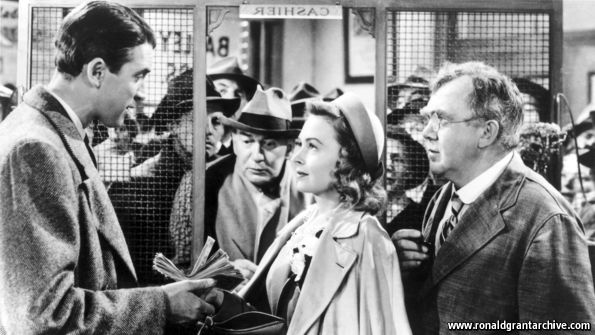
Some of the most memorable scenes in films have revolved around money. Think of Michael Douglas declaring “Greed is good” in “Wall Street”, Leonardo DiCaprio’s share scams in “The Wolf of Wall Street” and, most memorably, Jimmy Stewart’s desperate attempts to save his local bank in “It’s A Wonderful Life” (pictured).
Continue reading
===================================
Mars, Pluto… and beyond
via OUP Blog by Jan Zalasiewicz and Mark Williams
The story of our solar system is developing into one of the most absorbing – and puzzling – epics of contemporary science. At the heart of it lies one of the greatest questions of all – just how special is our own planet, which teems with life and (this is the difficult bit) which has teemed with life continuously through most of its 4.5 billion year lifetime? Not all of the answers are to be found here on Earth. Our world must be understood in context, by comparison with other planets, near and far. New information has recently come in from one of our nearest neighbours, Mars, and from our most distant one, that heavenly body Pluto, that used to be known as a planet. The information is puzzling and astonishing in equal measure.
Continue reading even if the "recent" is over a year old!
===================================
First Demonstration of Photonic Intelligence
Next time you need to choose, why not let a photon make the decision instead?
A View from Emerging Technology from the arXiv

Imagine walking into a casino to play the one-armed bandits. You’ve heard that one of them pays out more than the others, so your goal is to find out which. But how much of your resources should you pour into exploring the machines before you decide to exploit one of them?
Continue reading
===================================
Dental Picks
via Cool Tools by Kitty Hill
Dental picks come in all kinds of shapes and sizes. First recommended to me by my art teacher in 1982 as a great tool for picking out small bits in tight areas of woodcuts. I found them to be excellent for just about anything you could imagine: lifting out gobs of hair stuck in a drain, cleaning the grooves and fine lines in my antique stove, reaching into small areas to retrieve slipped objects, clearing scraps of jammed paper in a copy machine. I got my first one from my dentist who looked at me rather oddly and I assured him I would not be doing my own dental work! I believe they throw them out anyway.
Continue reading
===================================
Most Italians did not speak Italian
via 3 Quarks Daily: David Gilmour in delanceyplace
In 1861, when the Italian peninsula was finally united into a single political entity, only 2.5 percent of “Italians” spoke the Italian language. In fact, the citizens of every major Italian city – Rome, Venice, Florence, Milan, and others – each spoke a different language. The situation was similar in the other countries of Europe: “The posthumous role of Dante Alighieri in the development of Italian has long been treated with reverence and solemnity. The great Florentine poet was, according to one scholar, not only ‘the father of the Italian language’ but also ‘the father of the nation and the symbol of national greatness through the centuries’. It is doubtful that Dante would have thought the second part of the description applicable to him, especially as he believed Italy should be part of the Holy Roman Empire and not a nation by itself. Yet he did write The Divine Comedy (or, as he himself called it, simply La Commedia) in Italian and extolled the virtues of the vernacular, the ‘new sun’ that would put Latin in the shade, in De vulgari eloquentia, a book he wrote in Latin.
Continue reading
===================================
Fannia falanghina
via Times Online by Mary Beard

Another of my favourite Roman inscriptions, which I have mentioned before and talked about at Bard, is what may be the tombstone of a couple, known for business purposes (one presumes) as Calidius Eroticus and Fannia Voluptas. All those names are individually well attested at Rome, but together they roughly equal Mr Hot Sex and Mrs Gorgeous (though Fannia in Latin does not mean what you might imagine). So it seems highly unlikely that they were the names the couple were born with, but the one’s they took to brand their bar or cheap lodging house.
Continue reading
===================================
A pauper's life in their own words
via The National Archives by Katie Fox
It is generally accepted that primary sources detailing paupers’ experience of the 19th century are largely written about the poor rather than by them.
This is true. However, at The National Archives we estimate there to be thousands of documents written by paupers within our record series MH 12. These ego documents (meaning autobiographical writing) take the form of letters, petitions and signed depositions that came into the Local Government Board and its predecessors, the Poor Law Commission and the Poor Law Board. So within one (admittedly huge) record series we can find documents setting out the pauper experience written by paupers themselves.
Continue reading
===================================
A wonderful museum and some very odd notices
via Times Online by Mary Beard
I have just been stunned by the new museum at Ephesus, which I think only opened a few months ago, funded largely by the Austrians. I hadn’t been to Ephesus for about thirty years, and it was a flying visit back then, which certainly didn’t include the museum. I got the impression that most people going to the site now don’t take in the museum too: a big mistake. Go there if you get the chance.
Continue reading
===================================
It’s OK to Be a Luddite
Mocking people who fear technology’s dehumanizing creep is easy. Here’s why they have a point.
via Arts & Letter Daily: by David Auerbach in Slate
Technology will save us!
Technology sucks!
Where today’s techno-utopians cheer, our modern-day Luddites, from survivalists to iPhone skeptics to that couple that dresses in Victorian clothing and winds its own clock, grumble.
Continue reading
===================================
This underwater nightmare scorpion was Earth's first “big predator”
via Boing Boing by Rob Beschizza

Meet Pentecopterus decorahensis, the creature that would have eaten you were you a tasty fishy 460m years ago: “It was obviously a very aggressive animal. It was a big angry bug.”
Continue reading
via Prospero by P.C.
Some of the most memorable scenes in films have revolved around money. Think of Michael Douglas declaring “Greed is good” in “Wall Street”, Leonardo DiCaprio’s share scams in “The Wolf of Wall Street” and, most memorably, Jimmy Stewart’s desperate attempts to save his local bank in “It’s A Wonderful Life” (pictured).
Continue reading
===================================
Mars, Pluto… and beyond
via OUP Blog by Jan Zalasiewicz and Mark Williams
The story of our solar system is developing into one of the most absorbing – and puzzling – epics of contemporary science. At the heart of it lies one of the greatest questions of all – just how special is our own planet, which teems with life and (this is the difficult bit) which has teemed with life continuously through most of its 4.5 billion year lifetime? Not all of the answers are to be found here on Earth. Our world must be understood in context, by comparison with other planets, near and far. New information has recently come in from one of our nearest neighbours, Mars, and from our most distant one, that heavenly body Pluto, that used to be known as a planet. The information is puzzling and astonishing in equal measure.
Continue reading even if the "recent" is over a year old!
===================================
First Demonstration of Photonic Intelligence
Next time you need to choose, why not let a photon make the decision instead?
A View from Emerging Technology from the arXiv
Imagine walking into a casino to play the one-armed bandits. You’ve heard that one of them pays out more than the others, so your goal is to find out which. But how much of your resources should you pour into exploring the machines before you decide to exploit one of them?
Continue reading
===================================
Dental Picks
via Cool Tools by Kitty Hill
Dental picks come in all kinds of shapes and sizes. First recommended to me by my art teacher in 1982 as a great tool for picking out small bits in tight areas of woodcuts. I found them to be excellent for just about anything you could imagine: lifting out gobs of hair stuck in a drain, cleaning the grooves and fine lines in my antique stove, reaching into small areas to retrieve slipped objects, clearing scraps of jammed paper in a copy machine. I got my first one from my dentist who looked at me rather oddly and I assured him I would not be doing my own dental work! I believe they throw them out anyway.
Continue reading
===================================
Most Italians did not speak Italian
via 3 Quarks Daily: David Gilmour in delanceyplace
In 1861, when the Italian peninsula was finally united into a single political entity, only 2.5 percent of “Italians” spoke the Italian language. In fact, the citizens of every major Italian city – Rome, Venice, Florence, Milan, and others – each spoke a different language. The situation was similar in the other countries of Europe: “The posthumous role of Dante Alighieri in the development of Italian has long been treated with reverence and solemnity. The great Florentine poet was, according to one scholar, not only ‘the father of the Italian language’ but also ‘the father of the nation and the symbol of national greatness through the centuries’. It is doubtful that Dante would have thought the second part of the description applicable to him, especially as he believed Italy should be part of the Holy Roman Empire and not a nation by itself. Yet he did write The Divine Comedy (or, as he himself called it, simply La Commedia) in Italian and extolled the virtues of the vernacular, the ‘new sun’ that would put Latin in the shade, in De vulgari eloquentia, a book he wrote in Latin.
Continue reading
===================================
Fannia falanghina
via Times Online by Mary Beard
Another of my favourite Roman inscriptions, which I have mentioned before and talked about at Bard, is what may be the tombstone of a couple, known for business purposes (one presumes) as Calidius Eroticus and Fannia Voluptas. All those names are individually well attested at Rome, but together they roughly equal Mr Hot Sex and Mrs Gorgeous (though Fannia in Latin does not mean what you might imagine). So it seems highly unlikely that they were the names the couple were born with, but the one’s they took to brand their bar or cheap lodging house.
Continue reading
===================================
A pauper's life in their own words
via The National Archives by Katie Fox
It is generally accepted that primary sources detailing paupers’ experience of the 19th century are largely written about the poor rather than by them.
This is true. However, at The National Archives we estimate there to be thousands of documents written by paupers within our record series MH 12. These ego documents (meaning autobiographical writing) take the form of letters, petitions and signed depositions that came into the Local Government Board and its predecessors, the Poor Law Commission and the Poor Law Board. So within one (admittedly huge) record series we can find documents setting out the pauper experience written by paupers themselves.
Continue reading
===================================
A wonderful museum and some very odd notices
via Times Online by Mary Beard
I have just been stunned by the new museum at Ephesus, which I think only opened a few months ago, funded largely by the Austrians. I hadn’t been to Ephesus for about thirty years, and it was a flying visit back then, which certainly didn’t include the museum. I got the impression that most people going to the site now don’t take in the museum too: a big mistake. Go there if you get the chance.
Continue reading
===================================
It’s OK to Be a Luddite
Mocking people who fear technology’s dehumanizing creep is easy. Here’s why they have a point.
via Arts & Letter Daily: by David Auerbach in Slate
Technology will save us!
Technology sucks!
Where today’s techno-utopians cheer, our modern-day Luddites, from survivalists to iPhone skeptics to that couple that dresses in Victorian clothing and winds its own clock, grumble.
Continue reading
===================================
This underwater nightmare scorpion was Earth's first “big predator”
via Boing Boing by Rob Beschizza
Meet Pentecopterus decorahensis, the creature that would have eaten you were you a tasty fishy 460m years ago: “It was obviously a very aggressive animal. It was a big angry bug.”
Continue reading
Tuesday, 6 December 2016
Are changes in the dispersion of hours worked a cause of increased earnings inequality?
an article by Daniele Checchi (University of Milan; Irvapp-FBK and IZA), Cecilia García-Peñalosa (Aix-Marseille University and CESifo) and Lara Vivian (Aix-Marseille University) published in IZA Journal of European Labor Studies 2016 Volume 5 Article 15
Abstract
Earnings are the product of wages and hours of work; hence, the dispersion of hours can magnify or dampen a given distribution of wages. This paper examines how earnings inequality is affected by the dispersion of working hours using data for the USA, the UK, Germany, and France over the period 1989–2012.
We find that hours dispersion can account for over a third of earnings inequality in some countries and that its contribution has been growing over time.
We interpret the expansion in hours inequality in European countries as being the result of weaker union power that led to less successful bargaining concerning working hours.
JEL Classification D31 J22
Full text (HTML)
Work-related boredom and depressed mood from a daily perspective: the moderating roles of work centrality and need satisfaction
an article by Madelon L. M. van Hooff (Radboud University, Nijmegen, The Netherlands) and Edwin A. J. van Hooft (University of Amsterdam, The Netherlands) published in Work & Stress: An International Journal of Work, Health & Organisations Volume 30 Issue 3 (2016)
Abstract
This study aimed to advance insight into inter- and intra-personal processes that may affect the associations between work-related boredom and employee well-being.
We employed a daily perspective to examine
Furthermore, daily need satisfaction after work mitigated the indirect relation between work-related boredom and depressed mood in the evening. Based on these findings it can be concluded that work centrality and need satisfaction should be taken into account in order to understand the association between work-related boredom and employee well-being.
Abstract
This study aimed to advance insight into inter- and intra-personal processes that may affect the associations between work-related boredom and employee well-being.
We employed a daily perspective to examine
- the relations between work-related boredom and depressed mood at the end of the workday and at the end of the evening after work;
- whether these relations were stronger for employees with high work centrality (the importance of work to the individual); and
- whether the indirect association between work-related boredom and depressed mood in the evening (via depressed mood at the end of the workday) was smaller on days during which employees’ basic psychological needs were satisfied after work.
Furthermore, daily need satisfaction after work mitigated the indirect relation between work-related boredom and depressed mood in the evening. Based on these findings it can be concluded that work centrality and need satisfaction should be taken into account in order to understand the association between work-related boredom and employee well-being.
Sunday, 4 December 2016
Sharing Resource Revenues: Common Mistakes and How to Get it Right
from the International Monetary Fund: Public Financial Management Blog (Making Public Money Count)
Posted by Andrew Bauer and Sofi Halling
In nearly every country, subnational governments receive public funds, either through direct tax collection or intergovernmental transfers. But in more than 30 countries—from Bolivia to Canada to DRC to Indonesia—policymakers have chosen to create a special revenue sharing system to distribute non-renewable natural resource revenues (see map below). A recently published report by the Natural Resource Governance Institute (NRGI) and the United Nations Development Programme (UNDP) examines this important topic.
Full text of the blog post (HTML)
Friday, 2 December 2016
Playing games at the Library: Seriously?
an article by Cécile Swiatek (Université Paris II Panthéon Assas, France) and Myriam Gorsse (Université Pierre et Marie Curie, Paris) published in Liber Quarterly: The Journal of the Association of European Research Libraries Volume 26 Number 2 (2016)
Abstract
During the past ten years, libraries have been developing gaming activities from library board games to mystery games and immersive role-playing games. This article aims at giving a general overview of gaming issues in French academic libraries.
General gaming theories are quickly reviewed, basic keys are given about how and why to set up a gaming service and department at the academic library, concrete and recent initiatives are presented.
This article focuses on non-virtual and public-oriented games that were already organised in and by libraries. More generally, it underlines how to use gaming activities for promoting organisational innovation.
It concludes on the necessity to settle a strategy for gaming activities, to enforce management practices, and on the importance to publicise the initiatives by establishing a public gaming policy and programme, and by formalising communication plans, staff training and knowledge management. The results of this fact study highlight how gaming activities are becoming a new reality for libraries, which requires a proper management perspective.
Full text (HTML)
Thursday, 1 December 2016
Ten items of interest
Wine and the Metaphysics of Time
via 3 Quarks Daily by Dwight Furrow
Wine is useless. It bakes no bread, does no work, and solves no problem. The alcohol loosens tongues and serves as social lubricant, but wine is an inefficient delivery system for alcohol – there are faster, cheaper ways of getting drunk. No one needs wine. Wine does nothing but give pleasure.
Continue reading
===================================
When flower power turned sour
Rob Chapman’s history of Psychedelia and LSD sees California dreaming become the nightmare of the Manson family murders
via Arts & Letters Daily: Ian Thomson in The Spectator
Aldous Huxley reported his first psychedelic experience in The Doors of Perception (1954), a bewitching little volume that soon became the Newest Testament among the happening people. One spring morning in 1953 the 58-year-old Englishman ingested four-tenths of a gram of mescalin in his Hollywood garden and waited for the visionary moment. When he opened his eyes he saw pure California neon dust. ‘I was seeing what Adam had seen on the morning of his own creation.’
Continue reading
===================================
How Can I Know Right From Wrong? Watch Philosophy Animations on Ethics Narrated by Harry Shearer
via 3 Quarks Daily: Josh Jones at Open Culture
The history of moral philosophy in the West hinges principally on a handful of questions: Is there a God of some sort? An afterlife? Free will? And, perhaps most pressingly for humanists, what exactly is the nature of our obligations to others? The latter question has long occupied philosophers like Immanuel Kant, whose extreme formulation – the “categorical imperative” – flatly rules out making ethical decisions dependent upon particular situations. Kant’s famous example, one that generally gets repeated with a nod to Godwin, involves an axe murderer showing up at your door and asking for the whereabouts of a visiting friend. In Kant’s estimation, telling a lie in this case justifies telling a lie at any time, for any reason. Therefore, it is unethical.
Continue reading
===================================
Clerical celibacy
via OUP Blog by Hugh Thomas
A set of related satirical poems, probably written in the early thirteenth century, described an imaginary church council of English priests reacting to the news that they must henceforth be celibate. In this fictional universe the council erupted in outrage as priest after priest stood to denounce the new papal policy. Not surprisingly, the protests of many focused on sex, with one speaker, for instance, indignantly protesting that virile English clerics should be able to sleep with women, not livestock. However, other protests were focused on family. Some speakers appealed to the desire for children, and others noted their attachment to their consorts, such as one who exclaimed: “This is a useless measure, frivolous and vain; he who does not love his companion is not sane!” The poems were created for comical effect, but a little over a century earlier English priests had in fact faced, for the first time, a nationwide, systematic attempt to enforce clerical celibacy. Undoubtedly a major part of the ensuing uproar was about sex, but in reality as in fiction it was also about family.
Continue reading
===================================
How pee brought us the modern world
via Boing Boing by David Pescovitz
Urine is golden so it must have some link to gold, thought medieval alchemists seeking to devise methods to transmute base metal into gold.
Not quite, but they did discover that pee is rich with the miraculous bearer of light, aka phosphorus. (American Chemical Society)
Video here
===================================
The Clandestine Adventures of Alice in Saudi Land
via Arts & Letters Daily: by Jasmine Bager in Narratively
At a discreet all-female book club in a shadowy Saudi café, women subtly push for societal change – with a little help from an imaginative heroine who turns 150 this year.
Since Saudi women still can’t take control of the wheel, I step out of the backseat of my shared family car, my long black abaya spilling onto the street as the call to prayer lingers in the cool Saudi air and the sun dips behind the horizon. I walk towards the sand-colored building holding a notebook, and adjust my headscarf with my free hand. The car drives away. The male workers inside the family-owned heritage store nod at me as I enter. I nod back. I go up the stairs alone, my abaya wiping away my footsteps as I climb higher.
Continue reading
===================================
The Dustbin of Geography
via Big Think by Frank Jacobs

That picture of you standing astride the stainless steel Meridian Line in Greenwich? It's a lie: You don’t really have one foot in either hemisphere. The real Prime Meridian runs 334 feet (102 m) east, cutting an imaginary north-south line through Greenwich Park. It is marked unceremoniously by a dustbin [actually it’s a litter bin].
Continue reading
===================================
Bias Detection
via CommonCraft by Lee LeFever
If you are not familiar with the CommonCraft way of presenting learning then you are in for a treat. If you are then this video is one that was published just over a year ago.
It’s all about understanding and detecting bias.
And you can see it here but you need to be aware that if you are not familiar with the concept of bias you may find this a bit too glossed for your liking.
===================================
Cameron’s World
via Boing Boing by Rob Beschizza

A beautiful and strangely haunting trip to a compilation of the Geocities-era web, made of carefully-rearranged bitmaps & bitrot.
The work of Cameron Askin, with javascript by Anthony Hughes and music by Robin Hughes, it's "a love letter to the Internet of old."
Continue reading
===================================
Tone Poet: The musical universe of Béla Bartók
via Arts & Letters Daily: George B. Stauffer in The Weekly Standard magazine
The concept of “The Three Bs” in classical music has been with us since 1854, when the writer Peter Cornelius coined the phrase while suggesting that Hector Berlioz should join Johann Sebastian Bach and Ludwig van Beethoven in the highest realm of composers. Berlioz fell from this pinnacle later in the century, however, when conductor Hans von Bülow proposed a different set of Bs, a musical Trinity consisting of Bach, the Father; Beethoven, the Son; and Brahms, the Holy Ghost. This sacred triumvirate stuck, as every student of classical music knows, despite the fact that Wagner, disturbed by the veneration of his conservative arch rival Brahms, proposed replacing him with Anton Bruckner – a suggestion that no one other than brass players has ever taken seriously.
Continue reading
via 3 Quarks Daily by Dwight Furrow
Wine is useless. It bakes no bread, does no work, and solves no problem. The alcohol loosens tongues and serves as social lubricant, but wine is an inefficient delivery system for alcohol – there are faster, cheaper ways of getting drunk. No one needs wine. Wine does nothing but give pleasure.
Continue reading
===================================
When flower power turned sour
Rob Chapman’s history of Psychedelia and LSD sees California dreaming become the nightmare of the Manson family murders
via Arts & Letters Daily: Ian Thomson in The Spectator
Aldous Huxley reported his first psychedelic experience in The Doors of Perception (1954), a bewitching little volume that soon became the Newest Testament among the happening people. One spring morning in 1953 the 58-year-old Englishman ingested four-tenths of a gram of mescalin in his Hollywood garden and waited for the visionary moment. When he opened his eyes he saw pure California neon dust. ‘I was seeing what Adam had seen on the morning of his own creation.’
Continue reading
===================================
How Can I Know Right From Wrong? Watch Philosophy Animations on Ethics Narrated by Harry Shearer
via 3 Quarks Daily: Josh Jones at Open Culture
The history of moral philosophy in the West hinges principally on a handful of questions: Is there a God of some sort? An afterlife? Free will? And, perhaps most pressingly for humanists, what exactly is the nature of our obligations to others? The latter question has long occupied philosophers like Immanuel Kant, whose extreme formulation – the “categorical imperative” – flatly rules out making ethical decisions dependent upon particular situations. Kant’s famous example, one that generally gets repeated with a nod to Godwin, involves an axe murderer showing up at your door and asking for the whereabouts of a visiting friend. In Kant’s estimation, telling a lie in this case justifies telling a lie at any time, for any reason. Therefore, it is unethical.
Continue reading
===================================
Clerical celibacy
via OUP Blog by Hugh Thomas
A set of related satirical poems, probably written in the early thirteenth century, described an imaginary church council of English priests reacting to the news that they must henceforth be celibate. In this fictional universe the council erupted in outrage as priest after priest stood to denounce the new papal policy. Not surprisingly, the protests of many focused on sex, with one speaker, for instance, indignantly protesting that virile English clerics should be able to sleep with women, not livestock. However, other protests were focused on family. Some speakers appealed to the desire for children, and others noted their attachment to their consorts, such as one who exclaimed: “This is a useless measure, frivolous and vain; he who does not love his companion is not sane!” The poems were created for comical effect, but a little over a century earlier English priests had in fact faced, for the first time, a nationwide, systematic attempt to enforce clerical celibacy. Undoubtedly a major part of the ensuing uproar was about sex, but in reality as in fiction it was also about family.
Continue reading
===================================
How pee brought us the modern world
via Boing Boing by David Pescovitz
Urine is golden so it must have some link to gold, thought medieval alchemists seeking to devise methods to transmute base metal into gold.
Not quite, but they did discover that pee is rich with the miraculous bearer of light, aka phosphorus. (American Chemical Society)
Video here
===================================
The Clandestine Adventures of Alice in Saudi Land
via Arts & Letters Daily: by Jasmine Bager in Narratively
At a discreet all-female book club in a shadowy Saudi café, women subtly push for societal change – with a little help from an imaginative heroine who turns 150 this year.
Since Saudi women still can’t take control of the wheel, I step out of the backseat of my shared family car, my long black abaya spilling onto the street as the call to prayer lingers in the cool Saudi air and the sun dips behind the horizon. I walk towards the sand-colored building holding a notebook, and adjust my headscarf with my free hand. The car drives away. The male workers inside the family-owned heritage store nod at me as I enter. I nod back. I go up the stairs alone, my abaya wiping away my footsteps as I climb higher.
Continue reading
===================================
The Dustbin of Geography
via Big Think by Frank Jacobs
That picture of you standing astride the stainless steel Meridian Line in Greenwich? It's a lie: You don’t really have one foot in either hemisphere. The real Prime Meridian runs 334 feet (102 m) east, cutting an imaginary north-south line through Greenwich Park. It is marked unceremoniously by a dustbin [actually it’s a litter bin].
Continue reading
===================================
Bias Detection
via CommonCraft by Lee LeFever
If you are not familiar with the CommonCraft way of presenting learning then you are in for a treat. If you are then this video is one that was published just over a year ago.
It’s all about understanding and detecting bias.
And you can see it here but you need to be aware that if you are not familiar with the concept of bias you may find this a bit too glossed for your liking.
===================================
Cameron’s World
via Boing Boing by Rob Beschizza
A beautiful and strangely haunting trip to a compilation of the Geocities-era web, made of carefully-rearranged bitmaps & bitrot.
The work of Cameron Askin, with javascript by Anthony Hughes and music by Robin Hughes, it's "a love letter to the Internet of old."
Continue reading
===================================
Tone Poet: The musical universe of Béla Bartók
via Arts & Letters Daily: George B. Stauffer in The Weekly Standard magazine
The concept of “The Three Bs” in classical music has been with us since 1854, when the writer Peter Cornelius coined the phrase while suggesting that Hector Berlioz should join Johann Sebastian Bach and Ludwig van Beethoven in the highest realm of composers. Berlioz fell from this pinnacle later in the century, however, when conductor Hans von Bülow proposed a different set of Bs, a musical Trinity consisting of Bach, the Father; Beethoven, the Son; and Brahms, the Holy Ghost. This sacred triumvirate stuck, as every student of classical music knows, despite the fact that Wagner, disturbed by the veneration of his conservative arch rival Brahms, proposed replacing him with Anton Bruckner – a suggestion that no one other than brass players has ever taken seriously.
Continue reading
Subscribe to:
Posts (Atom)

