a post by Derek Beres for the Big Think blog
Nuances in psychological disorders are difficult to understand. While researchers are becoming more apt at discovering the neurochemistry of emotional turmoil, too many variables – many relating to trauma, genetics, and environment – make a silver bullet unlikely. Add in the placebo effect and it’s unlikely we’ll progress far with any singular remedy.
Or maybe we’ve just been looking in the wrong places. Though it was swept into the pile of supposedly useless (but highly addictive) substances during Nixon’s war on drugs (and on the radicals and minorities who consume them), lysergic acid diethylamide (LSD), along with other Schedule 1 substances – cannabis, psilocybin, and ecstasy – are proving quite therapeutic indeed.
Researchers at the University of Zurich recently dosed twenty-four volunteers with 100 micrograms of LSD (or a placebo; or LSD alongside ketanserin, which blocks LSD’s effects) and scanned their brains. The volunteers were instructed to make eye contact with an avatar while inside the scanner. Only the LSD group exhibited proof a reduced sense of self, which the researchers believe could help patients suffering from a variety of emotional disorders, including depression.
Continue reading
As with all the recent articles about psychedelic drugs being used to relieve mental distress there are lots of maybes, possiblies, suggesteds etc and all the research is being done under strict medical conditions.
Please do not experiment for yourself.
Showing posts with label psychedelic_drugs. Show all posts
Showing posts with label psychedelic_drugs. Show all posts
Tuesday, 3 April 2018


Thursday, 8 February 2018
Trials confirm the use of psilocybin for depression without the "dulling" effects of traditional antidepressants
a post by Cory Doctorow for the Boing Boing blog
The prohibition on psychedelics was memorably described as “the worst case of scientific censorship since the Catholic Church banned the works of Copernicus and Galileo” by former UK Drugs Czar David Nutt, and despite the ban, there has been a consistent, determined, very promising (sometimes surprising) drumbeat of scientific papers about the use of psilocybin (“magic mushrooms”) and other psychedelics in treating a range of chronic illnesses, including mental illnesses.
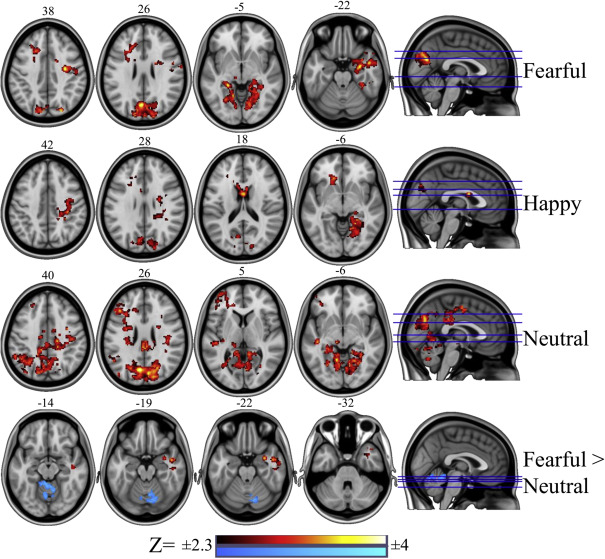
Now, a pair of new papers from an Imperial College London team (including David Nutt) detail the promising outcomes of a small-scale (20 subject) study in treating moderate to severe depression with psilocybin, in which the subjects report significant improvement without the “emotional dulling” associated with mainline antidepressants (this dulling effect is a major contributor to the cessation of medication), and in which fMRI imaging offers some clues to how psilocybin is mitigating depression.
Continue reading
Please note that this is not about trying to treat yourself with illegal substances but a report about serious study of the effects of using certain psychedelic drugs under controlled conditions.
And it was only a small sample.
Saturday, 30 December 2017
Reality enchanted
via 3 Quarks Daily: Josh Raymond at the TLS

© Universal Images Group North America LLC/DeAgostini/Alamy
Psychedelic drugs have an appropriately colourful history. The word’s origin is Greek (“mind-manifesting”, literally) and it was coined by the psychiatrist Humphry Osmond in an exchange of letters with Aldous Huxley; LSD, the quintessential psychedelic, first came to Britain in 1952, in the luggage of a psychoanalyst called Ronnie Sandison. Sandison had met the drug’s discoverer, Albert Hoffman, on a visit to Switzerland, and Hoffman believed LSD to be miraculous – “You see the world as it really is”. Sandison administered it to thirty-six patients with “very difficult psychiatric problems … all in danger of becoming permanent mental invalids”. The Journal of Mental Science write up in 1954 claimed more than half recovered completely.
Humphry Osmond used it to treat alcoholism. By the late 1960s he and his colleagues had treated over 2,000 people, more than 40 per cent of whom did not drink again within a year. The randomized-controlled portions of this work were reviewed and found valid in 2012. LSD was also tested by the military at Porton Down, first as a “truth serum” for interrogations, for which it proved useless, and then as a mass battlefield incapacitant, where results were inconclusive. A thoroughly researched history of LSD in Britain can be found in Albion Dreaming (2012) by Andy Roberts.
Continue reading
Subscribe to:
Posts (Atom)

