Showing posts with label personal_responsibility. Show all posts

Friday, 11 January 2019

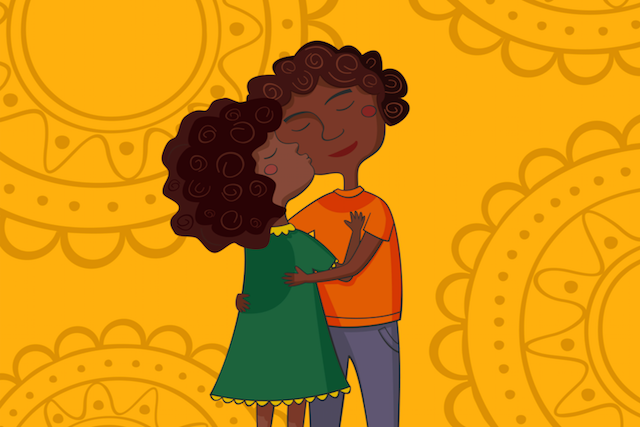
Beyond Sorry: A Better Way to Handle Conflict in Your Relationship

a post by Mike Matthews for the Tiny Buddha blog


“Sorry isn’t always enough. Sometimes you actually have to change.” ~Unknown

When I was young I was like every other kid, always in and out of trouble. I pushed the boundaries of what was acceptable in order to see what I could get away with. When I pushed, I’d often keep on pushing until someone said “stop.”

During my childhood I heard lots of:

“STOP!!”

Quickly followed by:

“Say you’re sorry.”

Say those two magical words, “I’m sorry,” and all the pain will go away. Then I’ll be back in the good books and can go play with my friends again.

During this time I received another strong message that many children hear. It’s the one that says some of your feelings are not a good thing.

Continue reading


Sunday, 22 October 2017

Poor choice? Smith, Hayek and the moral economy of food consumption

an article by Simon Glaze and Ben Richardson (University of Warwick, Coventry, UK) published in Economy and Society Volume 46 Issue 1 (2017)

Abstract

This paper explores the moral economy of food in the United Kingdom via discourses on food bank usage and obesity. It argues that both of these markers of malnutrition were interpreted under the Conservative-led governments of David Cameron (2010–2016) as failings of personal responsibility and identified primarily with the working class, advancing the assumption that poor people make poor choices.

Based on a critique of this account, our wider contribution is two-fold.

First, we identify the Hayekian lineage of the discourse of personal responsibility, highlighting its utility in facilitating a form of neoliberal market consent through its insistence on self-reliance.

Second, we stake out an alternative to this conceptualization through a discussion of Adam Smith’s notion of self-command, which we call interpersonal responsibility.


Thursday, 4 April 2013

Why Do Bystanders of Bullying Help or Not? A Multidimensional Model

an article by Tiziana Pozzoli and Gianluca Gini (University of Padua, Padova, Italy) published in The Journal of Early Adolescence Volume 33 Number 3 (April 2013)

Abstract

The authors employed Latanè and Darley’s model about bystanders’ behaviour to explain children’s active defending and passive bystanding behaviour in school bullying.

The three central steps of the model were operationalised by measuring provictim attitudes, personal responsibility for intervention, and coping strategies.

Moreover, the role of perceived expectations from parents and peers was investigated. A total of 759 children and 995 early adolescents participated. The findings from structural equation modelling (SEM) confirmed the hypothesised relationships and the impact of perceived peer and parent pressure on nearly all the study variables.

The model was confirmed for both age groups, with only a few differences in the paths’ magnitudes, and the model demonstrated the importance of considering both strictly individual characteristics and contextual variables. These results substantially expand previous findings and have potential interest for both researchers and educators.