Showing posts with label government_spending. Show all posts

Tuesday, 8 October 2019

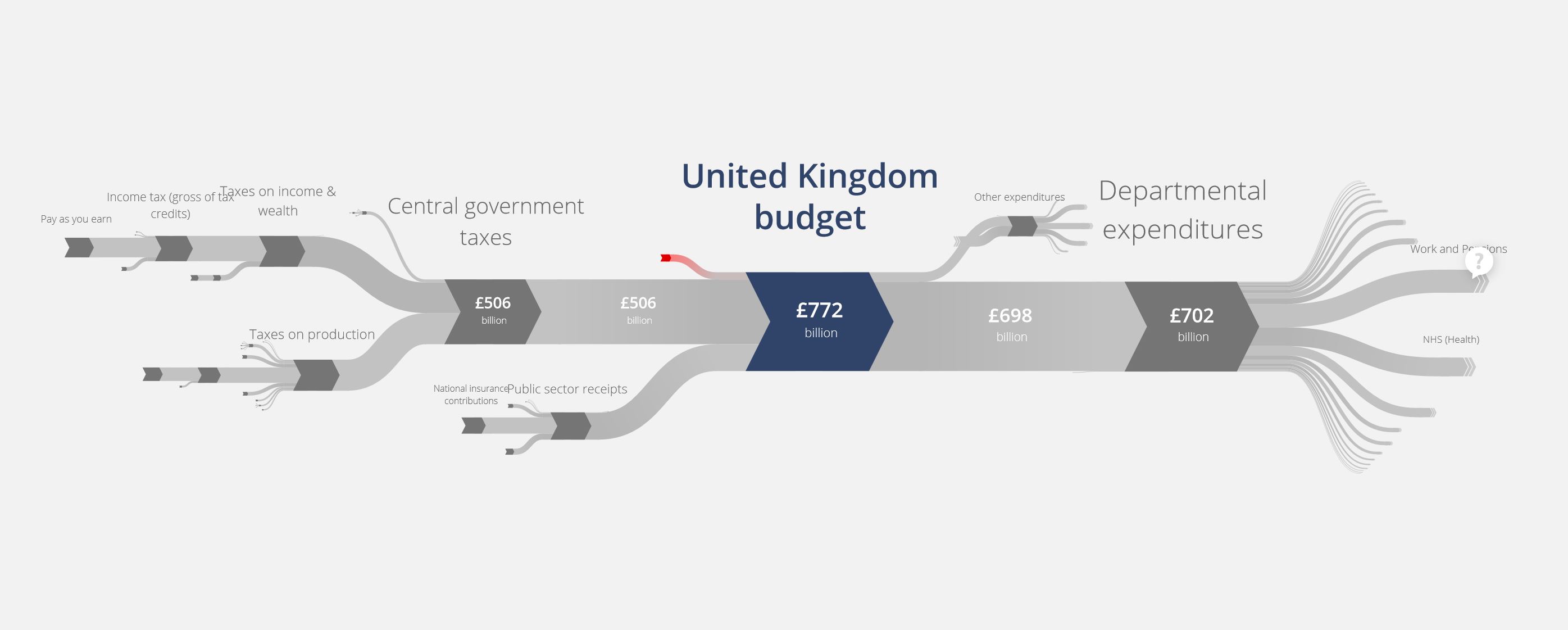
Visualization of the United Kingdom's budget

a post by Rob Beschizza for the Boing Boing blog


This one's good not only because it's simple yet interactive, but because it shows the receipts and the spending. There are various others on the site for different tendrils of the British state; hopefully the same visualization can be used to show other governments at work too. United Kingdom Budget 2016 [uk.wikibudgets]


Friday, 10 August 2012

Unintended consequences: Local Housing Allowance meets the Right to Buy

an article by Nigel Sprigings and Duncan H. Smith (University of Glasgow and Renfrewshire Council) published in People, Place & Policy Online Volume 6 Number 2 (June 2012)

Abstract

Recent rapid expansion of the Private Rented Sector (PRS) is recognised but the extensive involvement of ex-local authority stock in this new PRS is not.

This paper uses existing literature to outline the commodification processes through which Right to Buy (RTB) housing enters the PRS.

Other published research is used to estimate a likely range of council to PRS tenure change over 30 years of RTB in the UK.

Then using detailed data matching, we present one local authority example at individual dwelling level across the whole stock to establish the true scale of this transfer from council housing to private rental.

Finally, to stimulate debate about the revenue cost of this switch of rental tenures we speculate on the additional annual cost of Housing Benefit support to this ex-RTB stock given that the PRS is invariably more expensive than council renting for equivalent dwellings. This may well be over £1bn per year. We conclude that UK government’s plans to expand the RTB scheme will simply increase revenue costs year on year for no discernable social or housing supply benefit.

Full text (PDF 18pp)

Hazel’s comment:
Just from reading the abstract that makes complete sense. I don’t have to like it, though.


Monday, 25 May 2009

Government invites bids for a share of £20 million to fund adult learning

Organisations can bid for a share of £20 million in Government cash from today (13 May) to open up and promote informal learning for adults and young people across the country. In a speech to NIACE’s Annual Policy Conference, Skills Secretary John Denham kicked off the bidding process, publishing a prospectus designed to show how a wide range of groups and partnerships of all sizes can win funding. The deadline for bids is July 12 this year but an “early bird” funding pot of £1 million is available for ideas submitted by June 12.

Comment: Now, you can call me an old cynic if you want to, but when I clicked on the link in the email alert to download this press release, I kept getting ‘Internet Explorer cannot display this page’. A quick Google search using the title of the release only threw up one link – which turned out to be no good. I eventually found a copy of it on E-Gov Monitor. Do you think the government doesn’t actually want anyone to apply for this cash? Dawn

Friday, 22 August 2008

Benefits and spend

via Government Computing 14 August

£1.24bn is a lot of money, even for government IT. It is nearly as much as Connecting for Health spent on the core National Programme for IT contracts up to March 2007. It would keep Birmingham City Council's IT going for 26 years on its current deal.
It is also what the Department for Work and Pensions plans to spend on IT in this financial year.
Such things are hard to assess, but DWP's record on IT seems pretty good, such as when moving its Jobcentre Plus contact centres to a single system and number. It has had problems, such as its cancellation of Siemens' contract for the Customer Information System project, but on balance DWP is one of the better departments for technology use.
It is more the sheer size of the budget that is notable. DWP and HMRC together in the 2007-08 financial year spent £1.89bn on IT - more than £30 for everyone in the country - basically (with a few exceptions such as Jobcentre Plus) to administer money coming in and out of government.
One wonders if, when deciding to add new complexity to taxes and benefits, politicians pause to think about the cost of that complexity.
Full story

Hazel's comment:
Do politicians pause to think of the cost of the complex changes that they initiate? Of course not. Plus ça change and all that.
Sunday, 25 May 2008

Government shelves compulsory personal carbon trading

Kable's Government Computing 9 May

Public fears over data management have contributed to the Department for Environment, Food and Rural Affairs' decision to suspend research into a national personal carbon trading scheme.

Full story

Hazel's comment:
Bloomin' silly idea to start with.

Tuesday, 13 May 2008

Why do Europeans work (much) less? It is taxes and government spending

an article by Tine Dhont and Freddy Heylen (Ghent University) in Economic Inquiry Volume 46 Issue 2 (April 2008)

Abstract
The authors develop and calibrate a theoretical model that explains per capita hours worked and output growth as a function of three fiscal policy variables. Differences in income taxes, productive government expenditures, and non employment transfers are sufficient to answer the question why Europeans work (much) less than Americans and why some Europeans work less than others. Differences in taste for leisure have little role to play given the actual variation of these three policy variables.
Hazel's comment: Tax workers too much and they will not work such long hours that additional tax becomes payable. It is human nature to want to see reward for one's labour whether this is expressed as "more money in the pay packet" or is visible as beneficial government spending with the revenue collected.