Showing posts with label Islam. Show all posts

Tuesday, 12 November 2019

Italy And Beyond

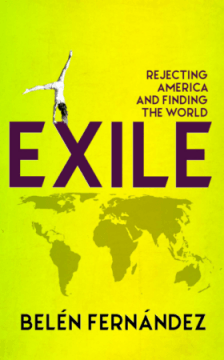
Belén Fernández in the Washington Spectator via 3 Quarks Daily by S. Abbas Raza


Once upon a time in Italy, a prominent citizen declared: “It is unacceptable that sometimes in certain parts of Milan there is such a presence of non-Italians that instead of thinking you are in an Italian or European city, you think you are in an African city.”

In case the message was not crystal clear, he then spelled it out: “Some people want a multicolored and multiethnic society. We do not share this opinion.”

The citizen in question was none other than Silvio Berlusconi: billionaire three-time Italian prime minister, intermittent convict, and head of a super-powerful media empire, who, as the New York Times put it in January 2018, has now “cleverly nurtured a constituency of aging animal lovers—and potential voters—by frequently appearing on a show on one of his networks in which he pets his fluffy white dogs and bottle-feeds lambs.”

Continue reading


Thursday, 12 September 2019

Arab youth, architects of their future

An article by Katerina Markelova published in the UNESCO Courier


The old and the new, Beirut, Lebanon, 2018.

French photographer Yan Bighetti de Flogny was in Pakistan when, in the course of a conversation with a hotel owner, he learned of the existence of Ibn Battuta, the fourteenth-century Moroccan explorer. Unfairly little-known, Ibn Battuta is “perhaps the greatest traveller who has ever lived”, as an article in the Courier of August-September 1981 tells us.

“At the age of 21, he started his travels by undertaking a pilgrimage to Mecca. This was the start of thirty years of wandering, during which he would travel almost 120,000 kilometres and visit all the Muslim countries. In the course of this great journey, comparable only to that of Marco Polo, he visited Mecca four times, became a judge in Delhi and in the Maldive Islands, accompanied a Greek princess to Constantinople, sailed to Sumatra and Java, and journeyed to China as ambassador of the Sultan of India. Then, in 1349, he returned briefly to his own country (“the best land in the world”) before setting off immediately to the kingdom of Granada and after that on a journey through Africa to the Niger basin. The diary which Ibn Battuta dictated to a scribe during his travels is a source of the first importance for the history of the Muslim world of his time, especially for the history of India, Asia Minor and West Africa.”

The story inspired our photographer, whose reporting project on the fight against cultural prejudices had been maturing for years, but lacked a common thread. Which he had now found: Yan decided that he would embark on a long journey, in the footsteps of Ibn Battuta! The project was launched in March 2018. It will take three years and cover more than twenty countries, from Morocco to China, following a similar itinerary to the one undertaken by the Moroccan explorer seven centuries earlier.

Continue reading


Sunday, 29 October 2017

Differences in access to information and communication technologies: Voices of British Muslim teenage girls at Islamic faith schools

Glenn Hardaker and Atika Qazi (Universiti Brunei Darussalam, Gadong, Brunei), Aishah Sabki, (Beyond Labels Ltd, Huddersfield, UK) and Javed Iqbal, (Independent Researcher, London, UK) published in The International Journal of Information and Learning Technology Volume 34 Issue 4 (2017)

Abstract

Purpose
Most research on information and communication technologies (ICT) differences has been related to gender and ethnicity, and to a lesser extent religious affiliation. The purpose of this paper is to contribute to this field of research by situating the discussion in the context of British Muslims and extending current research into ICT differences beyond gender and ethnicity.

Design/methodology/approach
This paper explores the ICT differences in access and use by British Muslim teenage girls at Islamic faith schools, and ICTs’ perceived influence on learning. The qualitative research was undertaken by conducting 45 semi-structured interviews with British Muslim teenage girls in Islamic faith schools.

Findings
The study provides tentative findings that Islamic faith schools are not only framed by the wider diverse Muslim community, but also by the supplementary schooling of madrasahs. The findings suggest that the home use of ICTs was reinforced rather than compensated for by the Islamic faith schools. This seemed to inhibit many pupils’ access to online educational resources. The authors found that didactic instruction was prevalent and this provided tentative insights into the types of digital inequity experienced by many pupils.

Originality/value
The research into ICT differences in the UK adopted the premise that the unity in Muslim identity increasingly transcends ethnicity and gender in the Muslim community.


Saturday, 7 October 2017

It’s Not Islam That Drives Young Europeans to Jihad, France’s Top Terrorism Expert Explains

3 Quarks Daily commented on, and linked to, a report in the Israeli newspaper Haaretz by Davide Lerner. I can’t bring you the original report as the online version of Haaretz is riddled with adverts which are hard to get beyond and some are definitely, in my opinion, in the “not safe for work” category.

However, here is what 3 Quarks had to say:

Salman Abedi, the suicide bomber who killed 22 people at a Manchester pop concert this week, started life advantageously enough: to parents who had fled Gadhafi’s Libya for a new life in Britain. But actually it was that kind of dislocation that would send him off kilter two decades later, says Olivier Roy, one of France’s top experts on Islamic terrorism.

“An estimated 60 percent of those who espouse violent jihadism in Europe are second-generation Muslims who have lost their connection with their country of origin and have failed to integrate into Western societies,” Roy says.

They are subject to a “process of deculturation” that leaves them ignorant of and detached from both the European society and the one of their origins. The result, Roy argues, is a dangerous “identity vacuum” in which “violent extremism thrives.”


Thursday, 14 February 2013

Muslim women’s workplace experiences: implications for strategic diversity initiatives

an article by Terrie C. Reeves (University of North Carolina at Greensboro, USA), Arlise P. McKinney (Coastal Carolina University, Conway, USA) and Laila Azam, (Froedtert Hospital, Milwaukee, Wisconsin, USA) published in Equality, Diversity and Inclusion: An International Journal Volume 32 Issue 1 (2013)

Abstract

Purpose
The purpose of this paper is to examine Muslim women’s decisions to wear headscarves, known as hijab, in the workplace. The decision to wear hijab may result in a stigmatised identity, so the paper also aims to examine perceived or experienced discrimination and impact on employment outcomes.

Design/methodology/approach
Using qualitative methodology to capture nuances, the study was based on demographic responses and semi-structured interview questions by 79 Muslim women physicians and other healthcare professionals.

Findings
The paper finds that many factors influenced their decisions, but Muslim women had a wide variety of views in terms of the hijab and adherence to Islamic precepts. Those who wear hijab reported negative experiences of intolerance and discrimination. The decision to wear hijab was subsequently associated with perceived discrimination that would limit one’s employment opportunities.

Practical implications
Religion is one diversity categorisation that can be invisible yet still has a significant impact on workers and their engagement in the workplace. Organisations engaged in strategic diversity initiatives may need to better understand specific nuances of diversity concerning religious expression and the potential psychological toll hiding those expressions may have on workers. The paper's findings have implications for personnel selection, training, and managing interpersonal relationships in the workplace.

Originality/value
Religious expression is an under-studied workplace diversity facet, especially when disclosing religion is a choice that may result in being stigmatised. There has been research on workplace treatment of Muslims and the influences of spirituality, but no research that examined the decision to wear hijab and the associated workplace consequences.