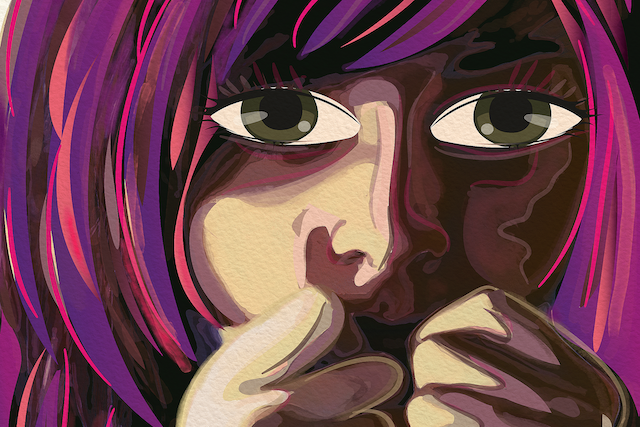
Showing posts with label panic_disorder. Show all posts

Tuesday, 26 November 2019

Inside a Panic Attack: What It's Like When Anxiety Strikes

a post by Haley West for the Tiny Buddha blog


“Those who suffer from mental illness are stronger than you think. We must fight to go to work, care for our families, be there for our friends, and act ‘normal’ while battling unimaginable pain.” ~Unknown

It’s strange having a panic attack while surrounded by p eople. I’m experiencing something so private and so personal, but unless I externalise it, they are completely unaware. It’s almost an art to be able to hide it — to train myself well enough to function in front of others to the point that, if I do reveal to them the nature of my anxiety, they reply, “I had no idea.”

If you’ve never experienced a panic attack, they are almost impossible to explain. But I’m going to try.

Continue reading


Friday, 14 December 2018

What You Need To Know About Panic Attacks

a post by Rachel Fintzy Woods for her Cultivating Contentment & Happiness blog for the World of Psychology blog

Anyone who has experienced a panic attack will tell you that such episodes are among the most painful, terrifying, and seemingly unbearable experiences he or she has endured. Panic attacks can come out of the blue and generally last no longer than ten minutes or so – but that ten minutes can feel like an eternity and have a traumatic impact on you.

Common physical symptoms of a panic attack include:
  • Heart palpitations
  • Shortness of breath
  • Tightening in the chest
  • Dizziness
  • Faintness
  • Choking sensations
  • Sweating
  • Trembling
  • Tingling in the hands and feet
Common psychological symptoms of a panic attack include:
  • Feelings of unreality or as if things are surreal
  • An intense urge to flee the situation
  • Fear of going crazy
  • Fear of dying
  • Fear of doing something uncontrollable
Continue reading

Tuesday, 27 February 2018

Scientists have discovered where anxiety comes from

an article by Philip Perry for the Big Think blog

Anxiety disorders are common and may be growing more so. 40 million US adults suffer from one in some form, about 18% of the population. Worldwide, 260 million live with an anxiety disorder, according to the WHO. Economist Seth Stephens-Davidowitz reported in 2016 that anxiety disorders have doubled in the US since 2008. There are a number of different kinds. There’s general anxiety disorder, panic disorder, social anxiety, and of course, a near countless number of phobias.

Although common, physicians aren’t sure what exactly brings on such a disorder. They usually hit a person in the prime of their life, and the treatments we have now are generally, only partially effective. Medical researchers hypothesize that it’s a combination of genes, environmental conditions, and changes inside the brain that lead to such a disorder.

Anxiety often runs in families and epigenetic markers for it have been identified. Epigenetics is the system by which genes are marked to become either expressed or suppressed. A recent study found that epigenetic changes associated with anxiety that occurred in holocaust victims, were passed down to their children.

Continue reading


Tuesday, 28 November 2017

Can Anxiety and Panic Disorder Cause Depression if Left Untreated?

a post by Myra Espey for the World of Psychology blog


Mental health problems are infamously complicated. Although psychologists have a successful guidebook to identify and diagnose mental illness, those manuals are merely suggestions for treatment – and can’t predict exactly how you experience your psychological and emotional well-being. With that in mind, some people experience multiple forms of mental health disorders, often in various degrees. If somebody has several mental health conditions, it’s known as “comorbidity,” and anxiety and depression are the two most related diagnoses.

Continue reading