Showing posts with label neuroscience. Show all posts

Monday, 28 October 2019

Why Mammalian Brains are Geared Toward Kindness

posted by Azra Raza in 3 Quarks Daily: Patricia Churchland in The Scientist:


Three myths about morality remain alluring:
  • only humans act on moral emotions,
  • moral precepts are divine in origin, and
  • learning to behave morally goes against our thoroughly selfish nature.
Converging data from many sciences, including ethology, anthropology, genetics, and neuroscience, have challenged all three of these myths. First, self-sacrifice, given the pressing needs of close kin or conspecifics to whom they are attached, has been documented in many mammalian species — wolves, marmosets, dolphins, and even rodents. Birds display it too. In sharp contrast, reptiles show no hint of this impulse.

Continue reading


Wednesday, 27 March 2019

Better detection of concussions using vital signs

a post by Ryan CN D'Arcy for the OUP blog


SFU Ph.D student and brain researcher Shaun Fickling uses ‘brain vital signs’ to monitor brain function” by Simon Fraser University. Used with permission.

As a father of a young ice hockey player, I’m all too familiar with every parent’s concern about concussions. As a neuroscientist, I chose not to accept that it was okay to rely on subjective and error-prone tests to understand how best to care for our brains after concussion. We dared ourselves to think bigger, and to devise a solution that was larger than concussions – to ask the question: “Why don’t we have objective vital signs for brain function?”

We have vital signs for our body like heart rate, body temperature, respiratory rate, and blood pressure. Why not for our brain? You can’t treat what you can’t measure, bottom line. Therefore, we must first know if brain injuries, like concussions, have significantly affected brain function. We must also know whether our treatments are helping to promote improved recovery. In essence, we must have an objective measuring stick for brain function.

Continue reading


Wednesday, 20 March 2019

Sleep is a brain-repair mechanism, new study proves

a post by Xeni Jardin for the Boing Boing blog


Scientists Lior Appelbaum and David Zada in Israel publish new proof that sleep serves to help our brains repair damage.

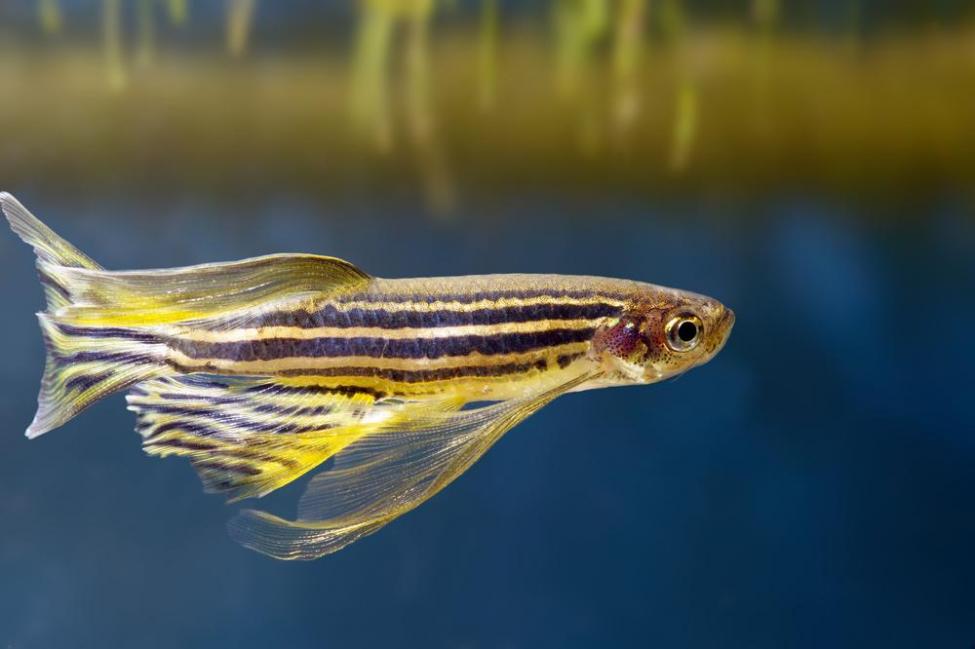
Their study, published in the journal Nature, used genetically engineering transparent zebra fish with colorful chemical tags attached to chromosomes in their neurons, and found that chromosomes constantly change shape to repair DNA damage, but move twice as much during sleep as when awake.

Continue reading

I am not sure that I would make the leap from zebra fish to humans but hey, I’sm not a neuroscientist.


Tuesday, 26 February 2019

An Introduction to the Neuroscience Behind Creating Your Reality

a post by Brooklyn Storme for the World of Psychology blog


Have you ever wondered why two people can share the exact same situation, yet experience it differently?

Neural pathways are often described as a type of super-highway of nerve cells, the function of which is to transmit messages. Much like a walking track in the bush, the more you walk over it, the more trodden and clear it becomes. The same thing happens when we engage in behaviors such as thinking certain thoughts with a high degree of regularity.

You see the brain consumes between 20-30% of the caloric burn in our body at rest. It uses so much energy because it’s so complex and so it has needed to evolve and adapt in order to automate various processes as a way of conserving energy. This is why and how regular behaviors become habits (or things we seemingly do without a great deal of conscious thought).

Think about something simple like brushing your teeth. You can brush them just fine, no problem but what if I asked you to use your non-dominant hand to do that instead? You’d suddenly have to think about the action of your arm and the motion of your wrist or hand. It would be hard at first because it’s unfamiliar, but if you persevered with it, over time, it would become easier as the task became more familiar. This is an example of neuroplasticity and can be thought of as “re-wiring your brain.”

Continue reading


Monday, 7 January 2019

Does manual labor boost happiness?

a post by Derek Beres for the Big Think blog

The neurochemistry of working with your hands.
  • Working with your hands affects brain chemistry in a positive way.
  • Automation technologies can strip away a sense of agency and meaning in our lives.
  • Using your hands connects you with your environment in a way that most technologies cannot.
Violence has become such a part of the fabric of American society that many stories pass without much commentary. Mass shootings need to be bigger and grander than ever to stay in the headlines; solo homicides rarely receive a glance. We pass over news about increasing suicide rates as if it is to be expected.

Continue reading

There’s some interesting links and a video to watch!


Monday, 31 December 2018

The science behind why our brains make us cooperate (or disagree)

a post by the Charles Foch Foundation for the Big Think blog

Studies from neuroscience highlight how the brain both helps with and prevents collaboration.
  • Neuroscientists identify the parts of the brain that affect our social decision-making.
  • Guilt has a large affect on social interactions, find the researchers.
  • To find ways to cooperate, people need to let go of fear and anxiety, suggest studies
Why do we decide to work on a project or pursue a goal with someone? Or why do we treat some people like there's no way we can find any common language? Neuroscience says that the human brain contains underlying causes to all human cooperation and social decision-making.

Continue reading

Thursday, 20 December 2018

Why victims of childhood adversity have a harder time achieving their goals

a post by Mike Colagrossi for the Big Think blog

Childhood trauma can affect a child's brain in dramatic ways for the rest of their lives.

  • New findings suggest that childhood adversity may be directly linked to depression.
  • Adverse childhood experiences include a wide range of stressful or traumatic events brought upon by abuse and neglect.
  • Important landmark studies from the '90s suggest that these experiences are common and lead to a number of health, social and behavioral problems throughout life.

New research published in the journal Social Cognitive and Affective Neuroscience in October suggests that there is a connection between childhood adversity and depression.

Continue reading


Monday, 19 November 2018

Wait for it: how schizophrenia illuminates the nature of pleasure

a post by Ann M Kring for the Big Think blog

Pleasure is not just about experiencing an enjoyable moment. It also involves anticipation – a connection between one's present and future selves.

Schizophrenia is one of the most widely misunderstood of human maladies. The truth of the illness is far different from popular caricatures of a sufferer muttering incoherently or lashing out violently. People with schizophrenia are, in fact, not more likely to be violent than people without schizophrenia. About one per cent of the worldwide population has schizophrenia, affecting men and women, rich and poor, and people of all races and cultures. It can be treated with medication and psychosocial treatments, though the treatments don't work well for every person and for every symptom. Most of all, it impacts everything that makes us human: the way one thinks, the way one behaves, and the way one feels – particularly the ability to experience pleasure.

Three-quarters of people with schizophrenia suffer from anhedonia: the decreased pleasure from events or activities that were once enjoyed. Friends will no longer be fun to be around, and once-tasty meals can come to taste bland. (It is also a core symptom of depression.) [my highlight] From a clinical perspective, anhedonia is assessed via an interview with a mental-health professional in which a person is asked about pleasure and enjoyment in various life activities such as socialising, eating, working or participating in hobbies.

Continue reading

I have not been diagnosed with schizophrenia nor do I think I have schizoid tendencies but I can empathise with everything in this article about pleasure and anticipation. Standing in the Vatican looking at that marvellous painting of the Sistine Chapel ceiling and thinking, “That’s nice”.