an article by Robin Palmer (Rhodes University, Simon's Town, Western Cape, South Africa) published in International Journal of Business and Globalisation Volume 21 Number 3 (2018)
Abstract
We live in a time of increased international migration and asylum seeking. Those involved have become scapegoats for nativists who support parties with promises to restore what they have lost through neoliberalism and globalisation.
Neoliberalism may be of recent derivation, but it is derived from the liberalism and laissez-faire capitalism of the 'long 19th century' (1750-1914). Then, as now, the masses were 'pushed' to migrate by accelerated population growth and its political and socio-economic correlates.
Focusing on London, the paper examines the experience of Italian migrants and asylum seekers in the UK of that period, who drew on the historic Italophilia of the British to advance their careers or causes. Collective reputation, so long as it is positive, can be an important resource for 'culture entrepreneurs' in migrant or refugee settings; it can take a long time to build but once established tends to be resilient and capable of innovative reinterpretation.
Showing posts with label asylum_seekers. Show all posts
Showing posts with label asylum_seekers. Show all posts
Thursday, 18 October 2018


Friday, 13 April 2018
(The struggle for) refugee integration into the labour market: Evidence from Europe
a column by Francesco Fasani, Tommaso Frattini and Luigi Minale for VOX: CEPR’s Policy Portal
The lack of differentiation between refugees and other immigrants in immigration data presents major problems for researchers looking at refugee integration.
This column uses novel European data to investigate factors affecting the integration of asylum seekers into host labour markets. The results suggest that allowing free residential mobility and reducing uncertainty in refugee status determination processes could improve future labour market outcomes.
Continue reading
The lack of differentiation between refugees and other immigrants in immigration data presents major problems for researchers looking at refugee integration.
This column uses novel European data to investigate factors affecting the integration of asylum seekers into host labour markets. The results suggest that allowing free residential mobility and reducing uncertainty in refugee status determination processes could improve future labour market outcomes.
Continue reading
Friday, 2 February 2018
Indefinite Detention and the Rule of Law
a post by Catherine Jaquiss for the UK Human Rights blog
On 1 December 2017 an event in Temple Church with the Bar Council in collaboration with Refugee Tales, an outreach project whose aim is to see the end of indefinite immigration detention, saw an announcement of new recommendations for reform of the system of immigration detention.
This followed from the publication on 30 November 2017 of ‘Injustice in Immigration Detention, Perspectives from Legal Professionals’, an independent report by Dr Anna Lindley of SOAS.
Read the report (PDF 61pp)
The Bar Council, led by Andrew Langdon QC, is making a series of recommendations in light of the report, as follows:
On 1 December 2017 an event in Temple Church with the Bar Council in collaboration with Refugee Tales, an outreach project whose aim is to see the end of indefinite immigration detention, saw an announcement of new recommendations for reform of the system of immigration detention.
This followed from the publication on 30 November 2017 of ‘Injustice in Immigration Detention, Perspectives from Legal Professionals’, an independent report by Dr Anna Lindley of SOAS.
Read the report (PDF 61pp)
The Bar Council, led by Andrew Langdon QC, is making a series of recommendations in light of the report, as follows:
- A 28-day time limit for administrative detention;
- Automatic judicial oversight of the arrangements for holding people in administrative detention;
- Adequate legal aid for advice and representation for those held in immigration detention to challenge the loss of their liberty;
- A ban on the use of prisons for the purposes of administrative detention;
- Special care for vulnerable people and victims of torture held in administrative detention; and
- Review and clarification of the criteria for administrative detention. The relevant policy and rules need to be accessible and intelligible so that all those who are affected by the exercise of powers to detain understand the reasons for the exercise of those powers and can challenge decisions where appropriate.
Tuesday, 14 November 2017
How the EU Can Manage the Migrant Flow
via 3 Quarks Daily: Kenneth Roth at Human Rights Watch
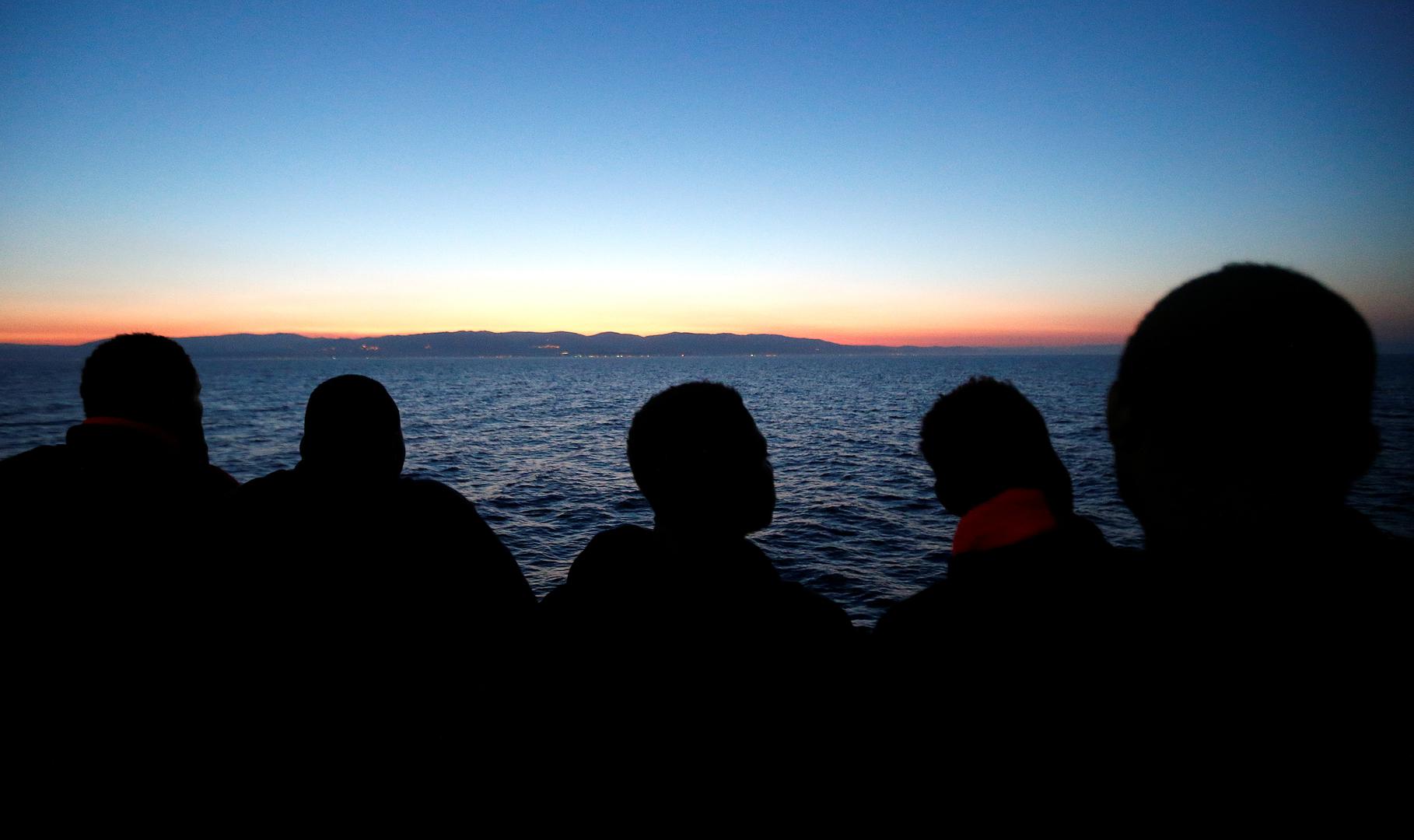
No one pretends there is an easy way for the European Union to manage the flow of asylum seekers and other migrants arriving by boat from Libya. Yet there are certain basic principles of human rights – and decency – that should guide the EU response.
The Mediterranean crossing from Libya toward Italy has become the world’s most dangerous. Some 103,000 people have survived the journey this year through late September, but 2,471 have drowned or gone missing.
What would lead anyone to risk such a perilous journey? Some flee persecution or violence at home. Others, fleeing crushing poverty, hope for a better life in Europe. But all have traversed Libya, one of the world’s most inhospitable places for migrants.
Divided today among three competing authorities, Libya has become a smuggler’s paradise and a migrant’s nightmare. Non-Libyan migrants seeking transit to Europe are typically corralled and kept in squalid, overcrowded detention centers where malnutrition and illness are widespread, and forced labor, beatings, sexual abuse and torture are rife. The UN Refugee Agency estimates that more migrants are killed crossing Libya these days than die at sea.
International refugee law prohibits forcibly returning anyone to such conditions, which is why boats rescuing migrants – whether operated by the EU, Italy, or nongovernmental groups – don’t return them. So far, most have been taken to Italy.
Some, such as Italy’s 5 Star Movement and the far-right Northern League, criticize these rescue efforts as a “pull factor,” but there is no evidence that ending them would deter the migrants from embarking. It would, however, increase the drownings.
Many of the other ideas offered for managing the flow have been similarly flawed. French President Emmanuel Macron briefly suggested that the EU screen asylum seekers inside Libya to avert the need for them to take to the sea, but he quickly withdrew the idea once it was pointed out that Libya is safe neither for the screeners nor anyone seeking to be screened.
The EU is supporting Libyan coastal forces, arguing that they will curtail smugglers and save lives, but under current circumstances these forces are doing indirectly what the EU is prohibited from doing directly – sending people back to the horrible, lawless conditions of detention. Separate deals with militias who would otherwise be involved in smuggling may be behind the significant drop in boat departures during the summer – normally a peak crossing period – but no one can predict how long that will hold. In the meantime, those who might have escaped remain trapped in a hellish environment.
Continue reading
Migrants look at south Italy's coast as they approach on the Vos Hestia ship after being rescued by " Save the Children" crew on the Mediterranean sea off the Libya coast, June 20, 2017.
© 2017 ReutersNo one pretends there is an easy way for the European Union to manage the flow of asylum seekers and other migrants arriving by boat from Libya. Yet there are certain basic principles of human rights – and decency – that should guide the EU response.
The Mediterranean crossing from Libya toward Italy has become the world’s most dangerous. Some 103,000 people have survived the journey this year through late September, but 2,471 have drowned or gone missing.
What would lead anyone to risk such a perilous journey? Some flee persecution or violence at home. Others, fleeing crushing poverty, hope for a better life in Europe. But all have traversed Libya, one of the world’s most inhospitable places for migrants.
Divided today among three competing authorities, Libya has become a smuggler’s paradise and a migrant’s nightmare. Non-Libyan migrants seeking transit to Europe are typically corralled and kept in squalid, overcrowded detention centers where malnutrition and illness are widespread, and forced labor, beatings, sexual abuse and torture are rife. The UN Refugee Agency estimates that more migrants are killed crossing Libya these days than die at sea.
International refugee law prohibits forcibly returning anyone to such conditions, which is why boats rescuing migrants – whether operated by the EU, Italy, or nongovernmental groups – don’t return them. So far, most have been taken to Italy.
Some, such as Italy’s 5 Star Movement and the far-right Northern League, criticize these rescue efforts as a “pull factor,” but there is no evidence that ending them would deter the migrants from embarking. It would, however, increase the drownings.
Many of the other ideas offered for managing the flow have been similarly flawed. French President Emmanuel Macron briefly suggested that the EU screen asylum seekers inside Libya to avert the need for them to take to the sea, but he quickly withdrew the idea once it was pointed out that Libya is safe neither for the screeners nor anyone seeking to be screened.
The EU is supporting Libyan coastal forces, arguing that they will curtail smugglers and save lives, but under current circumstances these forces are doing indirectly what the EU is prohibited from doing directly – sending people back to the horrible, lawless conditions of detention. Separate deals with militias who would otherwise be involved in smuggling may be behind the significant drop in boat departures during the summer – normally a peak crossing period – but no one can predict how long that will hold. In the meantime, those who might have escaped remain trapped in a hellish environment.
Continue reading
Sunday, 29 October 2017
Refugees and asylum seekers, the crisis in Europe and the future of policy
an article by Timothy J. Hatton (University of Essex, UK) published in Economic Policy Volume 32 Issue 91 (July 2017)
Summary
The recent asylum crisis has highlighted the inadequacies of European asylum policies. The existing asylum system, which encourages migrants to make hazardous maritime or overland crossings to gain access to an uncertain prospect of obtaining refugee status, is inefficient, poorly targeted and lacks public support. In the long run it should be replaced by a substantial joint programme of refugee resettlement that would help those most in need of protection, that would eliminate the risks to refugees, and that would command more widespread public support.
Analysis of key facts and data includes the determinants of asylum applications and trends in public opinion.
In this light I evaluate the feasibility of three elements for reform:
Full text (HTML)
Summary
The recent asylum crisis has highlighted the inadequacies of European asylum policies. The existing asylum system, which encourages migrants to make hazardous maritime or overland crossings to gain access to an uncertain prospect of obtaining refugee status, is inefficient, poorly targeted and lacks public support. In the long run it should be replaced by a substantial joint programme of refugee resettlement that would help those most in need of protection, that would eliminate the risks to refugees, and that would command more widespread public support.
Analysis of key facts and data includes the determinants of asylum applications and trends in public opinion.
In this light I evaluate the feasibility of three elements for reform:
- first, implementing tougher border controls to reduce unauthorised entry;
- second, promoting direct resettlement of refugees from countries of first asylum; and
- third, expanding refugee-hosting capacity through enhanced burden-sharing among destination countries.
Full text (HTML)
Thursday, 5 October 2017
Refugees and Mental Health
an article by Dr Chi-Chi Obuaya for Psychiatry-UK (June 2017)

There have always been people who have had to flee from wars, or natural disasters or severe persecution because of their ethnic origin or their political, religious or social activities. If we all had our DNA tested, few of us would not reveal traces of ancestors who have landed in these islands due to such circumstances; cold, wet, tired, with nothing but the clothes they wore – and traumatised by both the horrors that forced them to flee and the terrible travails that they had along the way.
The incredible will power, vigour and drive needed to make those journeys perhaps explains why refugees and their descendants have then often contributed so significantly to the cultures to which they have fled, all around the world.
There is a strong argument for saying that it was the arrival of Muslims fleeing the Spanish inquisition, bringing new mathematical knowledge, that triggered the Renaissance in Italy. Though the arrival of the Huguenots caused riots in London and Canterbury in Elizabethan times, now their descendants are woven through the establishment and elite of British society. Many Jewish refugees who fled from Europe to escape the death camps are now so rightly lauded for their achievements in the fields of medicine, law, music, art, and literature.
Continue reading and discover how an online service can link those in mental distress with culturally appropriate help.
Thanks to the Mind and Soul Foundation for pointing this article out.
There have always been people who have had to flee from wars, or natural disasters or severe persecution because of their ethnic origin or their political, religious or social activities. If we all had our DNA tested, few of us would not reveal traces of ancestors who have landed in these islands due to such circumstances; cold, wet, tired, with nothing but the clothes they wore – and traumatised by both the horrors that forced them to flee and the terrible travails that they had along the way.
The incredible will power, vigour and drive needed to make those journeys perhaps explains why refugees and their descendants have then often contributed so significantly to the cultures to which they have fled, all around the world.
There is a strong argument for saying that it was the arrival of Muslims fleeing the Spanish inquisition, bringing new mathematical knowledge, that triggered the Renaissance in Italy. Though the arrival of the Huguenots caused riots in London and Canterbury in Elizabethan times, now their descendants are woven through the establishment and elite of British society. Many Jewish refugees who fled from Europe to escape the death camps are now so rightly lauded for their achievements in the fields of medicine, law, music, art, and literature.
Continue reading and discover how an online service can link those in mental distress with culturally appropriate help.
Thanks to the Mind and Soul Foundation for pointing this article out.
Subscribe to:
Posts (Atom)

