Helen Hardman
School of Social & Political Sciences, University of Glasgow, Glasgow, UK
published in British Politics Volume 15 Issue 3 (June 2020)
Abstract
New archival evidence reveals how UK governments, since the 1970s, have been concerned primarily with domestic courts encroaching on executive powers rather than those of the legislature. Alongside the Human Rights Act 1998, a mechanism of judicial ‘deference’ to Parliament evolved to justify courts deferring to an act of Parliament, or to decisions of the legislature, or executive. As this article argues, failure to clarify which of these three is at play has served as a helpful vehicle for Governments to convey the powerful narrative of courts using human rights frameworks to usurp the democratic powers of Parliament as legislature at times of conflict between the courts and the executive. In the prisoner voting debate, actors thus successfully invoked ‘parliamentary sovereignty’ to generate an emotive narrative that the European Court of Human Rights was usurping the powers of ‘Parliament’ when instead the Court, supported by the UK legal community, was challenging the dangerous precedent set by the UK Divisional Court’s deference, in 2001, to the executive. Interview data demonstrate how the 2011 backbench parliamentary debate to flout Strasbourg’s judgements was largely manufactured to curtail the ECHR mechanism which empowers domestic courts to effectively hold the government to account.
Only the abstract freely available BUT, and it's a VERY BIG BUT, Notes and References are given with it here, together with Unattributed interviews and Archival documents.
I've highlighted this to read at the British Library when I finally get there.
Labels:
prisoner_voting_rights, Parliamentary_sovereignty, European_Court_of_Human_Rights,
UK_judiciary, human_rights,
Friday, 31 July 2020


Wednesday, 29 July 2020
Change point analysis of historical battle deaths
an article by Brennen T. Fagan, Marina I. Knight, Niall J. MacKay and A. Jamie Wood (University of York, UK) published in Journal of the Royal Statistical Society Statistics in Society Series A Volume 183 Issue 3 (June 2020)
Summary
It has been claimed and disputed that World War II has been followed by a ‘long peace’: an unprecedented decline of war.
We conduct a full change point analysis of well‐documented, publicly available battle deaths data sets, using new techniques that enable the robust detection of changes in the statistical properties of such heavy‐tailed data.
We first test and calibrate these techniques.
We then demonstrate the existence of changes, independent of data presentation, in the early to mid‐19th century, as the Congress of Vienna system moved towards its collapse, in the early to mid‐20th century, bracketing the World Wars, and in the late 20th century, as the world reconfigured around the end of the Cold War.
Our analysis provides a methodology for future investigations and an empirical basis for political and historical discussions.
Full text (PDF 25pp)
Labels:
battle_deaths, change_point_analysis, correlates_of_war, heavy-tailed_data, long_peace, power_law_distribution,
Hazel’s comment:
What I understood of this I found fascinating.
Summary
It has been claimed and disputed that World War II has been followed by a ‘long peace’: an unprecedented decline of war.
We conduct a full change point analysis of well‐documented, publicly available battle deaths data sets, using new techniques that enable the robust detection of changes in the statistical properties of such heavy‐tailed data.
We first test and calibrate these techniques.
We then demonstrate the existence of changes, independent of data presentation, in the early to mid‐19th century, as the Congress of Vienna system moved towards its collapse, in the early to mid‐20th century, bracketing the World Wars, and in the late 20th century, as the world reconfigured around the end of the Cold War.
Our analysis provides a methodology for future investigations and an empirical basis for political and historical discussions.
Full text (PDF 25pp)
Labels:
battle_deaths, change_point_analysis, correlates_of_war, heavy-tailed_data, long_peace, power_law_distribution,
Hazel’s comment:
What I understood of this I found fascinating.
Remedying depletion through social reproduction: a critical engagement with the United Nations’ business and human rights framework
an article by Beth Goldblatt (University of Technology Sydney, Australia) and Shirin M. Rai (University of Warwick, UK) published in European Journal of Politics and Gender Volume 3 Number 2 (June 2020)
Abstract
The growing recognition of unpaid work in international law and the Sustainable Development Goals acknowledges that gendered labour supports the global economy.
This work can have harmful impacts, leading to ‘depletion through social reproduction’ (Rai et al, 2014).
When corporate harms impact on workers and communities, family members are often required to provide caring labour for those directly affected.
However, the consequential harms of depletion are generally invisible within the law and uncompensated. In assessing the United Nations’ business and human rights framework, we argue that the international legal regime must take account of social reproductive work and its consequent harms.
Labels:
business_and_human_rights, depletion, harms, law, social_reproduction,
Abstract
The growing recognition of unpaid work in international law and the Sustainable Development Goals acknowledges that gendered labour supports the global economy.
This work can have harmful impacts, leading to ‘depletion through social reproduction’ (Rai et al, 2014).
When corporate harms impact on workers and communities, family members are often required to provide caring labour for those directly affected.
However, the consequential harms of depletion are generally invisible within the law and uncompensated. In assessing the United Nations’ business and human rights framework, we argue that the international legal regime must take account of social reproductive work and its consequent harms.
Labels:
business_and_human_rights, depletion, harms, law, social_reproduction,
Tuesday, 28 July 2020
In search of employment: Tackling youth homelessness and unemployment
an article by Jo Axe, Elizabeth Childs and KathleenManion (Royal Roads University, Victoria, BC, Canada) published Children and Youth Services Review Volume 113 (June 2020)
Highlights
Abstract
At a time when homelessness, inequality and poverty plague Canadian society, an organisation in Whistler, British Columbia has been working for over 20 years to combat some of the associated issues faced by vulnerable youth.
This multi-year research project explored one of the programs offered by the organisation with the intent of gaining an understanding of the short- and long-term impact, the future requirements for sustainability and growth, and the alignment of the program to local and regional needs.
Through a series of focus groups, qualitative data was collected and, while the focus of the research project fell across the identified program foci of housing, employment, participant experience, and support, this article focuses specifically on the findings related to employment.
The five themes that were identified in the data collected included:
Across these themes and sub-themes, it was clear that stable employment is a necessary component of a comprehensive program that supports youth as they build resilience and combat homelessness.
Labels:
youth_homelessness, youth_employment, youth_unemployment, supportive_employment, reciprocity,
Highlights
- Employment is an important, yet sometimes overlooked, aspect of assisting vulnerable youth in moving to independence.
- Understanding the multiple perspectives of the avenues into, and out of, homelessness for young people helps ground effective supported employment programs.
- Strong resilient partnerships that bridge across employment, housing and support provide a better foundation for programs that can foster participant success and a reciprocal success for the community and workplaces they live and work in.
- Communicating the expectations of participants and partners fosters smoother processes.
- Capturing the success of a supported employment program requires careful tracking of the unique value-add they bring to their participants, their employers and their communities.
Abstract
At a time when homelessness, inequality and poverty plague Canadian society, an organisation in Whistler, British Columbia has been working for over 20 years to combat some of the associated issues faced by vulnerable youth.
This multi-year research project explored one of the programs offered by the organisation with the intent of gaining an understanding of the short- and long-term impact, the future requirements for sustainability and growth, and the alignment of the program to local and regional needs.
Through a series of focus groups, qualitative data was collected and, while the focus of the research project fell across the identified program foci of housing, employment, participant experience, and support, this article focuses specifically on the findings related to employment.
The five themes that were identified in the data collected included:
- participants’ context,
- processes to support accountability,
- contributors to success,
- challenges, and
- participants’ suggestions for improvement.
Across these themes and sub-themes, it was clear that stable employment is a necessary component of a comprehensive program that supports youth as they build resilience and combat homelessness.
Labels:
youth_homelessness, youth_employment, youth_unemployment, supportive_employment, reciprocity,
Gender differences in the union wage premium? A comparative case study
an article by Alex Bryson (University College London, UK), Harald Dale-Olsen (Institutt for samfunnsforskning, Norway) and Kristine Nergaard (Fafo, Norway) published in European Journal of Industrial Relations Volume 26 Issue 2 (June 2020)
Abstract
Trade unions have changed from being male dominated to majority-female organisations.
We use linked employer-employee surveys for Norway and Britain to examine whether, in keeping with a median voter model, the gender shift in union membership has resulted in differential wage returns to unionisation among men and women.
In Britain, while only women receive a union wage premium, only men benefit from the increased bargaining power of their union as indicated by workplace union density. In Norway, however, both men and women receive a union wage premium in male-dominated workplaces; but where the union is female dominated, women benefit more than men.
The findings suggest British unions continue to adopt a paternalistic attitude to representing their membership, in contrast to their more progressive counterparts in Norway.
Labels:
unions, gender, wages,
Abstract
Trade unions have changed from being male dominated to majority-female organisations.
We use linked employer-employee surveys for Norway and Britain to examine whether, in keeping with a median voter model, the gender shift in union membership has resulted in differential wage returns to unionisation among men and women.
In Britain, while only women receive a union wage premium, only men benefit from the increased bargaining power of their union as indicated by workplace union density. In Norway, however, both men and women receive a union wage premium in male-dominated workplaces; but where the union is female dominated, women benefit more than men.
The findings suggest British unions continue to adopt a paternalistic attitude to representing their membership, in contrast to their more progressive counterparts in Norway.
Labels:
unions, gender, wages,
Friday, 24 July 2020
Multiple‐systems analysis for the quantification of modern slavery: classical and Bayesian approaches
an article by Bernard W. Silverman (University of Nottingham, UK) published in Journal of the Royal Statistical Society Statistics in Society Series A Volume 183 Issue 3 (June 2020)
Summary
Multiple‐systems estimation is a key approach for quantifying hidden populations such as the number of victims of modern slavery.
The UK Government published an estimate of 10,000–13,000 victims, constructed by the present author, as part of the strategy leading to the Modern Slavery Act 2015. This estimate was obtained by a stepwise multiple‐systems method based on six lists.
Further investigation shows that a small proportion of the possible models give rather different answers, and that other model fitting approaches may choose one of these.
Three data sets collected in the field of modern slavery, together with a data set about the death toll in the Kosovo conflict, are used to investigate the stability and robustness of various multiple‐systems‐estimate methods.
The crucial aspect is the way that interactions between lists are modelled, because these can substantially affect the results. Model selection and Bayesian approaches are considered in detail, in particular to assess their stability and robustness when applied to real modern slavery data. A new Markov chain Monte Carlo Bayesian approach is developed; overall, this gives robust and stable results at least for the examples considered.
The software and data sets are freely and publicly available to facilitate wider implementation and further research.
Full text (PDF 46pp)
Labels:
hidden_populations, human_trafficking, Markov_chain Monte_Carlo_methods, public_policy, thresholding,
Hazel’s comment:
I have definitely not kept up with manipulation of statistics since I retired but this looks as though useful insights into the scale of modern slavery have been achieved.
Summary
Multiple‐systems estimation is a key approach for quantifying hidden populations such as the number of victims of modern slavery.
The UK Government published an estimate of 10,000–13,000 victims, constructed by the present author, as part of the strategy leading to the Modern Slavery Act 2015. This estimate was obtained by a stepwise multiple‐systems method based on six lists.
Further investigation shows that a small proportion of the possible models give rather different answers, and that other model fitting approaches may choose one of these.
Three data sets collected in the field of modern slavery, together with a data set about the death toll in the Kosovo conflict, are used to investigate the stability and robustness of various multiple‐systems‐estimate methods.
The crucial aspect is the way that interactions between lists are modelled, because these can substantially affect the results. Model selection and Bayesian approaches are considered in detail, in particular to assess their stability and robustness when applied to real modern slavery data. A new Markov chain Monte Carlo Bayesian approach is developed; overall, this gives robust and stable results at least for the examples considered.
The software and data sets are freely and publicly available to facilitate wider implementation and further research.
Full text (PDF 46pp)
Labels:
hidden_populations, human_trafficking, Markov_chain Monte_Carlo_methods, public_policy, thresholding,
Hazel’s comment:
I have definitely not kept up with manipulation of statistics since I retired but this looks as though useful insights into the scale of modern slavery have been achieved.
Tuesday, 21 July 2020
10 for Today starts in Shakespeare's Athens and actually ends back in Greece (not deliberately)
Timon of Athens: A Short Plot Summary of Shakespeare’s Play
via Interesting Literature

Of all Shakespeare’s plays, Timon of Athens is perhaps the most easy to summarise in terms of its plot; certainly it’s up there in the top five of his plays with the simplest plot which can be summarised in just a few sentences. So we’ll keep the following plot summary brief.
Continue reading
One ancient Greek whose influence is still felt the world over is Hippocrates – a physician who is widely known as the father of modern or clinical medicine. Medicine and healthcare had been practised for thousands of years. The healing properties of things such as willow bark, cannabis, and poppies were recognised and taken advantage of long before the rise of the Classical World.
Continue reading
via Interesting Literature
Of all Shakespeare’s plays, Timon of Athens is perhaps the most easy to summarise in terms of its plot; certainly it’s up there in the top five of his plays with the simplest plot which can be summarised in just a few sentences. So we’ll keep the following plot summary brief.
Continue reading
==============================
Piri Reis Map - How Could a 16th Century Map Show Antarctica Without Ice?
via Ancient Origins by Beth
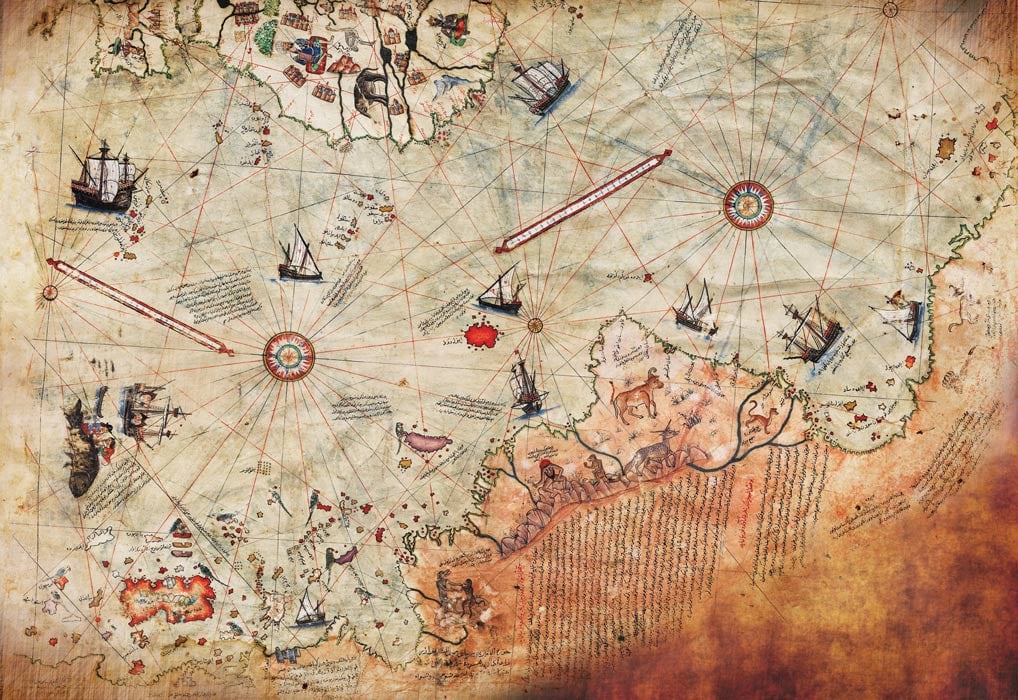
The Piri Reis Map. Credit: Mehmetilker / Adobe Stock
On October 9, 1929, a German theologian named Gustav Adolf Deissmann was cataloguing items in the Topkapi Palace library in Istanbul when he happened across a curious parchment located among some disregarded material. On the gazelle skin parchment was a map, now referred to as the Piri Reis map .
The map was drawn and signed by Turkish cartographer Hagji Ahmed Muhiddin Piri , aka Piri Reis, and is dated to 1513 AD. Reis was an admiral in the Turkish navy, an experienced sailor, and a cartographer, who claimed to have used 20 source maps and charts to construct the map, including 8 Ptolemaic maps, 4 Portuguese maps, an Arabic map, and a map by Christopher Columbus.
Continue reading
==============================
Lithium: A Doctor, A Drug, And A Breakthrough
via 3 Quarks Daily by Morgan Meis by A J Lees at Literary Review:
Lithium is a silvery-white metal that is so light it can float on water and so soft it can be cut with a butter knife. Along with hydrogen and helium it was produced during the Big Bang and so formed the universe before the emergence of the galaxies. It is employed to harden glass and to thicken grease, but its best-known industrial use is in the manufacture of rechargeable batteries. Lithium salts are found in considerable quantities in brine and igneous granite and the element is present in trace quantities in the human body. Lithium is also one of the few metals – along with platinum for cancer, gold for rheumatoid arthritis and bismuth for dyspepsia – that are used as medicines.
Continue reading
==============================
10 of the Best Poems about Graveyards
via Interesting Literature
Death looms large in poetry, from epitaphs to poems of grief over the loss of a loved one. And, of course, there’s a long-standing tradition of religious or sacred poems. But what about churchyards, graveyards, and cemeteries – those spaces around the church filled with the dead, with epitaphs by turns moving and cringeworthy, with yew trees and with flowers brought in memory of the deceased? Below we attempt to introduce ten of the very greatest poems about churchyards.
Continue reading
==============================
The fever tree
via The Royal Society Repository blog by Melody Bishop

Cinchona of St Lucia: plate 19 from ‘An account of a new species of the Bark-tree, found in the Island of St Lucia’ by George Davidson, Philosophical Transactions of the Royal Society, vol.74 part 2 (1784), pp.452-456.
In summer 2018, I was the sole Undergraduate Research Assistant for a project entitled ‘The Fever Tree’. This initiative, jointly run by Dr Marc Etherington (Physics) and Dr David Lowther (History) at Durham University and sponsored by the Hatfield Trust, aimed to understand the changing interest in quinine and divergent routes of study throughout the nineteenth and twentieth centuries.
My main responsibility during this internship was to transcribe nineteenth-century scientific correspondence. The aim was to analyse how the study of quinine – a compound derived from the bark of the cinchona tree and the key component of tonic water – changed over time, ultimately resulting in quinine’s reputation as a valuable antimalarial and fluorescence standard.
Continue reading
==============================
Be My Matelotage! The Civil Union of 17th Century Pirates
via Ancient Origins by B.B. Wagner

Matelotage is the marriage / civil union of two male pirates. Source: rdrgraphe / Adobe Stock.
Love strikes hard like the broadsiding from a warship, leaving both splinters and buckshot in one’s heart. When it hits, there's nothing anyone can do but accept the bombardment with both arms open. It can happen with friends, co-workers, and even with 17th-century Caribbean pirates . The word 'matelotage’ carried many different meanings, but in the island of Tortuga, matelotage meant the civil union and sexual relationship between two pirate men.
In 1645, the French-controlled island of Tortuga was a safe haven for privateers and buccaneers alike. Tortuga was also a sanctuary for those who wished to have matelotage, the civil union of two male pirates.
Continue reading
This is quite a long read but I found it very interesting. It told me about things I had not previously known.
==============================
How archives helped solve a family mystery
via The National Archives Blog by Kerri Ramsay
Like many of us who find ourselves working at The National Archives, I have a passion for both mysteries and social history. This is the story of how I solved a family mystery of my own – of who really was my estranged great-grandfather? – with a little help from some historical documents.
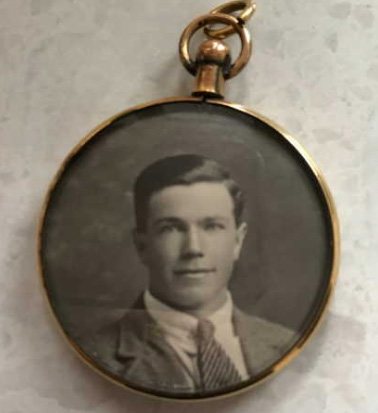
Robert John Davidson in a locket pendant photograph
I began my investigation armed with a few random facts that had been passed down through the years. I knew that his name was Robert John Davidson; that he had been married with children to a lady named Catherine; that he was an excellent horse rider; that he had served in the Great War with the Lovat’s Scouts regiment; and that he was buried on the Rothiemurchus estate in Scotland. Finally, perhaps less appealingly, there was the rumour that he had been seeing another woman at the same time as my great-grandmother!
Continue reading
==============================
An Interesting Character Study: Lady Macbeth
via Interesting LIterature
Lady Macbeth is widely regarded as one of the most villainous female characters in all of English literature, and perhaps Shakespeare’s most cold-hearted female character. Not only does she urge her husband to murder their King for no other reason than heartless ambition, she also states that she would dash out her own baby’s brains rather than lose her courage for such a regicidal act.
Continue reading
==============================
The Intelligence of Plants
via Arts and Letters Daily: Cody Delistraty at the Paris Review

MIGUEL RIO BRANCO, UNTITLED, TOKYO, 2008 © MIGUEL RIO BRANCO
What if plants are smarter than we think – a lot smarter?
A few years ago, Monica Gagliano, an associate professor in evolutionary ecology at the University of Western Australia, began dropping potted Mimosa pudicas. She used a sliding steel rail that guided them to six inches above a cushioned surface, then let them fall. The plant, which is leafy and green with pink-purple flower heads, is commonly known as a “shameplant” or a “touch-me-not” because its leaves fold inward when it’s disturbed. In theory, it would defend itself against any attack, indiscriminately perceiving any touch or drop as an offence and closing itself up.
The first time Gagliano dropped the plants – fifty-six of them – from the measured height, they responded as expected. But after several more drops, fewer of them closed. She dropped each of them sixty times, in five-second intervals. Eventually, all of them stopped closing. She continued like this for twenty-eight days, but none of them ever closed up again. It was only when she bothered them differently – such as by grabbing them – that they reverted to their usual defence mechanism.
Continue reading
==============================

Hippocrates Statue and Dooley Hospital Door .
Classical Greece is considered by many to be the birthplace of modern Western civilization. The ancient Greeks made astounding progress in a huge number of areas - from politics and governing to religious practice and philosophical thought. The impact the Hellenic culture had is still felt throughout the world today.
Archimedes, Pythagoras, Plato, Aristotle, Socrates, Homer – the list of figures from ancient Greece who have left their mark on the world today is astounding and the innovations and principles they pioneered surround us in our day-to-day lives.via Ancient Origins by Beth
The Piri Reis Map. Credit: Mehmetilker / Adobe Stock
On October 9, 1929, a German theologian named Gustav Adolf Deissmann was cataloguing items in the Topkapi Palace library in Istanbul when he happened across a curious parchment located among some disregarded material. On the gazelle skin parchment was a map, now referred to as the Piri Reis map .
The map was drawn and signed by Turkish cartographer Hagji Ahmed Muhiddin Piri , aka Piri Reis, and is dated to 1513 AD. Reis was an admiral in the Turkish navy, an experienced sailor, and a cartographer, who claimed to have used 20 source maps and charts to construct the map, including 8 Ptolemaic maps, 4 Portuguese maps, an Arabic map, and a map by Christopher Columbus.
Continue reading
==============================
via 3 Quarks Daily by Morgan Meis by A J Lees at Literary Review:
Lithium is a silvery-white metal that is so light it can float on water and so soft it can be cut with a butter knife. Along with hydrogen and helium it was produced during the Big Bang and so formed the universe before the emergence of the galaxies. It is employed to harden glass and to thicken grease, but its best-known industrial use is in the manufacture of rechargeable batteries. Lithium salts are found in considerable quantities in brine and igneous granite and the element is present in trace quantities in the human body. Lithium is also one of the few metals – along with platinum for cancer, gold for rheumatoid arthritis and bismuth for dyspepsia – that are used as medicines.
Continue reading
==============================
via Interesting Literature
Death looms large in poetry, from epitaphs to poems of grief over the loss of a loved one. And, of course, there’s a long-standing tradition of religious or sacred poems. But what about churchyards, graveyards, and cemeteries – those spaces around the church filled with the dead, with epitaphs by turns moving and cringeworthy, with yew trees and with flowers brought in memory of the deceased? Below we attempt to introduce ten of the very greatest poems about churchyards.
Continue reading
==============================
via The Royal Society Repository blog by Melody Bishop
Cinchona of St Lucia: plate 19 from ‘An account of a new species of the Bark-tree, found in the Island of St Lucia’ by George Davidson, Philosophical Transactions of the Royal Society, vol.74 part 2 (1784), pp.452-456.
In summer 2018, I was the sole Undergraduate Research Assistant for a project entitled ‘The Fever Tree’. This initiative, jointly run by Dr Marc Etherington (Physics) and Dr David Lowther (History) at Durham University and sponsored by the Hatfield Trust, aimed to understand the changing interest in quinine and divergent routes of study throughout the nineteenth and twentieth centuries.
My main responsibility during this internship was to transcribe nineteenth-century scientific correspondence. The aim was to analyse how the study of quinine – a compound derived from the bark of the cinchona tree and the key component of tonic water – changed over time, ultimately resulting in quinine’s reputation as a valuable antimalarial and fluorescence standard.
Continue reading
==============================
via Ancient Origins by B.B. Wagner
Matelotage is the marriage / civil union of two male pirates. Source: rdrgraphe / Adobe Stock.
Love strikes hard like the broadsiding from a warship, leaving both splinters and buckshot in one’s heart. When it hits, there's nothing anyone can do but accept the bombardment with both arms open. It can happen with friends, co-workers, and even with 17th-century Caribbean pirates . The word 'matelotage’ carried many different meanings, but in the island of Tortuga, matelotage meant the civil union and sexual relationship between two pirate men.
In 1645, the French-controlled island of Tortuga was a safe haven for privateers and buccaneers alike. Tortuga was also a sanctuary for those who wished to have matelotage, the civil union of two male pirates.
Continue reading
This is quite a long read but I found it very interesting. It told me about things I had not previously known.
==============================
via The National Archives Blog by Kerri Ramsay
Like many of us who find ourselves working at The National Archives, I have a passion for both mysteries and social history. This is the story of how I solved a family mystery of my own – of who really was my estranged great-grandfather? – with a little help from some historical documents.
Robert John Davidson in a locket pendant photograph
I began my investigation armed with a few random facts that had been passed down through the years. I knew that his name was Robert John Davidson; that he had been married with children to a lady named Catherine; that he was an excellent horse rider; that he had served in the Great War with the Lovat’s Scouts regiment; and that he was buried on the Rothiemurchus estate in Scotland. Finally, perhaps less appealingly, there was the rumour that he had been seeing another woman at the same time as my great-grandmother!
Continue reading
==============================
via Interesting LIterature
Lady Macbeth is widely regarded as one of the most villainous female characters in all of English literature, and perhaps Shakespeare’s most cold-hearted female character. Not only does she urge her husband to murder their King for no other reason than heartless ambition, she also states that she would dash out her own baby’s brains rather than lose her courage for such a regicidal act.
Continue reading
==============================
via Arts and Letters Daily: Cody Delistraty at the Paris Review
MIGUEL RIO BRANCO, UNTITLED, TOKYO, 2008 © MIGUEL RIO BRANCO
What if plants are smarter than we think – a lot smarter?
A few years ago, Monica Gagliano, an associate professor in evolutionary ecology at the University of Western Australia, began dropping potted Mimosa pudicas. She used a sliding steel rail that guided them to six inches above a cushioned surface, then let them fall. The plant, which is leafy and green with pink-purple flower heads, is commonly known as a “shameplant” or a “touch-me-not” because its leaves fold inward when it’s disturbed. In theory, it would defend itself against any attack, indiscriminately perceiving any touch or drop as an offence and closing itself up.
The first time Gagliano dropped the plants – fifty-six of them – from the measured height, they responded as expected. But after several more drops, fewer of them closed. She dropped each of them sixty times, in five-second intervals. Eventually, all of them stopped closing. She continued like this for twenty-eight days, but none of them ever closed up again. It was only when she bothered them differently – such as by grabbing them – that they reverted to their usual defence mechanism.
Continue reading
==============================
Ancient Greek Physician Hippocrates and the Medical Revolution
via Ancient Origins by Sarah P YoungHippocrates Statue and Dooley Hospital Door .
Classical Greece is considered by many to be the birthplace of modern Western civilization. The ancient Greeks made astounding progress in a huge number of areas - from politics and governing to religious practice and philosophical thought. The impact the Hellenic culture had is still felt throughout the world today.
One ancient Greek whose influence is still felt the world over is Hippocrates – a physician who is widely known as the father of modern or clinical medicine. Medicine and healthcare had been practised for thousands of years. The healing properties of things such as willow bark, cannabis, and poppies were recognised and taken advantage of long before the rise of the Classical World.
Continue reading
Subscribe to:
Posts (Atom)

