a column by Samuel Bowles (Santa Fe Institute, New Mexico, USA) and Wendy Carlin (University College London, UK; CEPR) for VOX: CEPR’s Policy Portal
In the shadow of the Great Depression, Paul Samuelson placed the “really interesting and vital problems of overall economic policy” – notably persistent unemployment – at the front of his introductory text. What future citizens learned from their economics courses was transformed by the new knowledge – Keynesian economics – applied to the new problems.
This column asks whether we are now at a similar juncture. Using topic modelling, it finds that the novel themes in published research in recent decades – concepts that empower economists to address today’s major challenges of climate change, inequality, and the future of work and of property rights in the knowledge-based economy – are strikingly absent from today’s leading textbooks.
Continue reading
Labels:
Samuelson, economic_theory, economics_textbooks,
Tuesday, 24 March 2020


Sustainable careers: Towards a conceptual model
an article by Ans De Vos (University of Antwerp, Belgium), Beatrice I.J.M. Van der Heijden (
Radboud University, the Netherlands; Open University of the Netherlands; Kingston University, London, UK) and Jos Akkermans (Vrije Universiteit Amsterdam, the Netherlands) published in Journal of Vocational Behavior Volume 117 (March 2020)
Highlights
This paper aims to move the research field on sustainable careers forward by building conceptual clarity about what a sustainable career means and delineating what distinguishes sustainable from non-sustainable careers, thereby providing key indicators of a sustainable career. Moreover, we approach sustainable careers from a systemic and dynamic perspective and address influential factors associated with stakeholders situated in multiple contexts and evolving over time.
We elaborate on core theoretical frameworks useful for enhancing our understanding of what makes careers sustainable and present three key dimensions that can help to analyse and study sustainable careers: person, context, and time.
Finally, we propose a research agenda that we hope will spur scholars to examine the topic in more detail in future empirical work.
Labels:
career_development, sustainable_career, conceptual_model, theoretical_framework,
Radboud University, the Netherlands; Open University of the Netherlands; Kingston University, London, UK) and Jos Akkermans (Vrije Universiteit Amsterdam, the Netherlands) published in Journal of Vocational Behavior Volume 117 (March 2020)
Highlights
- Sustainable careers can be described in terms of happiness, health, and productivity.
- Three key dimensions are useful to study sustainable careers: person, context and time.
- Insights from core theoretical frameworks add to understanding sustainable careers.
This paper aims to move the research field on sustainable careers forward by building conceptual clarity about what a sustainable career means and delineating what distinguishes sustainable from non-sustainable careers, thereby providing key indicators of a sustainable career. Moreover, we approach sustainable careers from a systemic and dynamic perspective and address influential factors associated with stakeholders situated in multiple contexts and evolving over time.
We elaborate on core theoretical frameworks useful for enhancing our understanding of what makes careers sustainable and present three key dimensions that can help to analyse and study sustainable careers: person, context, and time.
Finally, we propose a research agenda that we hope will spur scholars to examine the topic in more detail in future empirical work.
Labels:
career_development, sustainable_career, conceptual_model, theoretical_framework,
The Memory of Trauma in the Body
a post by Linda Sapadin for the World of Psychology blog

Keith hadn’t thought about his father in many years. Though he had some good times with his dad, one of his most vivid memories was not so good. He was 10 years old and his father was determined to teach him how to dive. He remembers feeling pressured to get on the diving board and just do it. He remembers trying, really trying but he just couldn’t take the plunge.
“Let’s go, boy,” his dad yelled. “Just do it. Don’t be a wimp! It’s no big deal. Jump!” Keith wished it was no big deal, but for him it was. He felt terrified as he listened to his dad shouting and saw the other kids staring. But he could only stand there, his limbs frozen, his heart pounding.
Continue reading
Labels:
fear, body_memories, trauma, remember_to_breathe,
Empire’s h(a)unting grounds: Theorising violence and resistance in Egypt and Afghanistan
an article by Nivi Manchanda (Queen Mary University of London, UK) and Sara Salem (London School of Economics, UK) published in Current Sociology Volume 68 Issue 2 (March 2020)
Abstract
This article thinks theory otherwise by searching for what is missing, silent and yet highly productive and constitutive of present realities.
Looking at Afghanistan and Egypt, the authors show how imperial legacies and capitalist futurities are rendered invisible by dominant social theories, and why it matters that we think beyond an empiricist sociology in the Middle East.
In Afghanistan, the authors explore the ways in which portrayals of the country as retrogressive elide the colonial violence that has ensured the very backwardness that is now considered Afghanistan’s enduring characteristic. Specifically, using the example of the institutionalisation of the Frontier Crimes Regulation (FCR), they ask what alternative narratives might emerge if we take empire’s ghosts seriously on their own terms?
In Egypt, the authors look at the ways in which Gamal Abdel Nasser’s anticolonial project continues to haunt present-day Egyptian political, social and economic life. In particular, they ask how anticolonial nationalism and its promises produced lingering after-effects, and how we can understand these through the figure of the ‘spectre’.
The article asks what it would mean to produce social theory through (re)visiting sites of resistance, violence and contestation, proposing haunting as a means through which to understand and analyse political, social and economic change in the Middle East.
Labels:
Afghanistan, colonialism, Egypt, empire, haunting,
Entrepreneurship and Social Capital: Examining the Association in Deprived Urban Neighbourhoods
an article by Nick Williams (University of Leeds, UK), Robert Huggins (Cardiff University, UK) and Piers Thompson (Nottingham Trent University, UK) published in International Journal of Urban and Regional Research Volume 4 Issue 2 (March 2020)
Abstract
Spatial approaches to examining entrepreneurship have increasingly built on theories of social capital. However, the nature and extent of local social capital in less successful deprived communities remains under researched and inadequately understood.
This article examines the association between social capital and entrepreneurship in a deprived urban neighbourhood in the city of Leeds, UK as a means of contributing to an improved theoretical understanding of how space moderates this association.
It is found that social capital has a strong association with patterns of entrepreneurship in deprived urban neighbourhoods, with the potential impacts being both positive and negative. The forms of social capital are found to differ from that found in more affluent localities, with a prevalence of bonding social capital as the key facilitator of entrepreneurship, which may help in the early stages of venture development, but which over time may become a constraint.
Also, a lack of the bridging social capital associated with entrepreneurial success is found within the locality. From a policy perspective, it is recommended that policymakers responsible for entrepreneurship in deprived urban neighbourhoods should seek to enhance initiatives for developing social capital which incorporate local businesses, residents and local government agencies.
Labels:
entrepreneurship, social_capital, deprived_urban_neighbourhoods, Leeds_UK,
Monday, 23 March 2020
Sickening thy neighbour: Export restraints on medical supplies during a pandemic
a column by Simon Evenett (University of St. Gallen; CEPR) for VOX: CEPR’s Policy Portal
Given the centrality of China to many international supply chains, there is considerable interest in the impact of COVID-19 on global trade flows. And a troubling trade policy dimension is now coming to light.
This column reports on and assesses a finding of the Global Trade Alert that 24 nations have recently imposed export restrictions on medical supplies.

Continue reading
Labels:
COVID-19, coronavirus, global_trade_flows, export_restrictions,
Given the centrality of China to many international supply chains, there is considerable interest in the impact of COVID-19 on global trade flows. And a troubling trade policy dimension is now coming to light.
This column reports on and assesses a finding of the Global Trade Alert that 24 nations have recently imposed export restrictions on medical supplies.
Continue reading
Labels:
COVID-19, coronavirus, global_trade_flows, export_restrictions,
10 for Yesterday (22 March 2020) starts with a cute video and ends with William Ashbless (you will have to read to find out)
A stop-motion animator breathes life into Russian nesting dolls
via Boing Boing by Mark Frauenfelder
Charmingly simple, and simply charming, Co Hoedeman's stop-motion short, "Matrioska," (1970) gives life and humor to eight wooden nesting dolls. I couldn't help smiling at a few parts of the film.
[via The Kid Should See This]
==============================
We Contain Multitudes
via 3 Quarks Daily by Marie Gaglione

Things are changing. Always, everywhere, immensely and minutely, the history of mankind unfolds as we rotate around a grand burning star (also, everything everywhere else changes; the history of mankind may be of the least consequence on a cosmic scale, but I digress). I digress too early; I include parentheticals too soon; I stall with flowery descriptions of the sun. Because – ugh – I’m going to talk about “how divided we are as a nation.” It’s such a tired phrase; I don’t want to write about it. It’s stale because it’s static, and anyway, the declaration is often accompanied by divisive rhetoric. Wherever one may fall on the political spectrum (and here I’m being gracious; how often do we now identify with a “side”), they likely have established opinions of those who lie elsewhere. It does seem increasingly difficult to imagine a sweeping reconciliation when we continue to pour our definitions in concrete and defend our positions by reason of consistency. Inflexibility begets inability to listen, and thus to understand, which is why we find our differences so baffling and allow our prejudices to influence our opinions. So, finally, here it is: my own personal take on how we can get people to stop saying how divided we are. Bear with me, because I’m going to try and sell contradictions as potential energy for unity.
Continue reading
==============================
Literature before Homer: The Epic of Gilgamesh
via Interesting Literature
In this week’s Dispatches from The Secret Library, Dr Oliver Tearle travels back 4,000 years to find the world’s first great epic.
In 1850, a series of clay tablets came to light in the Middle East, in what is now Iraq. They were shipped back to the British Museum, where they sat for some fifteen years before anyone got round to giving them any serious attention. Then, in 1865, a young man named George Smith was tasked with deciphering the cuneiform script inscribed on the tablets. Smith worked for a printing firm by day, but his real hobby was trying to work out what these ancient tablets said. For seven years he worked tirelessly on the clay tablets and, in 1872, he published his translation of what we now know as The Epic of Gilgamesh, a poem that had been lost from the literary canon for millennia but which has a claim to being the oldest surviving epic poem in the history of the world.
Continue reading
==============================
Viking Drinking Hall Unearthed On Orkney Provides ‘Unparalleled’ Insights Into Chieftain’s Life
via Ancient Origins by Ashley Cowie
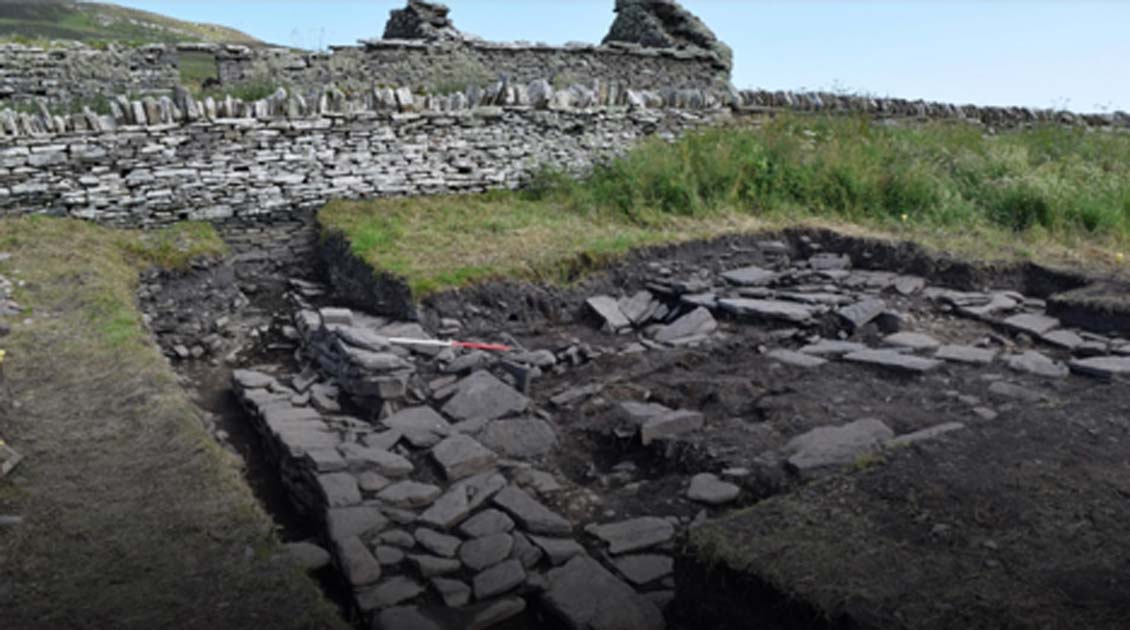
Skaill Norse Hall, the discovered Viking drinking hall below the present farmstead.
Source: UHI Archaeology Institute .
Archaeologists excavating on a tiny island off the north coast of Scotland have discovered an 800-year-old Viking ‘Bu’, or drinking hall , once serviced by a high-ranking Orcadian Norse chieftain.
The Discovery of the Viking Drinking Hall
Orkney was once a great seat of Viking power and the archipelago was ruled by the Scandinavian kingdom until 1468 AD when King Christian I of Denmark sold it to the Scottish crown. This newly discovered vestige of Orkney’s past Norse glory was discovered at Skaill Farmstead in Westness, on the island of Rousay and this ‘high-status’ Norse drinking hall is believed to date as far back as the 10th century.
Continue reading
==============================
If Bob Ross taught math
via Boing Boing by David Pescovitz
From Toby's "Tibees" YouTube channel: "A math lesson about logarithms inspired by the legendary painter Bob Ross."
==============================
10 of the Best Poems about Mountains and Hills
via Interesting Literature
Previously, we’ve gone among the rivers and streams with the poets, we’ve explored the forests and trees, and we’ve even taken to the seas with them. Now, it’s time to pick up your crampons and head to the mountains with these classic poems about hills and mountains from the Romantics to the present.
Continue reading
==============================
Chekhov: a writer for grown ups
posted by S. Abbas Raza in 3 Quarks Daily: Richard Ford in Literary Hub:

Until I began the long and happy passage of reading all of Anton Chekhov’s short stories for the purpose of selecting the twenty for inclusion in The Essential Tales of Chekhov, I had read very little of Chekhov. It seems a terrible thing for a story writer to admit, and doubly worse for one whose own stories have been so thoroughly influenced by Chekhov through my relations with other writers who had been influenced by him directly: Sherwood Anderson. Isaac Babel. Hemingway. Cheever. Welty. Carver.
As is true of many American readers who encountered Chekhov first in college, my experience with his stories was both abrupt and brief, and came too early. When I read him at age twenty, I had no idea of his prestige and importance or why I should be reading him—one of those gaps of ignorance for which a liberal education tries to be a bridge. But typical of my attentiveness then, I remember no one telling me anything more than that Chekhov was great, and that he was Russian.
Continue reading
==============================
The Boy King Behind the Mask: Tutankhamun’s Life and Legacy
via Ancient Origins by Sarah P Young
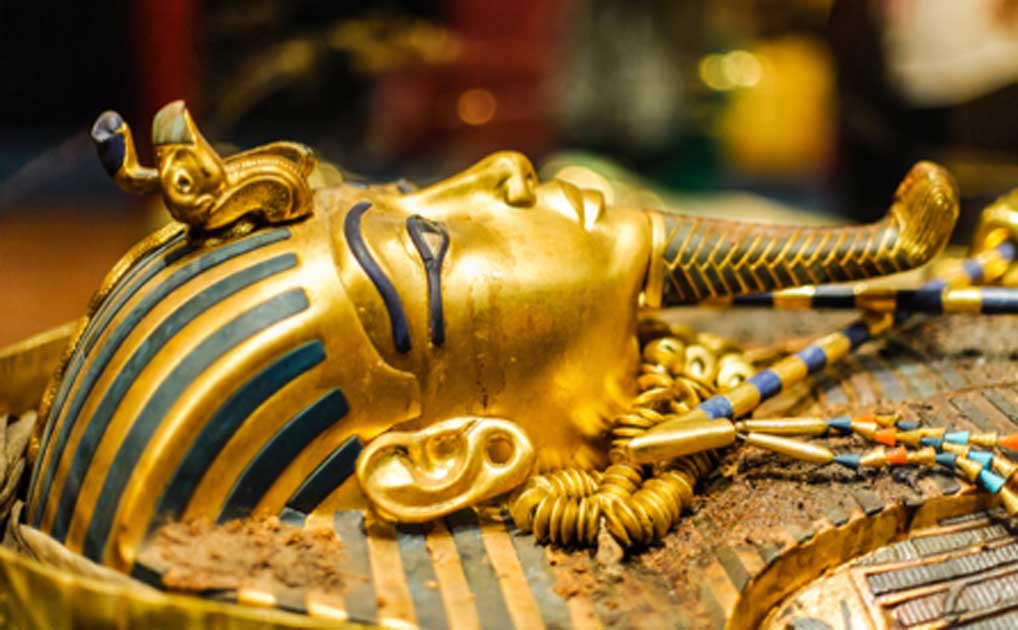
Mask of pharaoh Tutankhamun. Source: Dieter Hawlan / Adobe Stock.
The incredible golden mask with its dark blue stripes of lapis lazuli and serious young face is probably the most famous ancient artifact in the world. It is instantly recognizable, and the iconic death mask has ensured millions of people remember the name of the man whose mummy it adorned – Tutankhamun.
He was a pharaoh of Egypt who ruled between approximately 1332 BC and 1323 BC ascending the throne at only nine years of age. But his youth and relatively short time as pharaoh belie the significance of his reign.
Continue reading
==============================
Milestones to peace: The Treaty of St. Germain-en-Laye
via The National Archives Blog by James Cronan
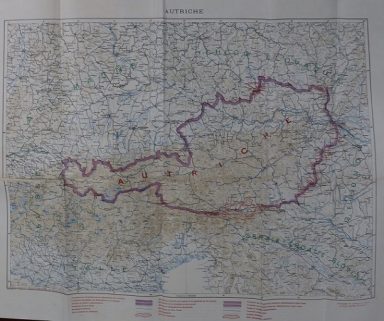
Boundaries of Austria by the Treaty of St. Germain-en-Laye, 10 September 1919, showing old boundaries and plebiscite area. Catalogue reference: FO 925/20026
The Treaty of Versailles, signed with Germany on 28 June 1919, brought an official end to the war between Germany and the Allied and Associated Powers, but it did not bring an end to the peace negotiations. There were still treaties to be signed with Germany’s partners who had formed the Central Powers in the First World War: Austria, Hungary, Turkey and Bulgaria. The first of these was to be Austria.
Continue reading
==============================
Fantasy Book Review: Tim Powers, The Anubis Gates
via Interesting Literature
In this week’s Dispatches from The Secret Library, Dr Oliver Tearle reads an enjoyable and high-octane fantasy from one of the genre’s most original voices
Here’s a question for you. Have you heard of the poet William Ashbless? He has his own Wikipedia page. Yet he doesn’t exist. He never has. Ashbless was the creation of two writers, Tim Powers and James Blaylock, in the 1970s when they were college students. Unimpressed by the terrible poetry being published in their school magazine, Blaylock and Powers decided to invent their own poet and submit ‘his’ work to the magazine as a joke. It was enthusiastically accepted.
Continue reading
via Boing Boing by Mark Frauenfelder
Charmingly simple, and simply charming, Co Hoedeman's stop-motion short, "Matrioska," (1970) gives life and humor to eight wooden nesting dolls. I couldn't help smiling at a few parts of the film.
[via The Kid Should See This]
==============================
via 3 Quarks Daily by Marie Gaglione
Things are changing. Always, everywhere, immensely and minutely, the history of mankind unfolds as we rotate around a grand burning star (also, everything everywhere else changes; the history of mankind may be of the least consequence on a cosmic scale, but I digress). I digress too early; I include parentheticals too soon; I stall with flowery descriptions of the sun. Because – ugh – I’m going to talk about “how divided we are as a nation.” It’s such a tired phrase; I don’t want to write about it. It’s stale because it’s static, and anyway, the declaration is often accompanied by divisive rhetoric. Wherever one may fall on the political spectrum (and here I’m being gracious; how often do we now identify with a “side”), they likely have established opinions of those who lie elsewhere. It does seem increasingly difficult to imagine a sweeping reconciliation when we continue to pour our definitions in concrete and defend our positions by reason of consistency. Inflexibility begets inability to listen, and thus to understand, which is why we find our differences so baffling and allow our prejudices to influence our opinions. So, finally, here it is: my own personal take on how we can get people to stop saying how divided we are. Bear with me, because I’m going to try and sell contradictions as potential energy for unity.
Continue reading
==============================
via Interesting Literature
In this week’s Dispatches from The Secret Library, Dr Oliver Tearle travels back 4,000 years to find the world’s first great epic.
In 1850, a series of clay tablets came to light in the Middle East, in what is now Iraq. They were shipped back to the British Museum, where they sat for some fifteen years before anyone got round to giving them any serious attention. Then, in 1865, a young man named George Smith was tasked with deciphering the cuneiform script inscribed on the tablets. Smith worked for a printing firm by day, but his real hobby was trying to work out what these ancient tablets said. For seven years he worked tirelessly on the clay tablets and, in 1872, he published his translation of what we now know as The Epic of Gilgamesh, a poem that had been lost from the literary canon for millennia but which has a claim to being the oldest surviving epic poem in the history of the world.
Continue reading
==============================
via Ancient Origins by Ashley Cowie
Skaill Norse Hall, the discovered Viking drinking hall below the present farmstead.
Source: UHI Archaeology Institute .
Archaeologists excavating on a tiny island off the north coast of Scotland have discovered an 800-year-old Viking ‘Bu’, or drinking hall , once serviced by a high-ranking Orcadian Norse chieftain.
The Discovery of the Viking Drinking Hall
Orkney was once a great seat of Viking power and the archipelago was ruled by the Scandinavian kingdom until 1468 AD when King Christian I of Denmark sold it to the Scottish crown. This newly discovered vestige of Orkney’s past Norse glory was discovered at Skaill Farmstead in Westness, on the island of Rousay and this ‘high-status’ Norse drinking hall is believed to date as far back as the 10th century.
Continue reading
==============================
via Boing Boing by David Pescovitz
From Toby's "Tibees" YouTube channel: "A math lesson about logarithms inspired by the legendary painter Bob Ross."
==============================
via Interesting Literature
Previously, we’ve gone among the rivers and streams with the poets, we’ve explored the forests and trees, and we’ve even taken to the seas with them. Now, it’s time to pick up your crampons and head to the mountains with these classic poems about hills and mountains from the Romantics to the present.
Continue reading
==============================
posted by S. Abbas Raza in 3 Quarks Daily: Richard Ford in Literary Hub:
Until I began the long and happy passage of reading all of Anton Chekhov’s short stories for the purpose of selecting the twenty for inclusion in The Essential Tales of Chekhov, I had read very little of Chekhov. It seems a terrible thing for a story writer to admit, and doubly worse for one whose own stories have been so thoroughly influenced by Chekhov through my relations with other writers who had been influenced by him directly: Sherwood Anderson. Isaac Babel. Hemingway. Cheever. Welty. Carver.
As is true of many American readers who encountered Chekhov first in college, my experience with his stories was both abrupt and brief, and came too early. When I read him at age twenty, I had no idea of his prestige and importance or why I should be reading him—one of those gaps of ignorance for which a liberal education tries to be a bridge. But typical of my attentiveness then, I remember no one telling me anything more than that Chekhov was great, and that he was Russian.
Continue reading
==============================
via Ancient Origins by Sarah P Young
Mask of pharaoh Tutankhamun. Source: Dieter Hawlan / Adobe Stock.
The incredible golden mask with its dark blue stripes of lapis lazuli and serious young face is probably the most famous ancient artifact in the world. It is instantly recognizable, and the iconic death mask has ensured millions of people remember the name of the man whose mummy it adorned – Tutankhamun.
He was a pharaoh of Egypt who ruled between approximately 1332 BC and 1323 BC ascending the throne at only nine years of age. But his youth and relatively short time as pharaoh belie the significance of his reign.
Continue reading
==============================
via The National Archives Blog by James Cronan
Boundaries of Austria by the Treaty of St. Germain-en-Laye, 10 September 1919, showing old boundaries and plebiscite area. Catalogue reference: FO 925/20026
The Treaty of Versailles, signed with Germany on 28 June 1919, brought an official end to the war between Germany and the Allied and Associated Powers, but it did not bring an end to the peace negotiations. There were still treaties to be signed with Germany’s partners who had formed the Central Powers in the First World War: Austria, Hungary, Turkey and Bulgaria. The first of these was to be Austria.
Continue reading
==============================
via Interesting Literature
In this week’s Dispatches from The Secret Library, Dr Oliver Tearle reads an enjoyable and high-octane fantasy from one of the genre’s most original voices
Here’s a question for you. Have you heard of the poet William Ashbless? He has his own Wikipedia page. Yet he doesn’t exist. He never has. Ashbless was the creation of two writers, Tim Powers and James Blaylock, in the 1970s when they were college students. Unimpressed by the terrible poetry being published in their school magazine, Blaylock and Powers decided to invent their own poet and submit ‘his’ work to the magazine as a joke. It was enthusiastically accepted.
Continue reading
Subscribe to:
Posts (Atom)

