provides links to information management, information sources and other "useful stuff" with a strong bias towards the management of information in a careers guidance context.
As of 17 July 2017 I include mental health information and comment.
I tweet as @careersinfo and am on LinkedIn and Facebook as Hazel Edmunds
an article by Sanya Ojo (University of East London, UK and Nigerian Defence Academy, Kaduna, Nigeria) and Sonny Nwankwo (Nigerian Defence Academy, Kaduna, Nigeria) published in Journal of Enterprising Communities: People and Places in the Global Economy Volume 14 Issue 3 (2020)
Abstract
Purpose
This paper aims to examine market-mediated transformative capacities of Black African Pentecostalism. It does this by exploring the interface between religion, culture and identity to generate a fresh interpretation of how marketing is ritualized among UK’s Black Africans on the platform of Pentecostalism.
Design/methodology/approach
Methodology is based on in-depth interviews with respondents drawn from the African Pentecostal movements in London, UK. This paper shows how adherents’ responsiveness to Pentecostal dogmas generated market advantages.
Findings
The paper reveals the interconnectedness of religion, faith and culture which, in turn, coalesced into a dense network that defines the reproduction, organization and approach to entrepreneurial marketing.
Originality/value
Pentecostal practices unveil the marketing notion of “Pentepreneurship”, which combines both spiritual and enterprise activities to formulate a fused space of engagement straddling the sacred and the secular. This fusion points to a unique platform of entrepreneurial marketing that bestrides ethno-cultural, religious and economic identities.
What If Keats Had Lived?
via 3 Quarks Daily: Ardene Hegele at Public Books:
Kerschen’s depiction of the on-the-ground historical conditions that produced the Romantics’ most radical poetry—Shelley’s “Epipsychidion” and “The Masque of Anarchy,” Byron’s Don Juan—is a major achievement. But the book also offers an appealingly intimate view into Keats’s more mundane realities. The convalescent poet is forced to reckon with his debts, both financial and emotional: his life in Italy is dependent on his friends’ charity, and he is pressured to honor his engagement to Fanny Brawne, back in London. The author’s research is impeccable: the fictional Keats’s traits are all supported by what manuscript evidence tells us about the poet’s character. Even so, his choices often come as a pleasant surprise. Continue reading
==============================
10 of the Best Poems about Deserts
via Interesting Literature
In previous poetry selections, we’ve offered some of the best poems about rivers and some of the finest sea poems. But poetry isn’t all wet; some of it is positively dry, and more than one poet has depicted the dry landscapes of deserts, wastelands, and deserted spaces. Here are ten of the greatest desert poems. Continue readingand discover some wonderful poetry.
==============================
‘You either have a collector’s gene in you or not’: from Marmite to barbed wire, some of the weirdest collectors’ items
via ResearchBuzz Firehose: Florence Snead in inews Mark Cranston has been collecting bricks for almost 10 years and has around 3,500 stored away in two converted stables
It starts as a hobby, then slowly takes over your whole house… Florence Snead views some of the UK’s stranger collections. Continue reading
==============================
Spectacular, robotic cardboard sculptures
via Boing Boing by Cory Doctorow
Greg Olijnyk works as a 2D graphic designer, but his hobby is creating unbelievably wonderful 3D science fictional cardboard sculptures that sport motors and lights that animate them (some use photovoltaic cells for power, too). Continue reading
Six of the Best Poems about Phones
via Interesting Literature
Telephones, like railways, don’t offer the same scope for poetry collections as, say, flowers or forests. They simply haven’t had the ‘run up’. But in the last century or so, poets have written about phones – poems that are by turns funny, moving, thoughtful, satirical, and true. Here are six of the best phone poems. Continue reading I really like this image of Sylvia Plath. Unfortunately I could not find an attribution.
==============================
On Humanity And Mathematics
via 3 Quarks Daily by Jonathan Kujawa
In the past few months I’ve been thinking a fair bit about math and humanity. We often think of math as outside of us but, in fact, it is a deeply human enterprise.
A group of us in the University of Oklahoma (OU) math department have been trying to establish a “bridge program” for students coming out of undergraduate but not quite ready for graduate school. In meetings with various university administrators, I’ve had to fumble my way towards an articulation of the sort of students we hope to have in the program. There are several such programs around the country with most designed to reach one or more groups that are underrepresented in mathematics. But, certainly, to have an effective program and to get administrators to open their wallets, you really need to be able to say who you’re trying to reach [1]. Continue reading
==============================
Gorgeous photos of Soviet subway stations
via Boing Boing by Clive Thompson
Christopher Herwig is a photographer who previously did a fantastic series of photos of Soviet-era bus stops. Continue reading
==============================
The Restless Peninsula: The Proud and Colorful History of Iberia
via Ancient Origins by Aleksa Vučković Lady of Baza, famous Iberian sculpture from a style that was developed by the Iberians of the Bronze age. Source: Juan Aunión / Adobe Stock.
Over the ages, the Iberian Peninsula was a melting pot of diverse cultures and civilizations, a piece of Europe that saw numerous migrations and many nations that rose and fell on its soil. Being the second largest peninsula in Europe, Iberia is geographically varied and vast, and as such it saw the spread of many isolated and very different cultures . And some parts of it endured with their uniqueness for a long, long time. Continue reading
==============================
10 of the Best Poems about Disappointment
via Interesting Literature
Poets have often written about unhappiness, as well as various types of disappointment. Below we’ve gathered together ten of the finest poems about disappointment – which, we hope, won’t be disappointing to read. Continue reading
an article by Simeon J Yates andElinor Carmi (University of Liverpool, UK), Eleanor Lockley (Sheffield Hallam University, UK), Alicja Pawluczuk (United Nations University Institute in Macau) and Tom French and Stephanie Vincent (Good Things Foundation) published in First Monday Volume 25 Number 7 (July 2020)
Abstract
This paper presents findings on the correspondence of levels of digital systems and media use with a range of socio-economic and demographic measures in the U.K.
Most research on inequalities in regard to digital systems and media has focused on access and skills.
Building on prior work (Yates and Lockley, 2018; Yates, et al., 2015) we argue that inequalities in regard to digital systems and media are better understood around types of user and their correspondence to other key social variables – rather than solely individual skills and access. The analysis presented here covers a range of key demographic variables, especially those that are markers of distinct social disadvantage.
We find that those not using the Internet have distinct characteristics – predominantly around age, education and deprivation levels. We also find that those undertaking limited uses (overall limited use or a very narrow range of uses) are all predominantly from lower socio-economic status backgrounds with variations due to age and education.
The data used for the analysis is the recent U.K. Ofcom 2018–19 (n = 1,882) media literacy survey. The paper uses latent class analysis methods to inductively define user types. Multinomial and binary logistic regression are used to explore the correspondence of latent class group membership to key demographic variables.
These insights have direct U.K. and international policy relevance as they are key to the development of strategies to tackle ongoing digital inequalities in U.K. society.
an article by Herbert Obinger and Carina Schmitt (University of Bremen, Germany) published in Journal of European Social Policy Volume 30 Issue 3 (July 2020)
Abstract
This article examines the impact of the two world wars on welfare legislation in 16 western countries.
We use Poisson regressions to test our hypothesis that war was a catalyst of welfare legislation, especially in countries that were heavily exposed to the dreadful effects of war. By welfare legislation, we mean the inaugural adoption and major reforms across four programmes (old age and disability benefits, sickness and maternity benefits, unemployment compensation and family allowances).
Our findings suggest that both world wars are key factors for explaining the timing of comprehensive welfare reforms and outweigh the significance of other factors such as regime type or level of economic development.
Labels:
social_policy, war, welfare_legislation, welfare_state,
an article by Ella Muncie (University of Leicester, UK) published in Social Movement Studies Volume 19 Issue 4 (2020)
Abstract
The process of hydraulic fracturing (fracking) to produce shale gas remains controversial. Most research in this area has focused on the environmental and economic impacts, with concerns for water, soil and air pollution, seismic activity and cost effectiveness being most prevalent.
In contrast less attention has been given to the identities and experiences of a growing number of anti-fracking groups and campaigns. This research explores how grassroots activists in the UK have been framed and reframed in media, political and campaigner discourse.
Through a combination of semi structured interviews with activists at three protest sites in July 2017 and analysis of media coverage at that time in the national and local press, it explores the extent to which discretionary policing practices, conflicting media reports and fluctuating framings have impacted the movement’s ability to exercise its democratic right to protest.
Helen Hardman
School of Social & Political Sciences, University of Glasgow, Glasgow, UK
published in British Politics Volume 15 Issue 3 (June 2020)
Abstract
New archival evidence reveals how UK governments, since the 1970s, have been concerned primarily with domestic courts encroaching on executive powers rather than those of the legislature. Alongside the Human Rights Act 1998, a mechanism of judicial ‘deference’ to Parliament evolved to justify courts deferring to an act of Parliament, or to decisions of the legislature, or executive. As this article argues, failure to clarify which of these three is at play has served as a helpful vehicle for Governments to convey the powerful narrative of courts using human rights frameworks to usurp the democratic powers of Parliament as legislature at times of conflict between the courts and the executive. In the prisoner voting debate, actors thus successfully invoked ‘parliamentary sovereignty’ to generate an emotive narrative that the European Court of Human Rights was usurping the powers of ‘Parliament’ when instead the Court, supported by the UK legal community, was challenging the dangerous precedent set by the UK Divisional Court’s deference, in 2001, to the executive. Interview data demonstrate how the 2011 backbench parliamentary debate to flout Strasbourg’s judgements was largely manufactured to curtail the ECHR mechanism which empowers domestic courts to effectively hold the government to account.
Only the abstract freely available BUT, and it's a VERY BIG BUT, Notes and References are given with it here, together with Unattributed interviews and Archival documents.
I've highlighted this to read at the British Library when I finally get there.
an article by Brennen T. Fagan, Marina I. Knight, Niall J. MacKay and A. Jamie Wood (University of York, UK) published in Journal of the Royal Statistical Society Statistics in Society Series A Volume 183 Issue 3 (June 2020)
Summary
It has been claimed and disputed that World War II has been followed by a ‘long peace’: an unprecedented decline of war.
We conduct a full change point analysis of well‐documented, publicly available battle deaths data sets, using new techniques that enable the robust detection of changes in the statistical properties of such heavy‐tailed data.
We first test and calibrate these techniques.
We then demonstrate the existence of changes, independent of data presentation, in the early to mid‐19th century, as the Congress of Vienna system moved towards its collapse, in the early to mid‐20th century, bracketing the World Wars, and in the late 20th century, as the world reconfigured around the end of the Cold War.
Our analysis provides a methodology for future investigations and an empirical basis for political and historical discussions.
an article by Beth Goldblatt (University of Technology Sydney, Australia) and Shirin M. Rai (University of Warwick, UK) published in European Journal of Politics and Gender Volume 3 Number 2 (June 2020)
Abstract
The growing recognition of unpaid work in international law and the Sustainable Development Goals acknowledges that gendered labour supports the global economy.
This work can have harmful impacts, leading to ‘depletion through social reproduction’ (Rai et al, 2014).
When corporate harms impact on workers and communities, family members are often required to provide caring labour for those directly affected.
However, the consequential harms of depletion are generally invisible within the law and uncompensated. In assessing the United Nations’ business and human rights framework, we argue that the international legal regime must take account of social reproductive work and its consequent harms.
an article by Jo Axe, Elizabeth Childs and KathleenManion (Royal Roads University, Victoria, BC, Canada) published Children and Youth Services Review Volume 113 (June 2020)
Highlights
Employment is an important, yet sometimes overlooked, aspect of assisting vulnerable youth in moving to independence.
Understanding the multiple perspectives of the avenues into, and out of, homelessness for young people helps ground effective supported employment programs.
Strong resilient partnerships that bridge across employment, housing and support provide a better foundation for programs that can foster participant success and a reciprocal success for the community and workplaces they live and work in.
Communicating the expectations of participants and partners fosters smoother processes.
Capturing the success of a supported employment program requires careful tracking of the unique value-add they bring to their participants, their employers and their communities.
Abstract
At a time when homelessness, inequality and poverty plague Canadian society, an organisation in Whistler, British Columbia has been working for over 20 years to combat some of the associated issues faced by vulnerable youth.
This multi-year research project explored one of the programs offered by the organisation with the intent of gaining an understanding of the short- and long-term impact, the future requirements for sustainability and growth, and the alignment of the program to local and regional needs.
Through a series of focus groups, qualitative data was collected and, while the focus of the research project fell across the identified program foci of housing, employment, participant experience, and support, this article focuses specifically on the findings related to employment.
The five themes that were identified in the data collected included:
participants’ context,
processes to support accountability,
contributors to success,
challenges, and
participants’ suggestions for improvement.
Across these themes and sub-themes, it was clear that stable employment is a necessary component of a comprehensive program that supports youth as they build resilience and combat homelessness.
an article by Alex Bryson (University College London, UK), Harald Dale-Olsen (Institutt for samfunnsforskning, Norway) and Kristine Nergaard (Fafo, Norway) published in European Journal of Industrial Relations Volume 26 Issue 2 (June 2020)
Abstract
Trade unions have changed from being male dominated to majority-female organisations.
We use linked employer-employee surveys for Norway and Britain to examine whether, in keeping with a median voter model, the gender shift in union membership has resulted in differential wage returns to unionisation among men and women.
In Britain, while only women receive a union wage premium, only men benefit from the increased bargaining power of their union as indicated by workplace union density. In Norway, however, both men and women receive a union wage premium in male-dominated workplaces; but where the union is female dominated, women benefit more than men.
The findings suggest British unions continue to adopt a paternalistic attitude to representing their membership, in contrast to their more progressive counterparts in Norway.
an article by Bernard W. Silverman (University of Nottingham, UK) published in Journal of the Royal Statistical Society Statistics in Society Series A Volume 183 Issue 3 (June 2020)
Summary
Multiple‐systems estimation is a key approach for quantifying hidden populations such as the number of victims of modern slavery.
The UK Government published an estimate of 10,000–13,000 victims, constructed by the present author, as part of the strategy leading to the Modern Slavery Act 2015. This estimate was obtained by a stepwise multiple‐systems method based on six lists.
Further investigation shows that a small proportion of the possible models give rather different answers, and that other model fitting approaches may choose one of these.
Three data sets collected in the field of modern slavery, together with a data set about the death toll in the Kosovo conflict, are used to investigate the stability and robustness of various multiple‐systems‐estimate methods.
The crucial aspect is the way that interactions between lists are modelled, because these can substantially affect the results. Model selection and Bayesian approaches are considered in detail, in particular to assess their stability and robustness when applied to real modern slavery data. A new Markov chain Monte Carlo Bayesian approach is developed; overall, this gives robust and stable results at least for the examples considered.
The software and data sets are freely and publicly available to facilitate wider implementation and further research.
Hazel’s comment:
I have definitely not kept up with manipulation of statistics since I retired but this looks as though useful insights into the scale of modern slavery have been achieved.
Timon of Athens: A Short Plot Summary of Shakespeare’s Play
via Interesting Literature
Of all Shakespeare’s plays, Timon of Athens is perhaps the most easy to summarise in terms of its plot; certainly it’s up there in the top five of his plays with the simplest plot which can be summarised in just a few sentences. So we’ll keep the following plot summary brief. Continue reading
==============================
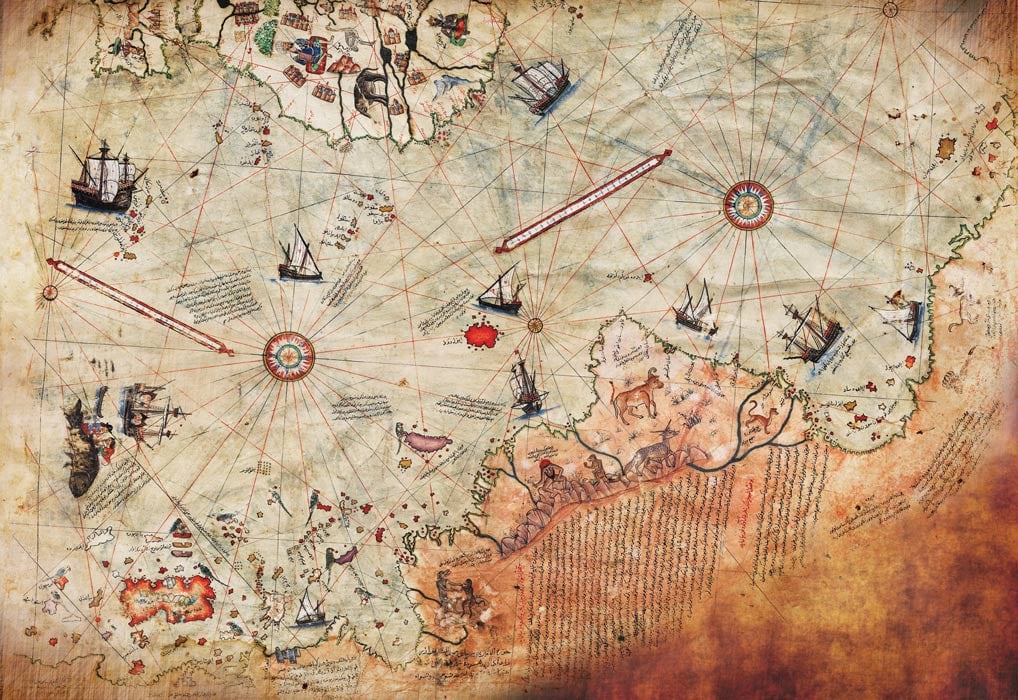
Piri Reis Map - How Could a 16th Century Map Show Antarctica Without Ice?
via Ancient Origins by Beth The Piri Reis Map. Credit: Mehmetilker / Adobe Stock
On October 9, 1929, a German theologian named Gustav Adolf Deissmann was cataloguing items in the Topkapi Palace library in Istanbul when he happened across a curious parchment located among some disregarded material. On the gazelle skin parchment was a map, now referred to as the Piri Reis map .
The map was drawn and signed by Turkish cartographer Hagji Ahmed Muhiddin Piri , aka Piri Reis, and is dated to 1513 AD. Reis was an admiral in the Turkish navy, an experienced sailor, and a cartographer, who claimed to have used 20 source maps and charts to construct the map, including 8 Ptolemaic maps, 4 Portuguese maps, an Arabic map, and a map by Christopher Columbus. Continue reading
==============================
Lithium: A Doctor, A Drug, And A Breakthrough
via 3 Quarks Daily by Morgan Meis by A J Lees at Literary Review:
Lithium is a silvery-white metal that is so light it can float on water and so soft it can be cut with a butter knife. Along with hydrogen and helium it was produced during the Big Bang and so formed the universe before the emergence of the galaxies. It is employed to harden glass and to thicken grease, but its best-known industrial use is in the manufacture of rechargeable batteries. Lithium salts are found in considerable quantities in brine and igneous granite and the element is present in trace quantities in the human body. Lithium is also one of the few metals – along with platinum for cancer, gold for rheumatoid arthritis and bismuth for dyspepsia – that are used as medicines. Continue reading
==============================
10 of the Best Poems about Graveyards
via Interesting Literature
Death looms large in poetry, from epitaphs to poems of grief over the loss of a loved one. And, of course, there’s a long-standing tradition of religious or sacred poems. But what about churchyards, graveyards, and cemeteries – those spaces around the church filled with the dead, with epitaphs by turns moving and cringeworthy, with yew trees and with flowers brought in memory of the deceased? Below we attempt to introduce ten of the very greatest poems about churchyards. Continue reading
==============================
The fever tree
via The Royal Society Repository blog by Melody Bishop Cinchona of St Lucia: plate 19 from ‘An account of a new species of the Bark-tree, found in the Island of St Lucia’ by George Davidson, Philosophical Transactions of the Royal Society, vol.74 part 2 (1784), pp.452-456.
In summer 2018, I was the sole Undergraduate Research Assistant for a project entitled ‘The Fever Tree’. This initiative, jointly run by Dr Marc Etherington (Physics) and Dr David Lowther (History) at Durham University and sponsored by the Hatfield Trust, aimed to understand the changing interest in quinine and divergent routes of study throughout the nineteenth and twentieth centuries.
My main responsibility during this internship was to transcribe nineteenth-century scientific correspondence. The aim was to analyse how the study of quinine – a compound derived from the bark of the cinchona tree and the key component of tonic water – changed over time, ultimately resulting in quinine’s reputation as a valuable antimalarial and fluorescence standard. Continue reading
==============================
Be My Matelotage! The Civil Union of 17th Century Pirates
via Ancient Origins by B.B. Wagner Matelotage is the marriage / civil union of two male pirates. Source: rdrgraphe / Adobe Stock.
Love strikes hard like the broadsiding from a warship, leaving both splinters and buckshot in one’s heart. When it hits, there's nothing anyone can do but accept the bombardment with both arms open. It can happen with friends, co-workers, and even with 17th-century Caribbean pirates . The word 'matelotage’ carried many different meanings, but in the island of Tortuga, matelotage meant the civil union and sexual relationship between two pirate men.
In 1645, the French-controlled island of Tortuga was a safe haven for privateers and buccaneers alike. Tortuga was also a sanctuary for those who wished to have matelotage, the civil union of two male pirates. Continue reading This is quite a long read but I found it very interesting. It told me about things I had not previously known.
==============================
How archives helped solve a family mystery
via The National Archives Blog by Kerri Ramsay
Like many of us who find ourselves working at The National Archives, I have a passion for both mysteries and social history. This is the story of how I solved a family mystery of my own – of who really was my estranged great-grandfather? – with a little help from some historical documents. Robert John Davidson in a locket pendant photograph
I began my investigation armed with a few random facts that had been passed down through the years. I knew that his name was Robert John Davidson; that he had been married with children to a lady named Catherine; that he was an excellent horse rider; that he had served in the Great War with the Lovat’s Scouts regiment; and that he was buried on the Rothiemurchus estate in Scotland. Finally, perhaps less appealingly, there was the rumour that he had been seeing another woman at the same time as my great-grandmother! Continue reading
==============================
An Interesting Character Study: Lady Macbeth
via Interesting LIterature
Lady Macbeth is widely regarded as one of the most villainous female characters in all of English literature, and perhaps Shakespeare’s most cold-hearted female character. Not only does she urge her husband to murder their King for no other reason than heartless ambition, she also states that she would dash out her own baby’s brains rather than lose her courage for such a regicidal act. Continue reading
Ancient Greek Physician Hippocrates and the Medical Revolution
via Ancient Origins by Sarah P Young Hippocrates Statue and Dooley Hospital Door .
Classical Greece is considered by many to be the birthplace of modern Western civilization. The ancient Greeks made astounding progress in a huge number of areas - from politics and governing to religious practice and philosophical thought. The impact the Hellenic culture had is still felt throughout the world today.
Archimedes, Pythagoras, Plato, Aristotle, Socrates, Homer – the list of figures from ancient Greece who have left their mark on the world today is astounding and the innovations and principles they pioneered surround us in our day-to-day lives.
One ancient Greek whose influence is still felt the world over is Hippocrates – a physician who is widely known as the father of modern or clinical medicine. Medicine and healthcare had been practised for thousands of years. The healing properties of things such as willow bark, cannabis, and poppies were recognised and taken advantage of long before the rise of the Classical World. Continue reading
an article by Pamela Davies and Michael Rowe (Northumbria University, UK) published in The Howard Journal of Crime and Justice Volume 59 Issue 2 (June 2020)
Abstract
Criminology has paid insufficient attention to the ‘domestic’ arena, as a locale that is being reconfigured through technological and social developments in ways that require us to reconsider offending and victimisation.
This article addresses this lacuna.
We take up Campbell's (2016) challenge that criminology needs to develop more sophisticated models of place and space, particularly in relation to changing patterns of consumption and leisure activity and the opportunities to offend in relation to these from within the domestic arena.
an article by Dimiter Toshkov (Leiden University, The Netherlands), Lars Mäder (University of Copenhagen, Denmark) and Anne Rasmussen (Leiden University, The Netherlands; University of Copenhagen, Denmark) published in Journal of Public Policy Volume 40 Issue 2 (June 2020)
Abstract
Does party government moderate the responsiveness of public policy to public opinion?
Analysing a new dataset, we examine whether the ability of governments to respond to the public on 306 specific policy issues in Denmark, Germany and the UK is affected by the extent of coalition conflict and by the fit of the considered policy changes with the government preferences.
We find a systematic but relatively weak positive impact of public support on the likelihood and speed of policy change. Contrary to expectations, a higher number of coalition partners are not associated with fewer policy changes nor with weaker responsiveness to public opinion.
We also find no evidence that responsiveness to public opinion is necessarily weaker for policy changes that go against the preferences of the government. Rather, it appears that public and government support for policy change are substitute resources.
an article by Sioned Pearce, Christala Sophocleous, Helen Blakely and Eva Elliott (Cardiff University) published in People, Place and Policy Volume 14 Issue 1 (2020)
Abstract
The devolution of power and responsibility from central to sub national levels of governance over the past half century marks a paradigm shift in forces shaping social policy across much of Western Europe. Scholarship in this field is often concerned with a binary analysis of before and after the advent of devolution, with insufficient attention paid to transitory changes over time.
Through attention to Wales’ flagship community regeneration programme, Communities First, a striking instance of divergent devolved social policy, we highlight the need to attend to the dynamics of devolution across time.
Drawing on empirical data charting the programme’s conception, implementation, evolution, distortion and eventual demise, we argue that a moment of alignment between ideology and policy design was visible at conception but eroded over 16 years, as the programme increasingly came to bear the hallmarks of neoliberalism.
Using this case study, we consider the extent to which newly devolved states can implement ideological policy visions that resist the restraints put upon sub-state governance on the one hand and forces of central state ideologies and logics on the other.
an article by Ilkka Pietilä and Hanna Ojala (University of Tampere, Finland) and Toni Calasanti and Neal King (Virginia Tech, Blacksburg, VA, USA) published in Men and Masculinities Volume 23 Issue 2 (June 2020)
Abstract
Because paid work is taken to be central to manhood, scholarly and popular discourse have characterised retirement as presenting a “crisis of masculinity.” However, such a crisis is not borne out by research, perhaps because scholars have not considered how class might shape masculinities and thus expectations and experiences of retirement.
Using data obtained from interviews with Finnish metal workers and engineers who are either approaching retirement or recently retired, we ask whether
this crisis discourse is reflected in their retirement expectations,
it matches their actual experiences of retirement, and
retirement disrupts the masculinities of some class groups more than others.
We find evidence of this retirement crisis discourse in our respondents’ views of retirement, but not in their actual experiences, belying the homogeneity of masculinity implied by it. Class shapes both the perceived content of crises and the actual retirement experiences.
an article by Jun Liu (University of Copenhagen, Denmark) published in European Journal of Sociology / Archives Européennes de Sociologie Volume 61 Issue 1 (April 2020)
Abstract
This study advances an original theoretical framework to understand the deployment of Information and Communication Technologies (ICTs) in political contention.
It argues that we should not look only at the use of ICTs in contention, as technologies are not “born” to be used in and for political activism. Rather, people appropriate and manoeuvre technologies – some but not others – for such purposes, in specific contexts.
This study proposes a relational understanding of ICT uses in contention, taking into account their technicalities and their sociality, as well as the transformation and actualisation that occurs between them. It suggests that an investigation necessitates the perception of communication technologies as a repertoire of contention on the basis of affordances that structure the possibilities of the use of technology.
The study further presents an application of the framework in cases of protests in mainland China.
Through fieldwork and in-depth interviews, this study indicates that the choice of (certain functions of) mobile phones as protest repertoire derives from a confluence of
a. a given social group’s habitus of media use that manifests particular affordances, and
b. the learned experience of the contested means of the past in official mass communication.
It concludes that what people do and do not do with ICTs in political contention is significantly shaped by affordances and habitus, thereby revealing the dynamics behind repertoire selection and constraint.
an article by Ashley Cartwright (University of Huddersfield, UK) and Chloe Shaw (Leeds Beckett University, UK) published in Safer Communities Volume 19 Issue 2 (2020)
Abstract
Purpose
Social media is an integral part of modern society and is used by billions of people worldwide. In a policing context, police services are starting to use social media platforms to interact with their communities. However, academic literature is lagging regarding the effectiveness of police use of social media. The purpose of this study is to gather public perceptions regarding the police’s use of social media particularly the use of Facebook.
Design/methodology/approach
The study administered a cross sectional survey recruiting participants who are policed by one of the larger police services in England and Wales. A total of 294 respondents completed the survey providing their views on their police service’s use of social media.
Findings
The results of the present study provide overwhelming support for the police’s use of social media by the public, with most respondents actively following their local police service’s social media accounts. The study additionally provides a number of important findings in relation to the preferences of the public with regards to their police service’s use of Facebook.
Practical implications
The findings presented here provide police services with an insight into how to implement an evidenced-based approach to their social media activity.
Originality/value
The present study takes an alternative approach to understanding the effectiveness of police social media use by simply asking residents, an approach not used in this area of policing research to date.
an article by Sean Low (Institute for Advanced Sustainability Studies, Potsdam, Germany; Utrecht University, the Netherlands) and Holly Jean Buck (University of California, Los Angeles, USA) published in WIRES Climate Change Volume 11 Issue 3 (May/June 2020)
Abstract
Sunlight reflection and carbon removal proposals for “climate engineering” (CE) confront governance challenges that many emerging technologies face: their futures are uncertain, and by the time one can discern their shape or impacts, vested interests may block regulation, and publics are often left out of decision‐making about them.
In response to these challenges, “responsible research and innovation” (RRI) has emerged as a framework to critique and correct for technocratic governance of emerging technologies, and CE has emerged as a prime case of where it can be helpfully applied.
However, a critical lens is rarely applied to RRI itself.
In this review, we first survey how RRI thinking has already been applied to both carbon removal and sunlight reflection methods for climate intervention.
We examine how RRI is employed in four types of activities: Assessment processes and reports, principles and protocols for research governance, critical mappings of research, and deliberative and futuring engagements.
Drawing upon this review, we identify tensions in RRI practice, including whether RRI forms or informs choices, the positionalities of RRI practitioners, and ways in which RRI activities enable or disable particular climate interventions.
Finally, we recommend that RRI should situate CE within the long arc of sociotechnical proposals for addressing climate change, more actively connect interrogations of the knowledge economy with reparative engagements, include local or actor‐specific contexts, design authoritative assessments grounded in RRI, and go beyond treating critique and engagement as “de facto” governance.
Visual Abstract
Responsible research and innovation (RRI) has been posed as a means to rethink, critique and reshape technocratic and solution‐oriented research and development into global climate engineering techniques—but is RRI fulfilling its potential?
an article by Shannon Spaulding (Oklahoma State University, USA) published in WIRES Cognitive Science Volume 11 Issue 3 (May/June 2020)
Abstract
Theory of mind, also known as mindreading, refers to our ability to attribute mental states to agents in order to make sense of and interact with other agents. Recently, theorists in this literature have advanced a broad conception of mindreading.
In particular, psychologists and philosophers have examined how we attribute knowledge, intention, mentalistically loaded stereotypes, and personality traits to others. Moreover, the diversity of our goals in a social interaction – precision, efficiency, self/in‐group protection – generates diversity in the mindreading processes we employ.
Finally, the products of mindreading are varied, as well.
We produce different sorts of mindreading explanations depending on our epistemic goals and the situational context.
In this article, I piece together these different strands of research to present a broad conception of mindreading that is complex, messy, and interesting.
My career in information management started back in 1987 working on the Training Access Points project. Nearly thirty years later I am still concerned to ensure that end users, and their mediators, have access to appropriate, relevant information in a form that they can understand, at a time and in a place that is right for them. The Internet seems to be for everyone and everywhere but the digital divide gets bigger. By pointing advisers in the direction of resources I hope to increase what can be done to help clients/customers.
I ran my own company for 16 years but am now a semi-retired freelancer.